Coloring tips: How to color Space Station Doodle Vista coloring page well?
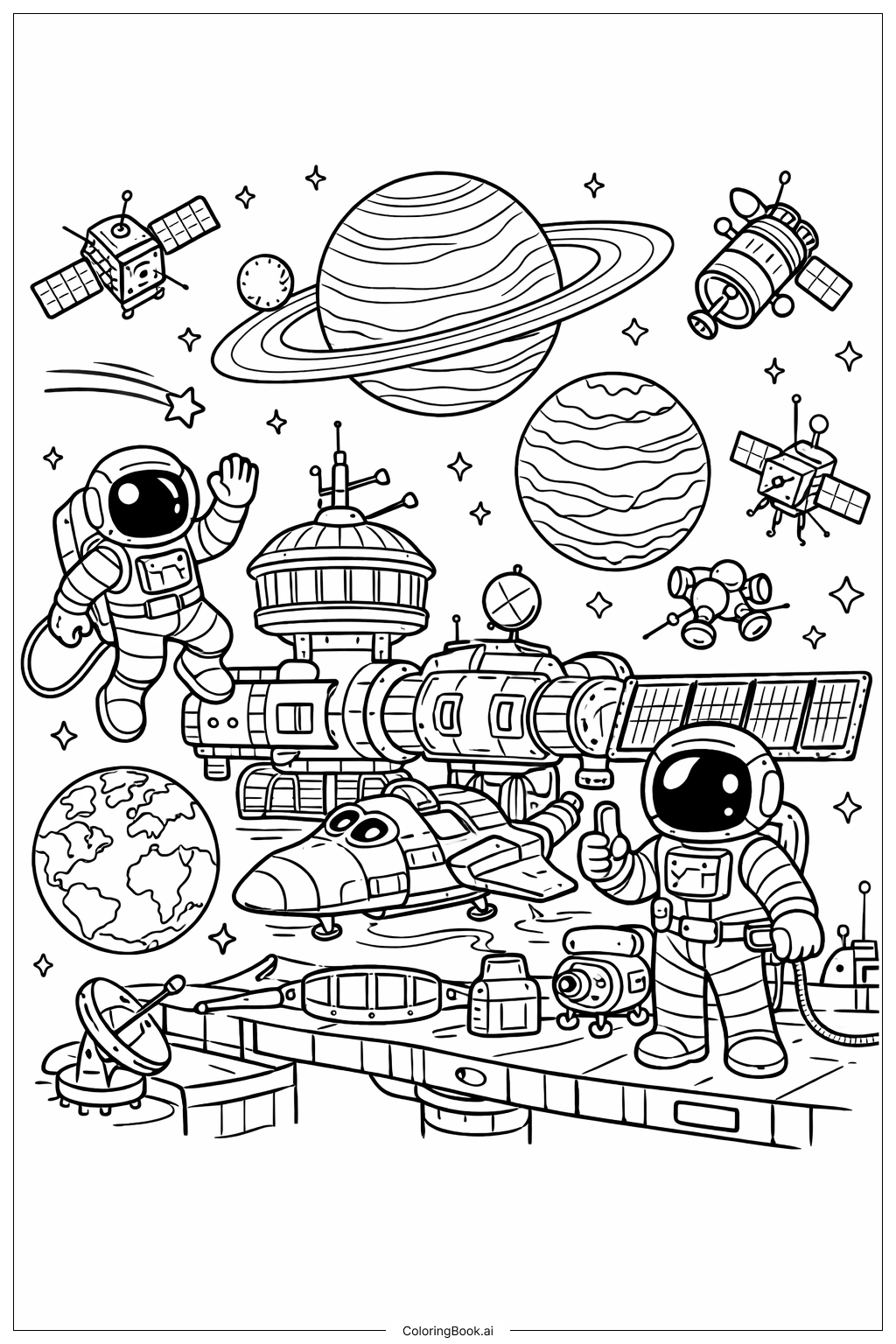
Try using bright and metallic colors like silvers, grays, and blues to give the space station a high-tech, shiny look. Use yellows and oranges for the solar panels to make them stand out. The background stars and planets can be colored with soft purples, dark blues, and pinks to create a beautiful cosmic sky. You could also add small bursts of color on the tiny spacecraft, maybe using reds or greens to make them pop. For the doodle lines and swirls, choose gentle pastel shades to add fun details without overwhelming the main shapes. Remember to color inside the lines to keep the picture neat and clear.
Coloring challenges: Which parts are difficult to color and need attention for Space Station Doodle Vista coloring page?
• Small Details: The space station has many tiny sections such as antennae, small windows, and connectors that require careful coloring with a fine-tip pencil or marker.
• Complex Shapes: The modules and structural parts have unusual round and rectangular shapes that may be tricky to fill evenly while keeping clean edges.
• Background Elements: The stars and planets in the background are scattered and vary in size, needing attention to avoid mixing colors unintentionally.
• Layered Parts: Some parts of the station overlap, so choosing different shades to separate these sections visually can be challenging but important.
• Repetitive Patterns: The doodle style includes repetitive swirls and dots that can become monotonous if not colored creatively, requiring thoughtful color choices for variety.
Benefits of coloring books: Advantages of drawing Space Station Doodle Vista coloring page
Coloring this image helps develop fine motor skills by encouraging precise control for small details. It also enhances focus and patience while working on complex sections and repeated patterns. Using imagination to choose space-inspired colors fosters creativity and artistic expression. The variety of shapes and textures improves visual discrimination skills, helping colorists notice different forms and layers. Finally, completing such a detailed picture offers a rewarding sense of accomplishment and encourages interest in science and space exploration.