Coloring tips: How to color Dolphin Underwater Scene coloring page well?
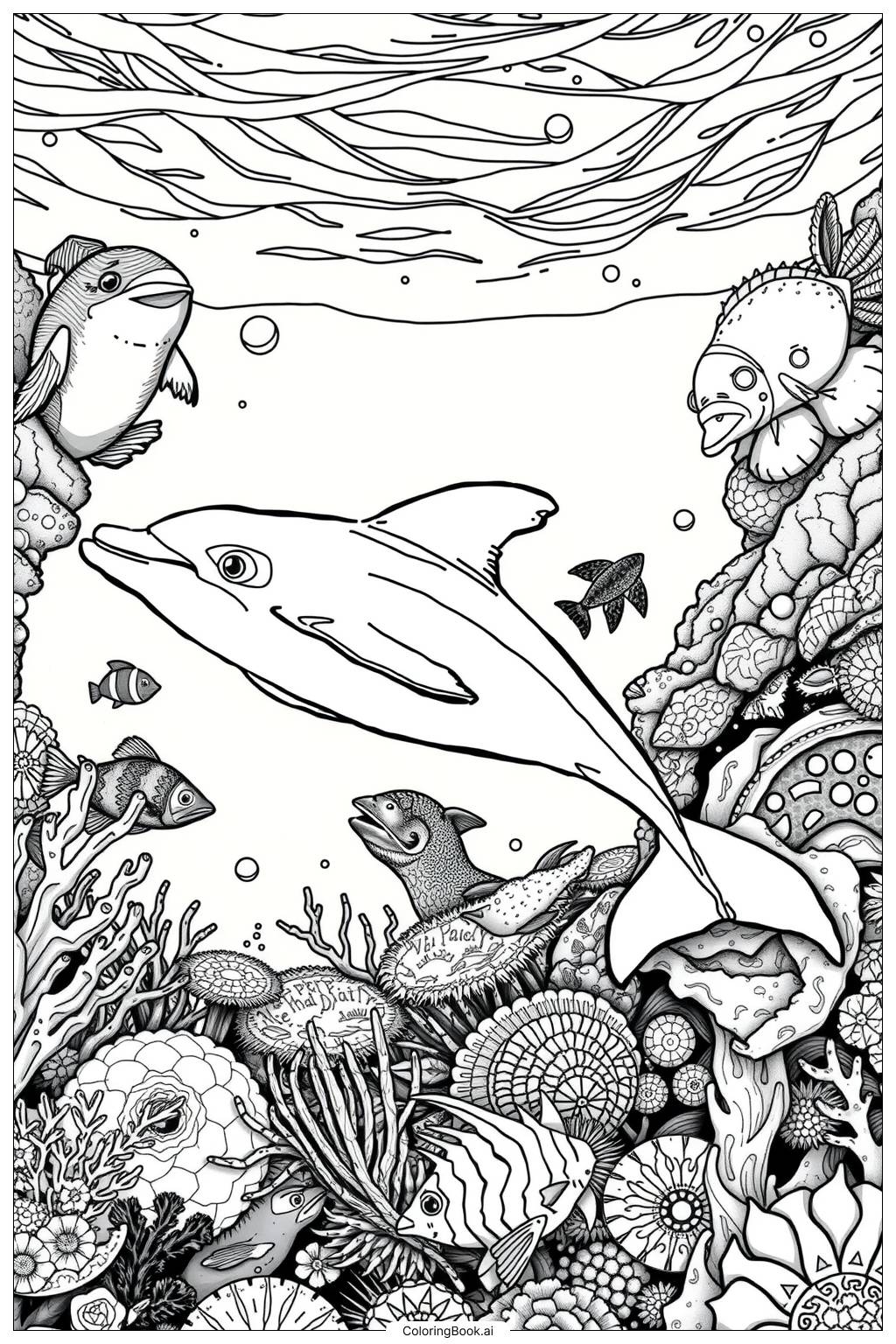
Start with the dolphin's body using a smooth blue-gray or silver tone. Leave the belly area lighter — white or pale cream — to show its natural shading. Use bright greens for the tall seaweed and ocean plants, mixing in some darker green for depth. Color the coral in warm shades like orange, pink, and red to make it pop. Paint the sea rocks in earthy browns and grays. For the water background, use a gradient of light blue near the top fading into deeper teal or navy at the bottom. Add soft yellow streaks where the sunlight filters through. Color the bubbles with a light blue or leave them white with a thin blue outline. The small fish can be colored in fun, bold colors like yellow, orange, or red to make them stand out. Take your time with each section and enjoy bringing this ocean world to life!
Coloring challenges: Which parts are difficult to color and need attention for Dolphin Underwater Scene coloring page?
• Dolphin Body Shading: The dolphin has a large, smooth surface that can look flat if colored with just one shade. The challenge is blending two or three tones — darker on the back and sides, lighter on the belly — to create a realistic, rounded look. Young colorists may find smooth gradients tricky without smudging or hard lines.
• Seaweed and Plant Details: The underwater plants have many overlapping leaves and thin, curving stems. Coloring each strand neatly without going outside the lines takes steady hands and patience. Choosing the right shades of green to show depth between foreground and background plants adds another layer of difficulty.
• Coral Texture: Coral formations often have bumpy, branching, or layered shapes. Filling these small sections with multiple warm colors while keeping the design clean and consistent requires careful attention. Younger children may find it hard to stay within the small spaces of the coral details.
• Background Water Gradient: Creating a smooth water background that transitions from lighter blue at the top to deeper blue or teal at the bottom is one of the more advanced techniques in this image. Achieving a natural-looking gradient with colored pencils or markers can be challenging without the right blending skills.
• Light Ray Effects: The soft streaks of sunlight filtering through the water add beauty but are delicate to color. Keeping those rays looking soft and glowing — rather than sharp or too dark — requires a light touch and careful layering, especially for beginners.
Benefits of coloring books: Advantages of drawing Dolphin Underwater Scene coloring page
Coloring this dolphin underwater scene offers a wonderful range of benefits for children of all ages. First, it builds fine motor skills as kids carefully fill in the dolphin's smooth body, tiny coral details, and flowing seaweed. Holding and guiding a crayon or colored pencil through these shapes strengthens hand-eye coordination and grip control.
The scene also sparks creativity. Choosing colors for the ocean, plants, and sea creatures encourages kids to make their own artistic decisions, boosting confidence and self-expression. There are no wrong color choices — a purple dolphin or pink seaweed is just as wonderful as a realistic one.
Focusing on the detailed image also trains concentration and patience. Children learn to slow down, work section by section, and feel the satisfaction of completing something step by step. This kind of mindful activity can be calming and help reduce stress or anxiety.
At the same time, this scene teaches kids about ocean life in a fun, hands-on way. As they color dolphins, coral, seaweed, and fish, they naturally become curious about the underwater world, making it a gentle bridge to learning about marine biology and nature.
Finally, finishing a fully colored page gives children a real sense of pride and achievement — a finished piece of art they can display, share, or keep.