Coloring tips: How to color Police German Shepherd On Duty coloring page well?
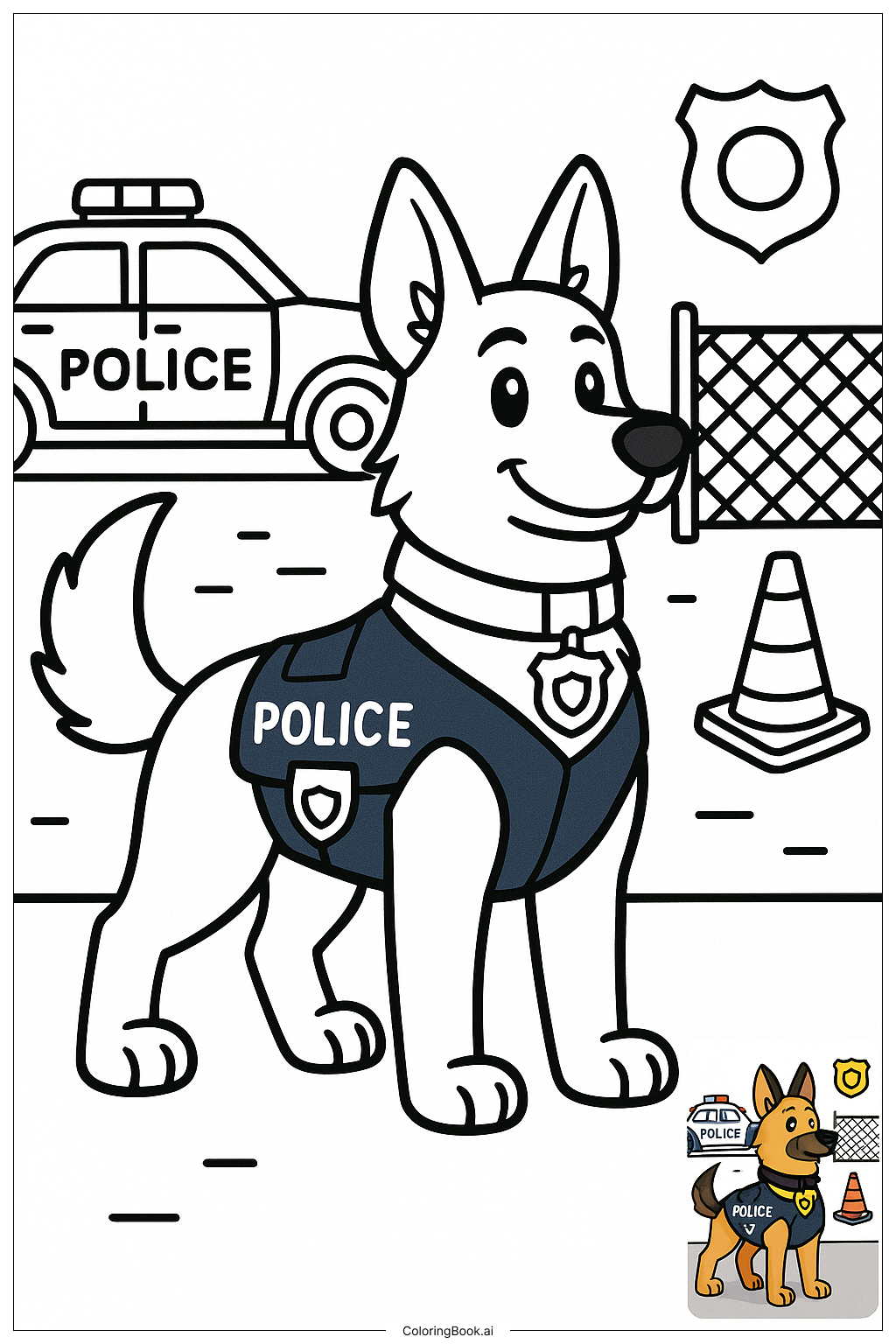
Start with the German Shepherd's classic coat. Use tan and brown for the body, with dark brown or black on the back, the muzzle, and the paws. The ears can be darker on the outside and lighter inside. For the K-9 police vest, use dark navy blue or black to give it an official look. Add a gold or yellow color for the badge on the vest to make it shine. The leash can be colored in dark gray or brown leather tones. For the background, use light gray for the sidewalk and soft blue for the sky. The patrol car can be white with blue and red stripe accents. Keep shadows in medium gray tones under the dog to give it a grounded, real feel. Younger colorists can keep it simple by focusing just on the dog, while older or more skilled colorists can add shading and details to the fur and equipment for a more realistic result.
Coloring challenges: Which parts are difficult to color and need attention for Police German Shepherd On Duty coloring page?
• German Shepherd Fur Texture: The German Shepherd has a thick double coat with multiple color zones — tan, brown, and black. Blending these colors smoothly without making the fur look flat is tricky. You need to layer light and dark strokes carefully to mimic the natural flow of the fur. Short, directional strokes work best to show how the fur lies on the body.
• K-9 Police Vest Details: The vest has small panels, stitching lines, and a badge with fine details. Staying inside these small areas while keeping colors clean and even is a real challenge. Using a sharp pencil tip or a fine-tip marker helps a lot when working on the badge and vest edges.
• Facial Expression and Eyes: The dog's face carries the most emotion in this image. The eyes, nose, and muzzle shading need to work together to show alertness and intelligence. Getting the eyes right — with a dark pupil, a colored iris, and a small white highlight — takes patience and a steady hand.
• Background Elements: The patrol car, buildings, and sidewalk in the background each need their own color set. Keeping these background colors lighter and less saturated than the dog helps keep the focus on the K-9. Balancing foreground and background contrast without overcrowding the page is something beginners may find challenging.
• Leash and Equipment: The leash has thin, curved lines that require careful coloring to avoid going outside the lines. Metal clip details on the leash may need a mix of silver and dark gray to look realistic.
Benefits of coloring books: Advantages of drawing Police German Shepherd On Duty coloring page
Coloring this Police German Shepherd On Duty page brings many great benefits for kids and adults alike. For younger children, it builds fine motor skills as they practice staying within lines and controlling their coloring tools. It also sharpens hand-eye coordination with each careful stroke.
Learning about police K-9 dogs while coloring is a fun way to spark curiosity about community helpers and how animals work alongside people to keep neighborhoods safe. This can lead to great conversations between kids and parents or teachers.
For older children and teens, the detailed fur texture and gear on this image offer a chance to practice blending, shading, and color layering — important artistic skills that grow with every session.
Coloring also has a calming effect. Focusing on a single task like this reduces stress and helps build patience and concentration. It encourages creative thinking as colorists choose their own color combinations and personal style.
For adults, this page is a relaxing and satisfying activity that can serve as a screen-free break. Overall, this image combines artistic challenge with a meaningful subject, making the coloring experience both enjoyable and rewarding for all ages.