Coloring tips: How to color Exchanging Gifts During Diwali coloring page well?
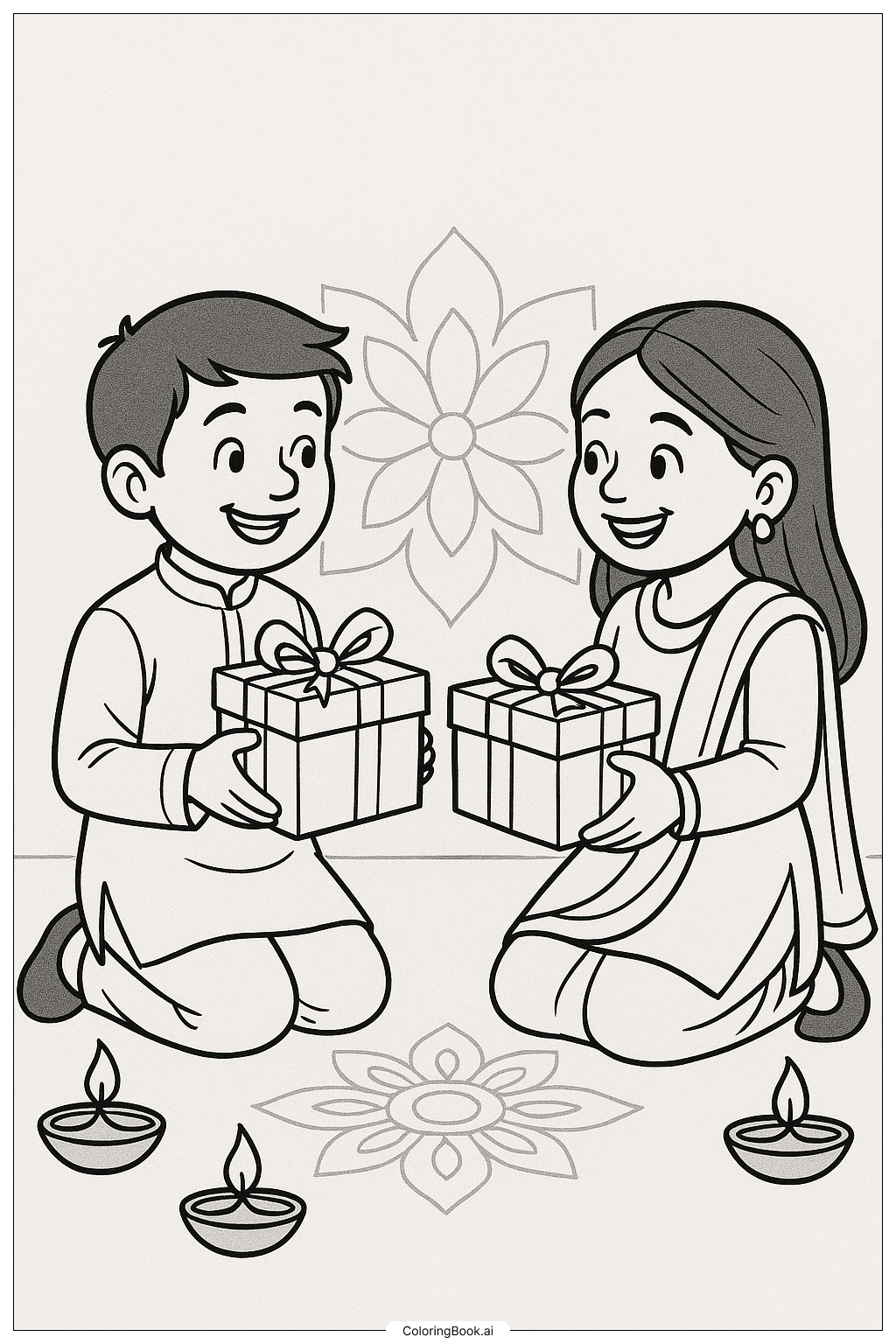
Start with the children's outfits using bright, festive colors. Try deep red, royal blue, emerald green, or golden yellow for their traditional clothes. Add orange and yellow to the diyas to give them a warm, glowing look. Use rich pinks, purples, and reds for the flower garlands. The rangoli on the floor is perfect for bold, contrasting colors like fuchsia, turquoise, and saffron orange. Color the gift boxes in fun, bright shades and add patterns like stripes or dots to make them look extra special. Use warm golden or amber tones for the string lights in the background. The background can be filled with deep purple or navy blue to make all the bright foreground colors pop. Encourage kids to mix colors freely and make the scene their own. There are no wrong color choices here — Diwali is all about color, light, and celebration!
Coloring challenges: Which parts are difficult to color and need attention for Exchanging Gifts During Diwali coloring page?
• Intricate Outfit Patterns: The traditional Indian clothing worn by the two children features small, detailed paisley and floral motifs. Staying within these tiny design elements requires a steady hand and fine-tipped coloring tools. Younger children may find it helpful to skip the fine details and focus on filling the larger sections of the garments with flat, bold colors instead.
• Rangoli Floor Design: The rangoli pattern at the base of the scene is made up of many geometric shapes and repeating curves that are placed very close together. Coloring each section without bleeding into neighboring areas is tricky. Using colored pencils or fine-tip markers will give better control than broad crayons.
• Gift Box Wrapping Details: The wrapped gift boxes feature ribbons, bows, and surface patterns. Getting each decorative element colored separately while keeping the overall look neat can be a challenge, especially for younger colorists. Taking it one section at a time helps.
• Layered Background Elements: The string lights, garlands, and background decorations overlap in several places. Deciding which color belongs to which layer requires careful observation. Lightly sketching out color zones with a pencil before applying color can prevent mistakes.
• Balancing Color Harmony: With so many elements in the scene, it can be hard to choose colors that work well together without making the image look too busy or muddy. Planning a simple color palette of three to five colors before starting will help keep the final result looking vibrant and balanced.
Benefits of coloring books: Advantages of drawing Exchanging Gifts During Diwali coloring page
Coloring this Diwali gift-exchange scene offers a range of wonderful benefits for children and young colorists. First, it builds fine motor skills. Carefully filling in small patterns on clothing, rangoli, and gift boxes trains hand muscles and improves pencil control, skills that also support handwriting and drawing. Second, it sparks creativity. Choosing colors for traditional outfits, glowing diyas, and decorative garlands encourages kids to make their own artistic decisions and express their personal style. Third, it teaches cultural awareness. As children color the scene, they naturally learn about Diwali traditions, traditional Indian attire, and the significance of sharing gifts during festivals. This builds empathy and appreciation for diverse cultures. Fourth, it supports focus and patience. The detailed nature of this page requires concentration, helping children practice staying on task and working carefully toward a finished goal. Fifth, it creates a sense of accomplishment. Completing a rich, colorful page like this gives children a real boost of confidence and pride. It also makes a wonderful keepsake or decoration during the Diwali season, reminding families of the joy of togetherness and celebration.