Coloring tips: How to color Diwali Puja Thali coloring page well?
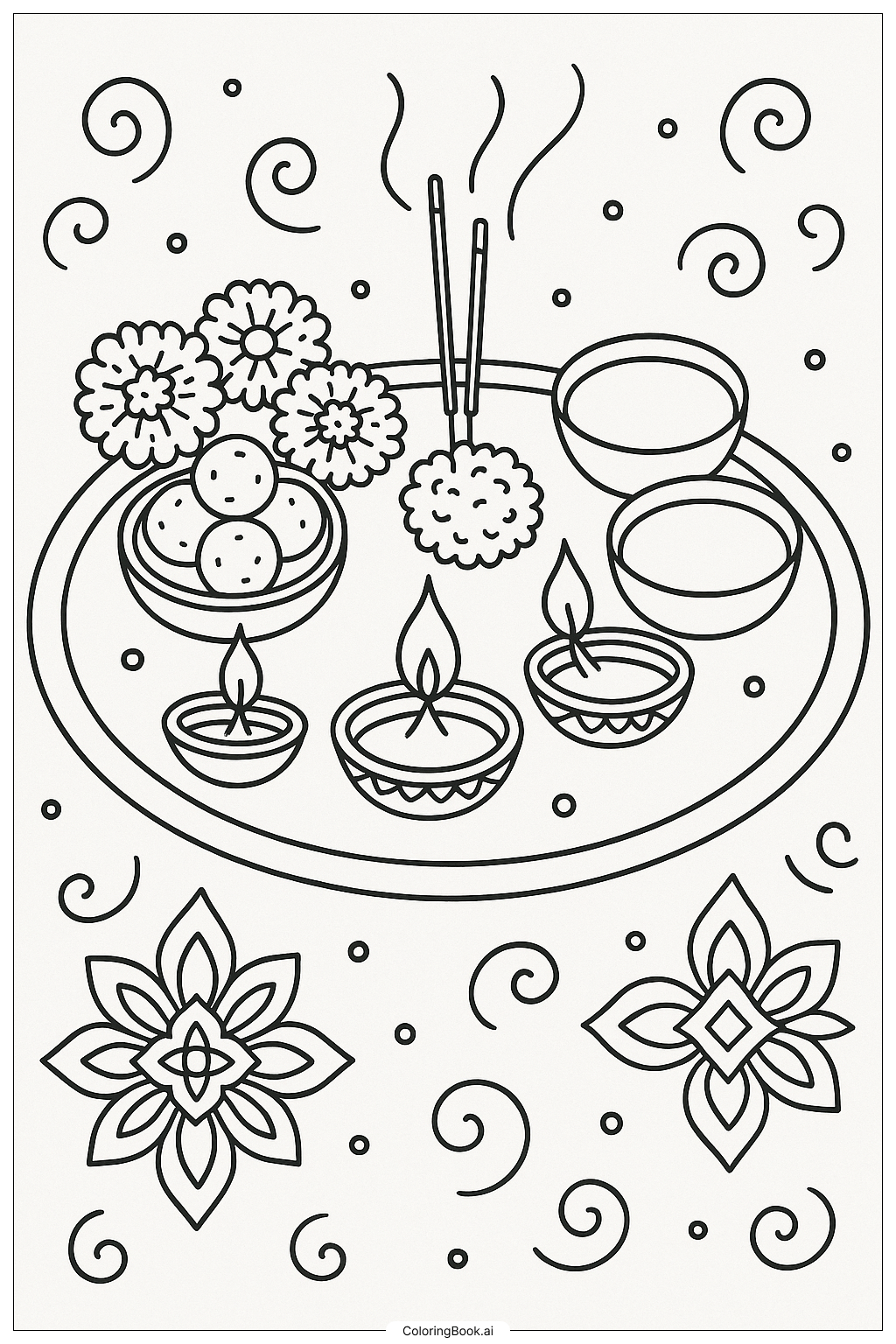
Start with the central diya lamp and use warm shades like orange, yellow, and red to bring the flame to life. Color the thali plate itself with gold or metallic yellow to give it a shiny, festive look. Use bright, cheerful colors for the flower petals — marigolds look great in orange and yellow, while rose petals can be deep pink or red. For the small offering bowls, try earthy browns or creamy whites. The kumkum powder can be colored in bright red or vermillion. Use green for any leaf decorations. Fill the rangoli and border patterns with a mix of bright colors like purple, blue, teal, and pink. Do not be afraid to mix colors and make the thali look as vibrant and joyful as Diwali itself. Light colors work well for the background to make the detailed designs pop.
Coloring challenges: Which parts are difficult to color and need attention for Diwali Puja Thali coloring page?
• Intricate Border Patterns: The decorative borders around the thali feature fine geometric and floral designs. These small, closely spaced lines can be tricky to color neatly. Using thin-tipped colored pencils or fine-point markers will help you stay within each section without smudging nearby areas.
• The Central Diya Details: The diya lamp has multiple small parts, including the flame, the oil reservoir, and decorative carvings on the body. Each section needs a different color, and the spaces between them are very narrow. Take your time and use a sharp pencil tip to fill each tiny area carefully.
• Multiple Small Bowls and Items: The thali contains several small objects placed close together. Switching between colors for each item without bleeding into the next one requires patience and precision. Let each section dry before moving to the next if you are using markers.
• Flower Petal Arrangements: The scattered petals and floral clusters around the thali have overlapping shapes. Deciding which petals are in front and which are behind, and shading them accordingly, can be a fun but challenging task for younger colorists.
• Rangoli-Inspired Fill Areas: The rangoli motifs inside and around the thali have symmetrical, repeating patterns. Keeping the colors consistent and balanced on both sides of the design takes concentration and planning. It helps to choose your color palette before you begin and map out which colors go where.
Benefits of coloring books: Advantages of drawing Diwali Puja Thali coloring page
Coloring this Diwali Puja Thali page offers a wonderful mix of fun, learning, and calm. As you fill in each tiny detail, your focus and concentration naturally improve. This kind of careful, mindful coloring helps reduce stress and creates a sense of peace, almost like a quiet meditation.
For children, this page is a great way to learn about Diwali and Indian cultural traditions. Understanding what each item on the thali represents — the diya, the flowers, the offerings — turns coloring into a learning experience.
Working through the detailed patterns also helps build fine motor skills. Staying within the lines, switching colors, and handling small spaces all strengthen hand-eye coordination, which is important for writing and other daily tasks.
Choosing colors for the rangoli patterns, flowers, and decorative borders encourages creative thinking. There is no single right answer, so children and adults alike can express their own sense of style and beauty.
Finally, completing a detailed image like this brings a genuine sense of accomplishment. Seeing the finished thali, bright and colorful, is a rewarding moment that boosts confidence and makes the whole activity deeply satisfying. It is a great project to share with family during the festive season.