Coloring tips: How to color A Detailed Diwali Puja Ceremony coloring page well?
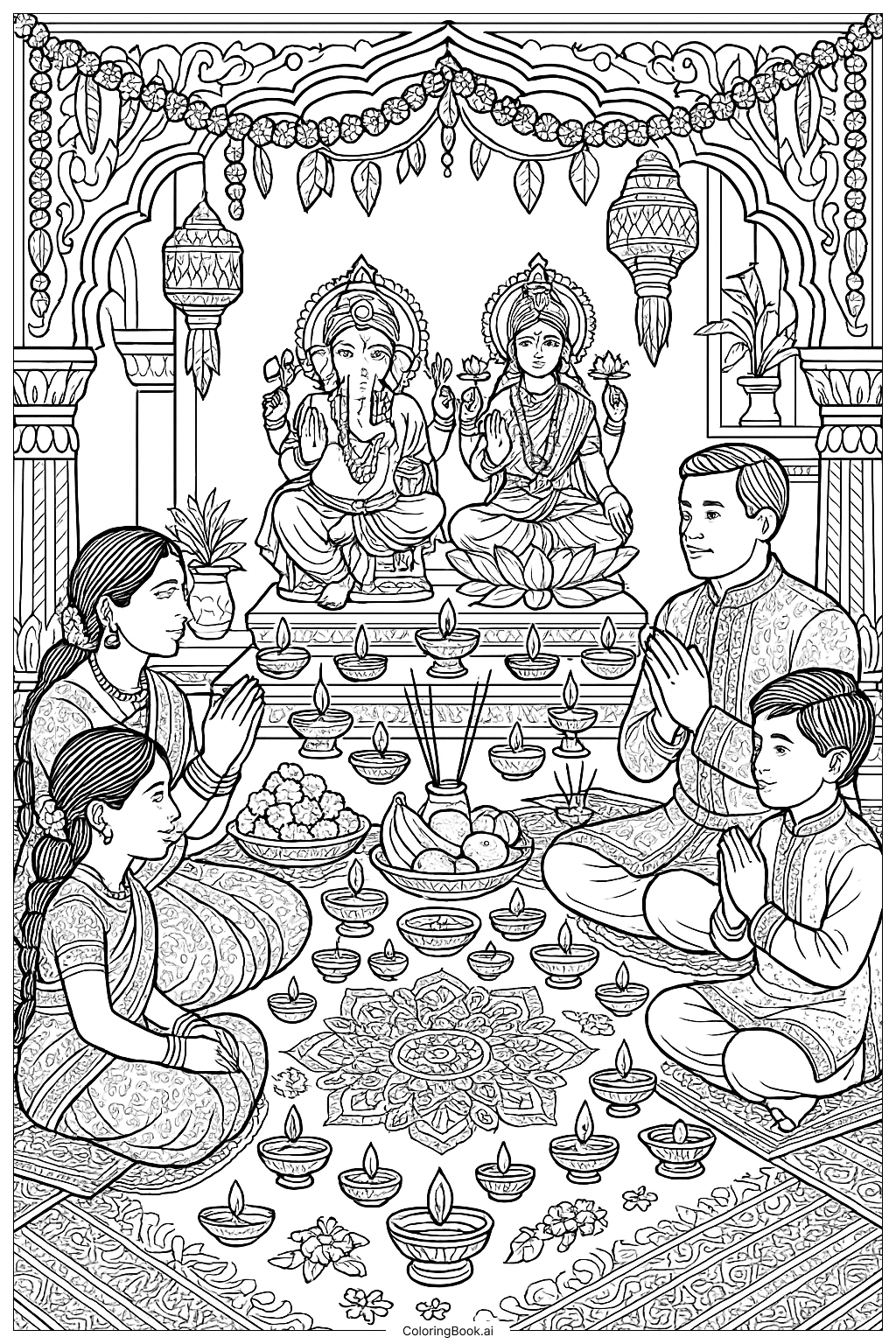
For this Diwali Puja ceremony, consider using bright and warm colors. Use shades of orange and yellow for the clay lamps or diyas to show their glowing light. Color the marigold flowers in vibrant orange and yellow tones. Traditional clothing can be colorful—try reds, pinks, bright blues, and greens to represent festive attire. The altar decorations can include gold, red, and green shades to make them stand out. The rangoli patterns on the floor could be colored with contrasting colors like purple, pink, and blue to highlight their intricate designs. Keep the background in light pastel shades so the main ceremony details pop. This will make your coloring lively and keep the joyful atmosphere of Diwali.
Coloring challenges: Which parts are difficult to color and need attention for A Detailed Diwali Puja Ceremony coloring page?
• Small Details: The image has many tiny elements like the small oil lamps, flowers, and fruits on the altar that require careful, precise coloring to avoid coloring outside the lines.
• Multiple Figures: There are several people in traditional clothes, so distinguishing between them with different colors while keeping consistency in skin tones and clothing patterns can be challenging.
• Intricate Designs: The rangoli on the floor and decorative patterns on clothes need a steady hand to color within the fine lines.
• Light Effects: Showing the glowing aura of the diyas and lamps might be tricky to represent just with coloring. You need to use gradual shading and warm colors.
• Layering Colors: The floral garlands and offerings have overlapping parts that require attention to layering colors without making them look dull or muddled.
Benefits of coloring books: Advantages of drawing A Detailed Diwali Puja Ceremony coloring page
Coloring this image helps develop attention to detail and fine motor skills because of its intricate patterns and small objects. It encourages creativity in choosing bright and harmonious colors to bring the festive scene alive. Coloring traditional clothes and decorations deepens understanding of cultural celebrations like Diwali. This activity can also improve patience and concentration as you carefully work on each part of the picture. For children and adults alike, it brings calmness and joy while connecting with the warmth and positivity of the Diwali festival.