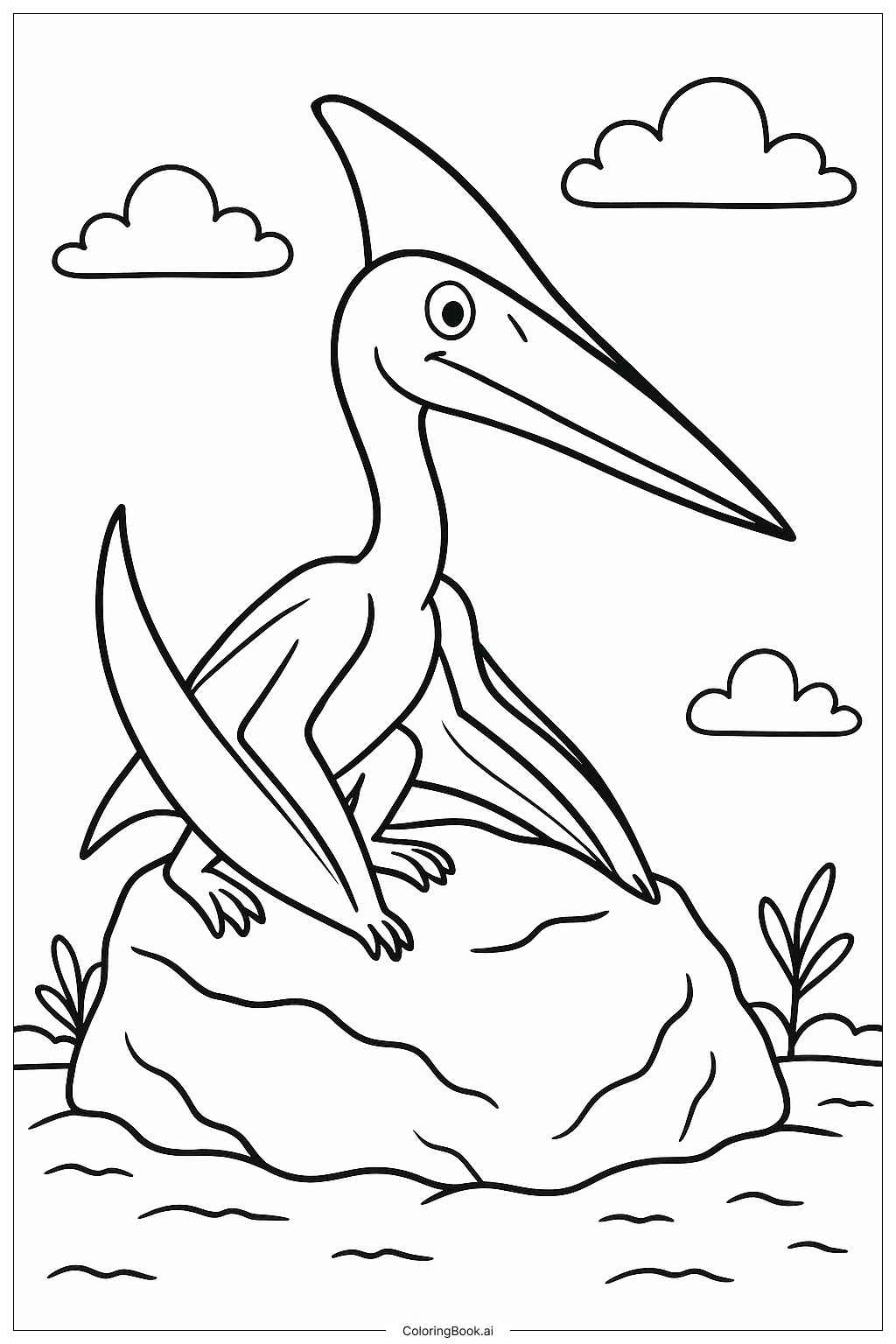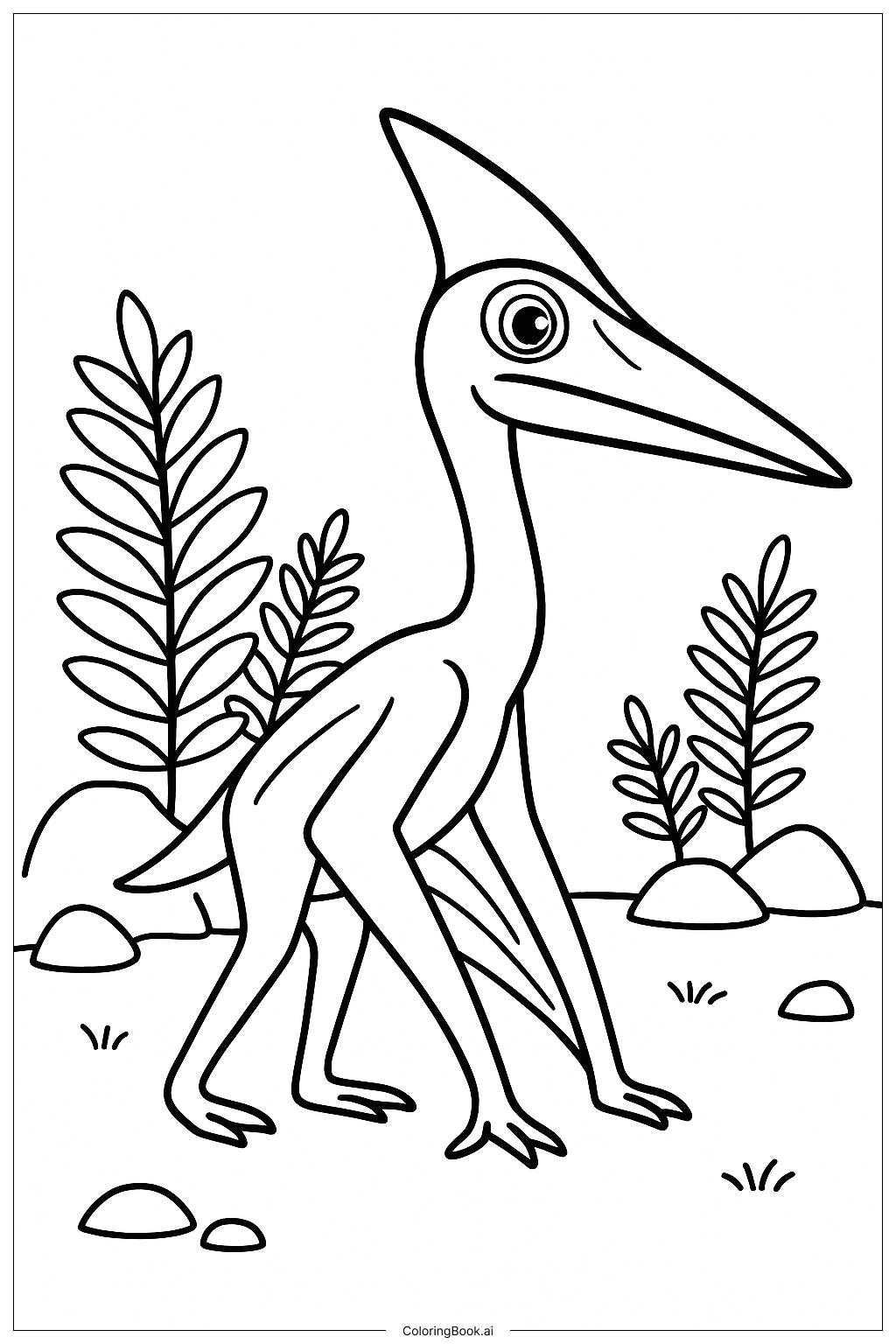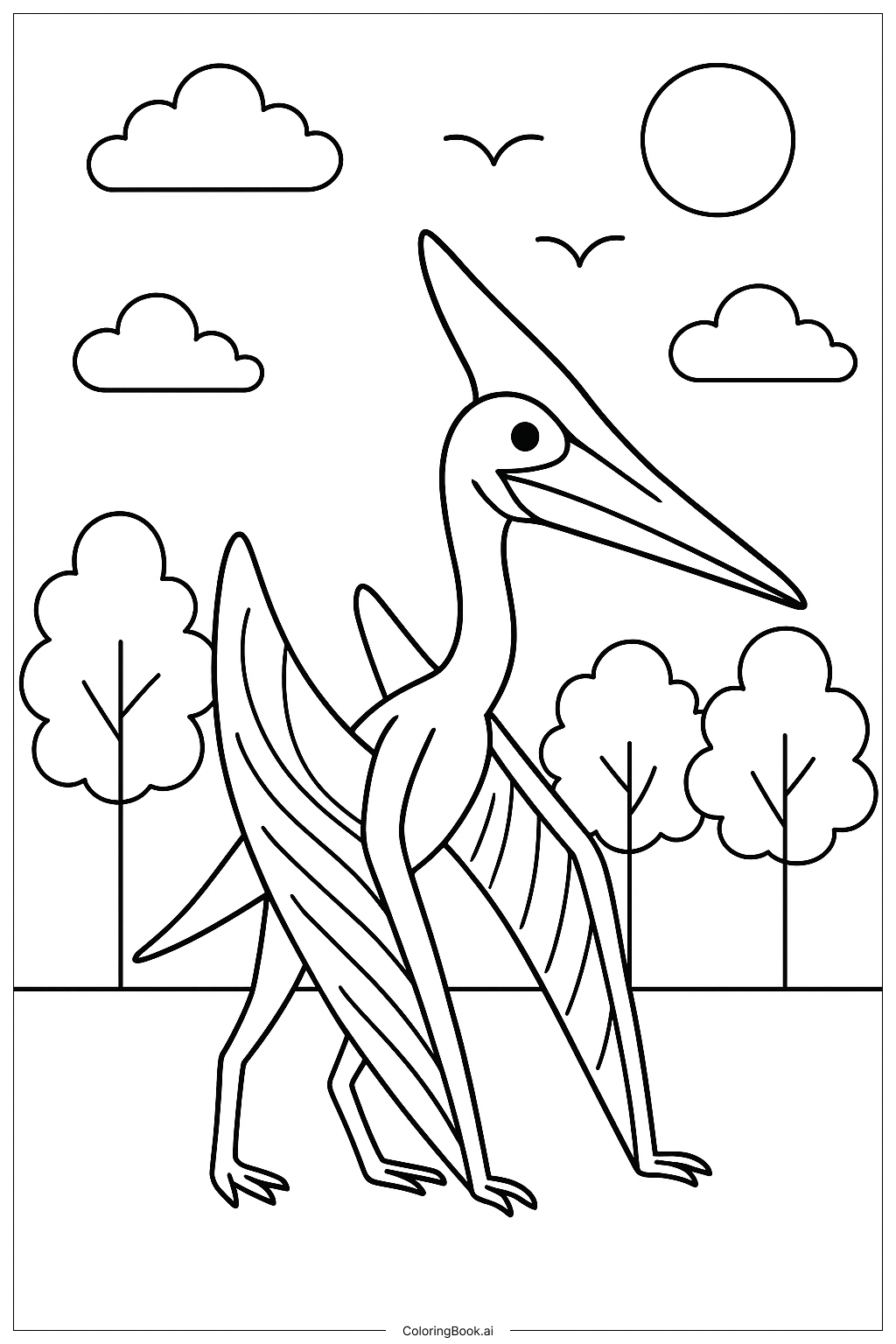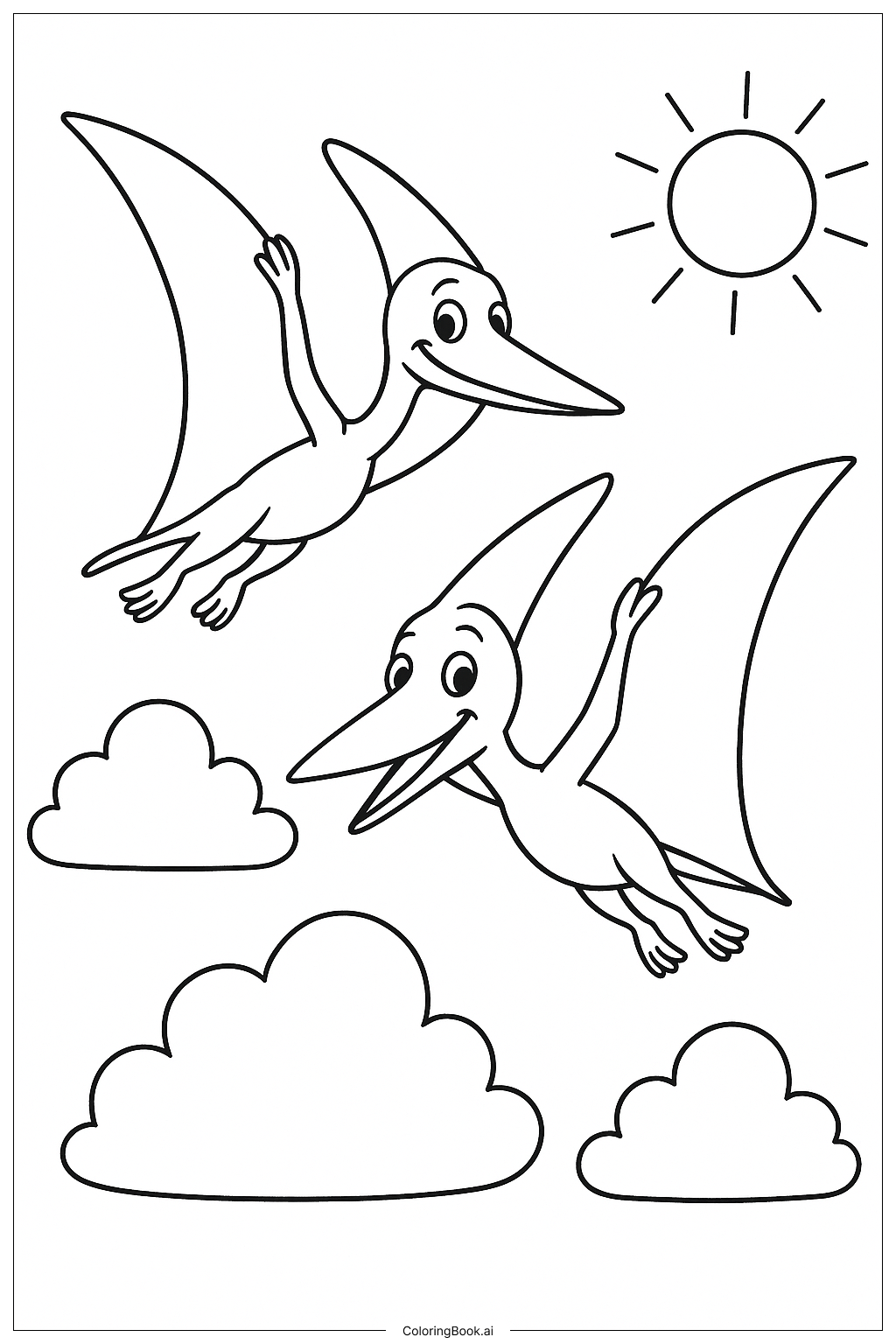
Coloring tips: How to color Quetzalcoatlus And A Spinosaurus At The Riverbank coloring page well?
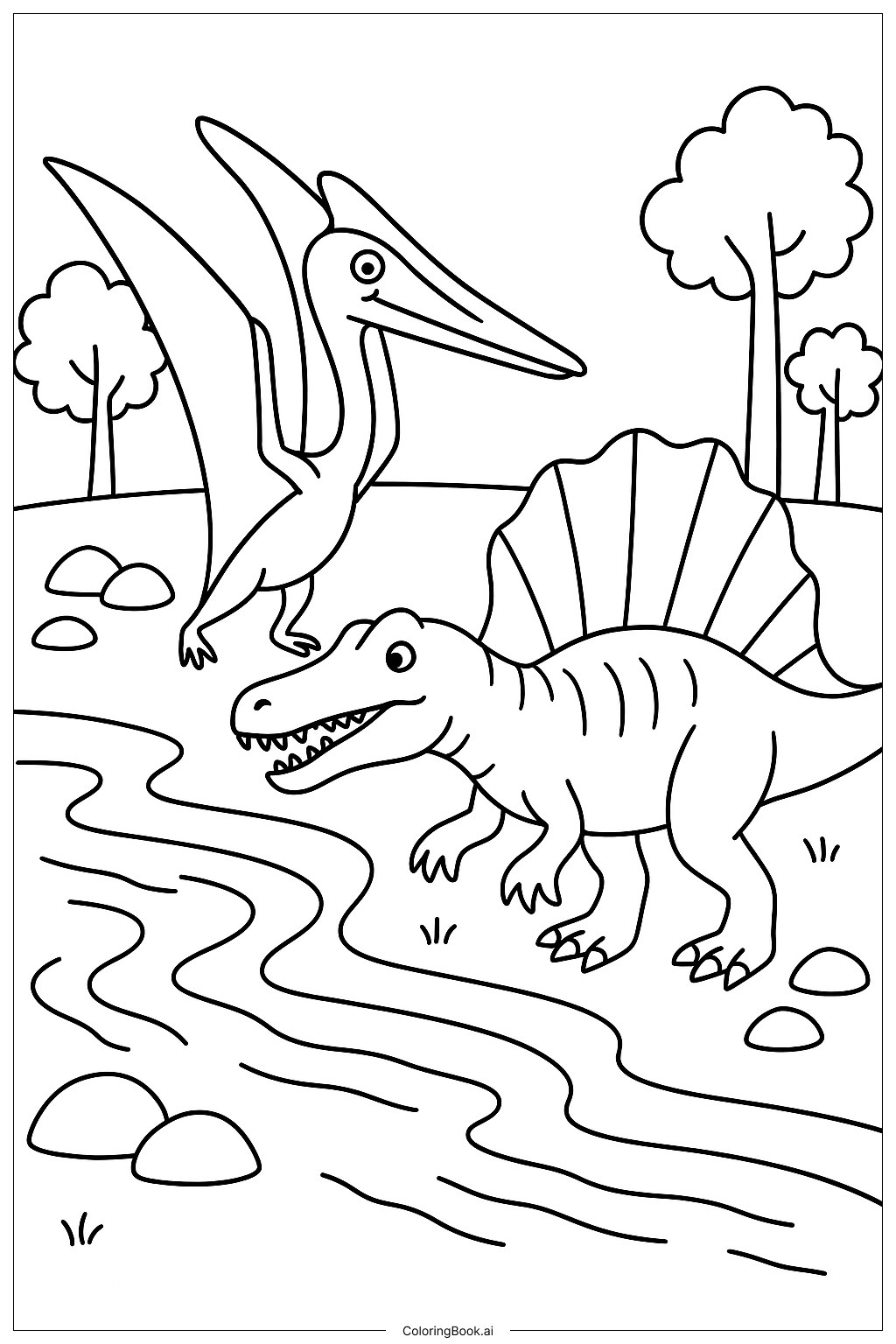
Start with the largest areas first. Color the Spinosaurus in earthy greens, deep browns, or olive tones. Its tall back sail can be a bold contrast color like orange or red with visible veins running through it. The Quetzalcoatlus can be done in warm tans, sandy yellows, or muted reds, with darker shading on the wing membranes to show depth. Use light blues and blue-greens for the river water. Add white highlights to show ripples and reflections. The riverbank rocks work well in grays and warm browns. Trees and ferns look great in various shades of green. Try using darker greens in shadowed areas and lighter greens where sunlight hits. Adding a warm yellow or orange sky in the background gives the whole scene a dramatic prehistoric glow. Don't be afraid to blend colors for a more realistic feel.
Coloring challenges: Which parts are difficult to color and need attention for Quetzalcoatlus And A Spinosaurus At The Riverbank coloring page?
• Spinosaurus Sail Detail: The tall, elaborate back sail of the Spinosaurus is one of the most complex areas. It contains multiple long bony spines connected by a membrane, and coloring each spine individually while keeping the membrane looking smooth and stretched takes patience. Choosing contrasting colors for the spines versus the membrane helps them stand out without looking flat.
• Quetzalcoatlus Wing Membrane: The huge wings of the Quetzalcoatlus cover a large area and require careful shading to avoid looking dull or uniform. The membrane should gradually darken toward the edges and along the supporting finger bones. Blending two or three tones of the same color family works best here.
• Water and Reflections: Coloring moving river water realistically is tricky. The surface needs light and dark ripple lines, and reflections of the creatures and the bank should be suggested with soft, blended strokes. Going too dark or too uniform makes the water look like solid ground.
• Overlapping Figures and Background: The two dinosaurs overlap with each other and with the background trees and rocks. Keeping each element visually separate requires smart color choices. Using lighter values for background elements and richer, more saturated colors for the main figures helps create a strong sense of depth.
• Fine Texture Details: Both creatures have rough, scaled skin textures throughout their bodies. Coloring these small repeated patterns without losing the overall form of the animals is a steady, careful task that requires a fine-tipped tool and good light control.
Benefits of coloring books: Advantages of drawing Quetzalcoatlus And A Spinosaurus At The Riverbank coloring page
Coloring this prehistoric scene offers a wide range of benefits for children and older kids alike. Working on two large, detailed dinosaurs at once encourages focus and patience, as each creature requires careful attention to stay within the lines and manage color choices across a complex image.
The variety of textures, from scaly skin and wing membranes to flowing water and dense foliage, gives young artists a chance to practice different coloring techniques in a single page. This builds real artistic skill and teaches kids how to use shading and color blending.
Choosing colors for animals that no longer exist sparks imagination and creativity. There are no wrong answers when it comes to prehistoric color palettes, which gives kids the freedom to express themselves confidently.
Learning about Quetzalcoatlus and Spinosaurus while coloring naturally grows curiosity about science, natural history, and the world of dinosaurs. It is an easy and enjoyable way to connect art with learning.
The calm, focused activity of coloring also helps reduce stress and improve hand-eye coordination. Finishing a detailed scene like this gives kids a strong sense of pride and accomplishment, boosting their confidence and motivation to keep creating.