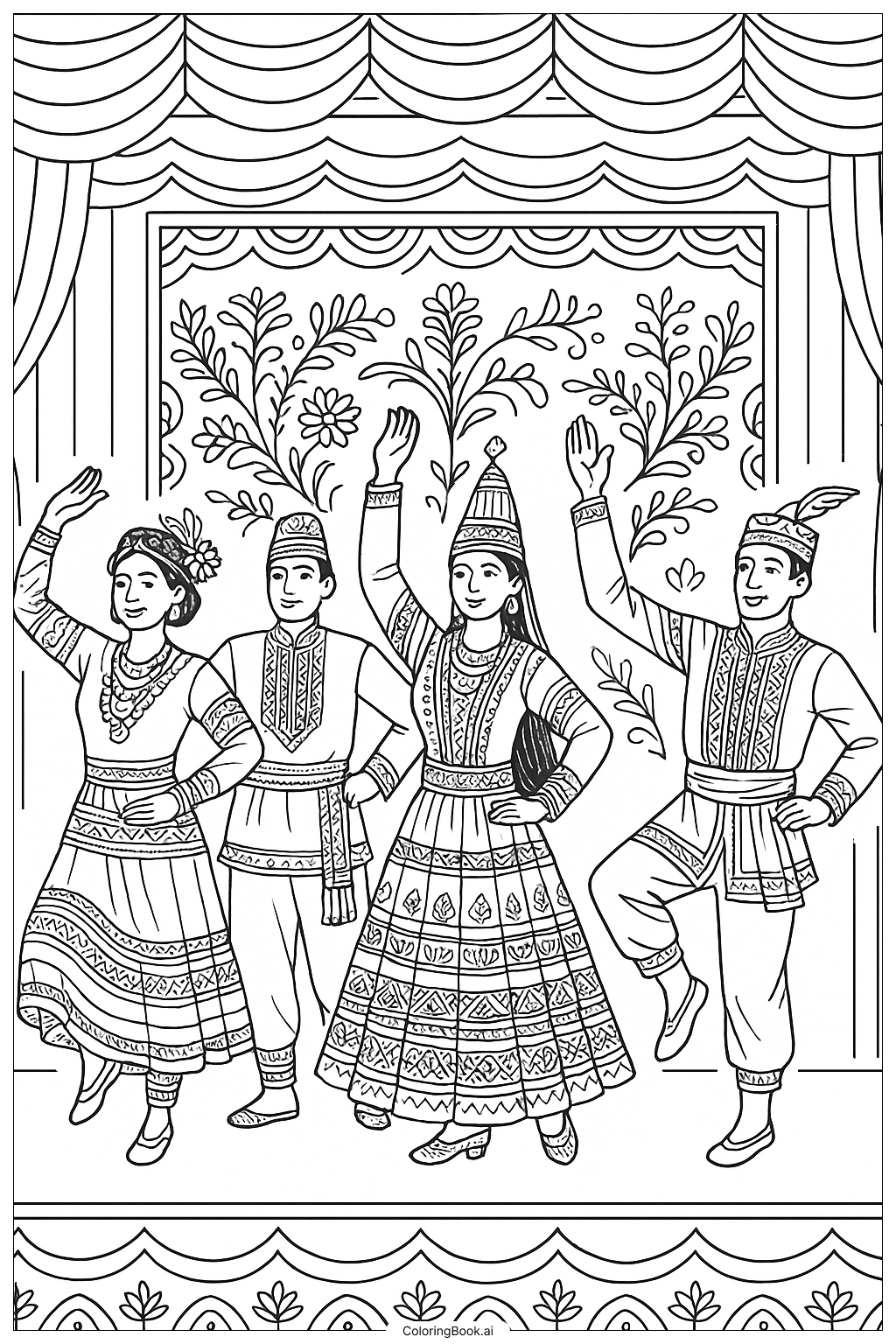
Coloring tips: How to color Traditional Cultural Dance Troupe coloring page well?
Start by coloring the costumes with bold, rich colors. Traditional dance outfits are often bright and festive, so try using reds, golds, blues, and greens. Use different shades of the same color to add depth to the flowing fabrics. Color the headpieces with metallic tones like gold or silver to make them stand out. For skin tones, choose warm shades and apply them gently. Use lighter colors for background details so the dancers remain the main focus. Don't be afraid to mix patterns on the costumes — stripes, dots, and floral designs can make each outfit look unique and special. Have fun making each dancer's costume a little different!
Coloring challenges: Which parts are difficult to color and need attention for Traditional Cultural Dance Troupe coloring page?
• Intricate Costume Details: The dancers' outfits feature many small decorative elements such as embroidery patterns, tassels, and layered fabrics. Coloring these tiny details requires a fine-tipped tool and a steady hand. It can be tricky to stay within the small sections without colors bleeding into each other. Take your time and work slowly on these areas.
• Overlapping Figures: Because this is a group scene, the dancers are positioned close together and their costumes overlap in several places. This makes it hard to tell where one outfit ends and another begins. Carefully study the outlines before choosing colors to make sure each dancer's costume looks distinct and separate from the others.
• Flowing Fabric and Movement Lines: The scarves, skirts, and sleeves of the costumes are drawn with many curved lines to show movement. Shading these flowing sections to give a sense of depth and motion can be challenging. Try using a lighter tone on one side and a darker tone on the other to create a realistic, three-dimensional look.
• Headpiece and Accessory Details: The decorative headpieces and accessories contain very small shapes and patterns. These areas are dense with detail and require precision coloring. Using thin markers or sharpened colored pencils will help you fill in these sections neatly without smudging surrounding areas.
• Background Balance: The background contains decorative elements that should complement but not overpower the dancers. Choosing colors that are softer or less saturated than the costumes will help keep the focus on the performers while still making the overall scene look complete and festive.
Benefits of coloring books: Advantages of drawing Traditional Cultural Dance Troupe coloring page
Coloring this Traditional Cultural Dance Troupe page offers a wonderful mix of fun and learning. As kids and Adults work through the detailed costumes and expressive poses, they develop fine motor skills and hand-eye coordination. Carefully coloring small patterns and intricate accessories helps build patience and focus — skills that are valuable both in and out of the classroom. This image also sparks curiosity about world cultures. Children who color the page may ask questions about where the dance comes from, what the costumes mean, and why people celebrate through dance. That natural curiosity opens the door to learning about history, geography, and traditions. For Boys and Girls alike, this page encourages creative decision-making. Choosing colors for each costume, mixing shades, and experimenting with patterns builds confidence and artistic expression. It also promotes a sense of pride and respect for cultural diversity. For Women and Men coloring alongside younger family members, this page makes for a meaningful shared activity. Working together on the details creates opportunities for conversation, storytelling, and connection. Overall, this coloring page is both an artistic challenge and a joyful celebration of culture, movement, and community.