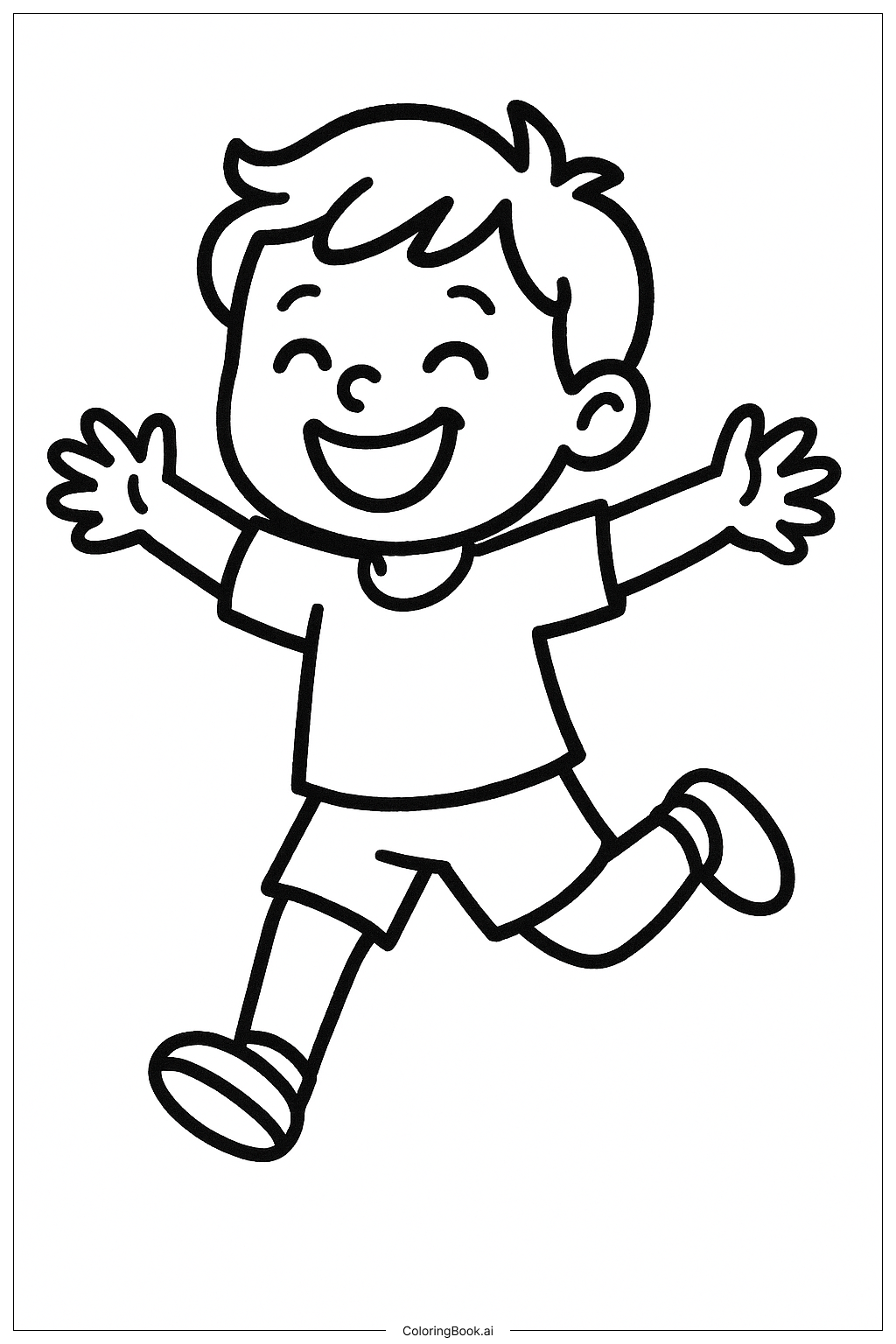
Coloring tips: How to color Jumping Dance coloring page well?
Start with the dancer's skin using a light peach or warm tan tone. For the outfit, choose bold and energetic colors — bright red, electric blue, or sunny yellow work great for the top and skirt or pants. Use a slightly darker shade of the same color along the edges to show the fabric folds and movement. Color the hair in a natural shade like brown or black, or go fun with gold or purple. The musical notes floating around can be filled in with contrasting colors like orange or teal to make them pop. Add soft pink or light purple to the cheeks and sparkles. For the background, use a warm gradient — yellow fading into orange — to give the feeling of stage lights. Keep the colors bright and cheerful to match the happy, lively energy of the jumping dancer.
Coloring challenges: Which parts are difficult to color and need attention for Jumping Dance coloring page?
• Capturing Movement in the Outfit: The dancer's clothing billows and flows as she jumps, creating curved folds and overlapping layers. Coloring these folds requires using light and shadow — a base color in the middle and darker shades along the creases. Without this shading, the outfit can look flat and lifeless, losing the sense of motion that makes the image so exciting.
• Hair in Motion: The hair streams upward and outward with the jump, creating many separate strands and curved shapes. It can be tricky to color each section consistently while still showing depth. Using two or three tones of the same color — light on top, darker underneath — helps the hair look full and natural rather than like a solid blob.
• Small Floating Details: The musical notes and sparkle shapes scattered around the figure are small and closely spaced. Staying within the lines on these tiny elements takes patience and a fine-tipped coloring tool. Choosing colors that contrast well with the background will help these details stand out clearly.
• The Figure's Dynamic Pose: The dancer's bent arms and legs create overlapping body parts — where the knee crosses in front of the other leg, or where the hand overlaps the torso. These overlapping areas need slightly different shades to separate the layers and keep each body part looking distinct.
• Background Balance: The background needs to feel lively without overpowering the dancer. Using a soft gradient or gentle radial glow effect with colored pencils or markers can be challenging. Too much color or too dark a shade will pull attention away from the jumping figure at the center.
Benefits of coloring books: Advantages of drawing Jumping Dance coloring page
Coloring this Jumping Dance page offers a wonderful mix of creative and personal benefits for kids and teens alike. Tracing the dancer's flowing outfit and dynamic pose helps build fine motor control and steady hand coordination — skills that carry over into writing and other detailed tasks. Choosing colors for the costume, hair, and glowing background encourages creative thinking and helps children develop a personal sense of style and color harmony. The joyful subject matter — a dancer frozen in a moment of pure happiness — naturally lifts the mood and makes the coloring experience feel fun and uplifting. Focusing on the small details, like the musical notes and sparkles, builds patience and concentration over time. For children who love music or dance, this page also deepens their emotional connection to the arts, making creativity feel personal and meaningful. Completing the image gives a satisfying sense of accomplishment, boosting confidence and encouraging kids to keep exploring their artistic side.