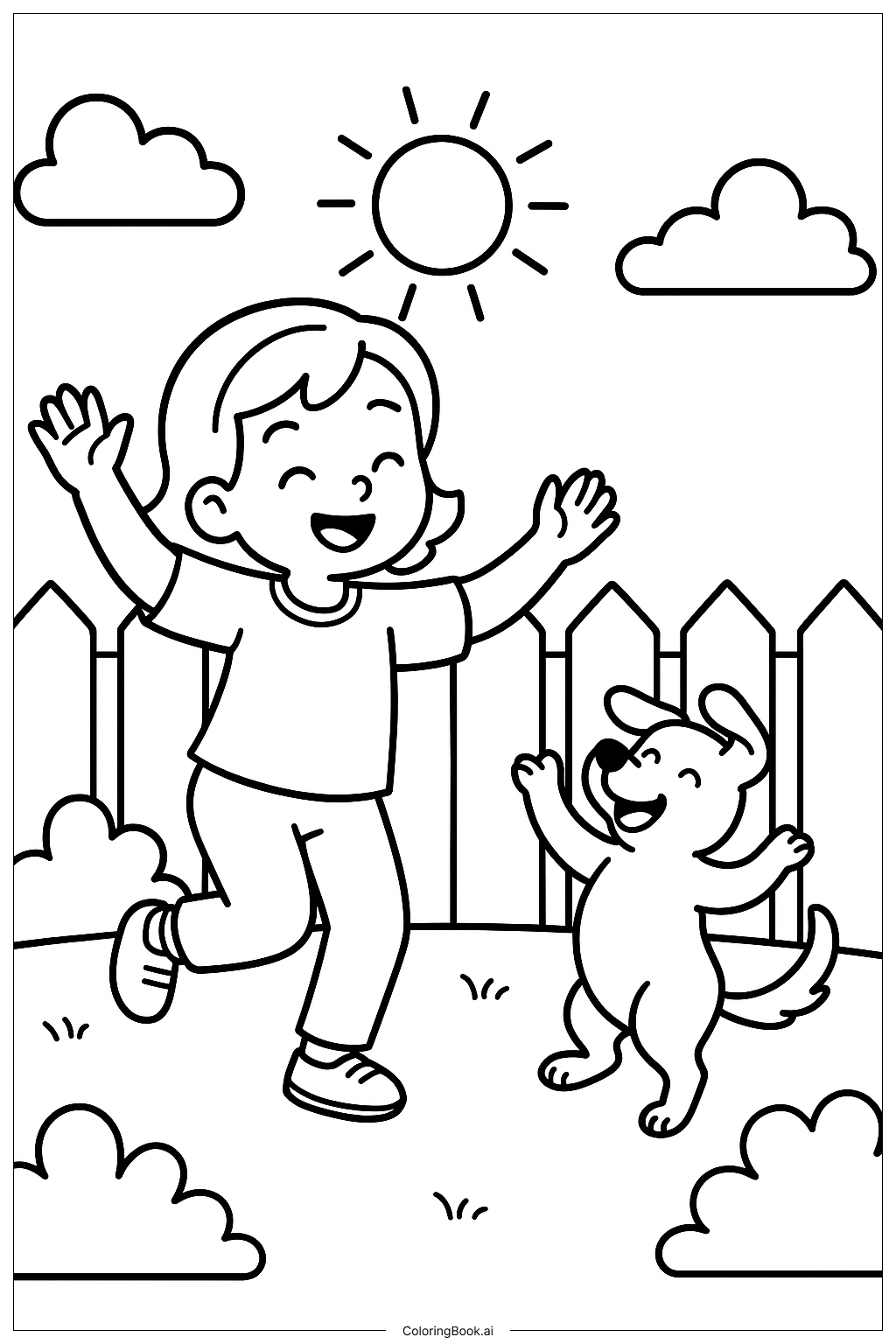
Coloring tips: How to color Dance With Pets coloring page well?
Start with the lightest colors first and work your way to darker shades. Use bright, cheerful colors like yellow, orange, and sky blue for the child's outfit to show energy and fun. For the dog, try warm shades like golden brown or tan, and give the cat soft gray or cream tones. Use pink or purple for the musical notes floating in the air to make them pop. Add light blue or lavender to the background swirls to keep the scene feeling dreamy and light. Use red or bright orange for the child's shoes to draw attention to the dancing feet. Don't be afraid to use your favorite colors — this is your artwork! Blend colors gently where shapes meet for a smooth, polished look. Try adding a little extra shine or sparkle to the stars in the background using yellow or gold.
Coloring challenges: Which parts are difficult to color and need attention for Dance With Pets coloring page?
• Small Musical Notes and Details: The musical notes and decorative swirls floating around the scene are quite small and closely spaced. Staying within these tiny shapes without smudging neighboring areas requires a fine-tipped coloring tool. Young colorists may find it helpful to use a sharp colored pencil or a thin-tip marker for these sections before filling in larger areas around them.
• Animal Fur Texture: Creating a realistic or appealing look for the dog and cat requires layering colors carefully. The dog's fur may involve blending golden, brown, and cream tones, while the cat's coat could need soft transitions between gray and white. Flat single colors can work too, but layering adds depth and makes the animals feel lively and three-dimensional.
• Overlapping Figures: The child and the pets share overlapping spaces in the composition. Where the dog leaps close to the dancer or the cat's tail curves near a foot, it can be tricky to keep each figure's colors clean and separate. Planning your color choices in advance so that adjacent figures contrast well will help each character stand out clearly.
• The Child's Outfit Patterns: If the child's clothing includes stripes, spots, or other decorative patterns, coloring each section evenly and consistently takes patience. Using smooth, even strokes and following the direction of each shape will produce a cleaner result.
• Background Balance: The stars and swirling background elements need to feel festive without overpowering the main characters. Choosing softer or lighter shades for the background, compared to the brighter tones used on the figures, will help the dancers remain the clear focal point of the whole image.
Benefits of coloring books: Advantages of drawing Dance With Pets coloring page
Coloring this Dance With Pets page offers a wonderful mix of creative and developmental benefits for kids. Filling in the dancing figures and lively animals helps children practice fine motor skills and hand-eye coordination as they carefully follow the lines and shapes. Choosing colors for the outfits, fur, and background encourages creative thinking and personal expression — there are no wrong answers here. The joyful theme of dancing with pets also sparks imagination, inviting children to think about movement, music, and the bond between people and animals. For younger kids, working through each section builds focus and patience in a fun, low-pressure setting. For older children, the layering and blending challenges offer a satisfying artistic workout. Coloring can also be a calming activity, helping kids unwind and reduce stress. Sharing the finished page with family or friends builds pride and confidence. Whether done solo or as a group activity, this page turns a simple coloring session into a moment of creative play and emotional expression.