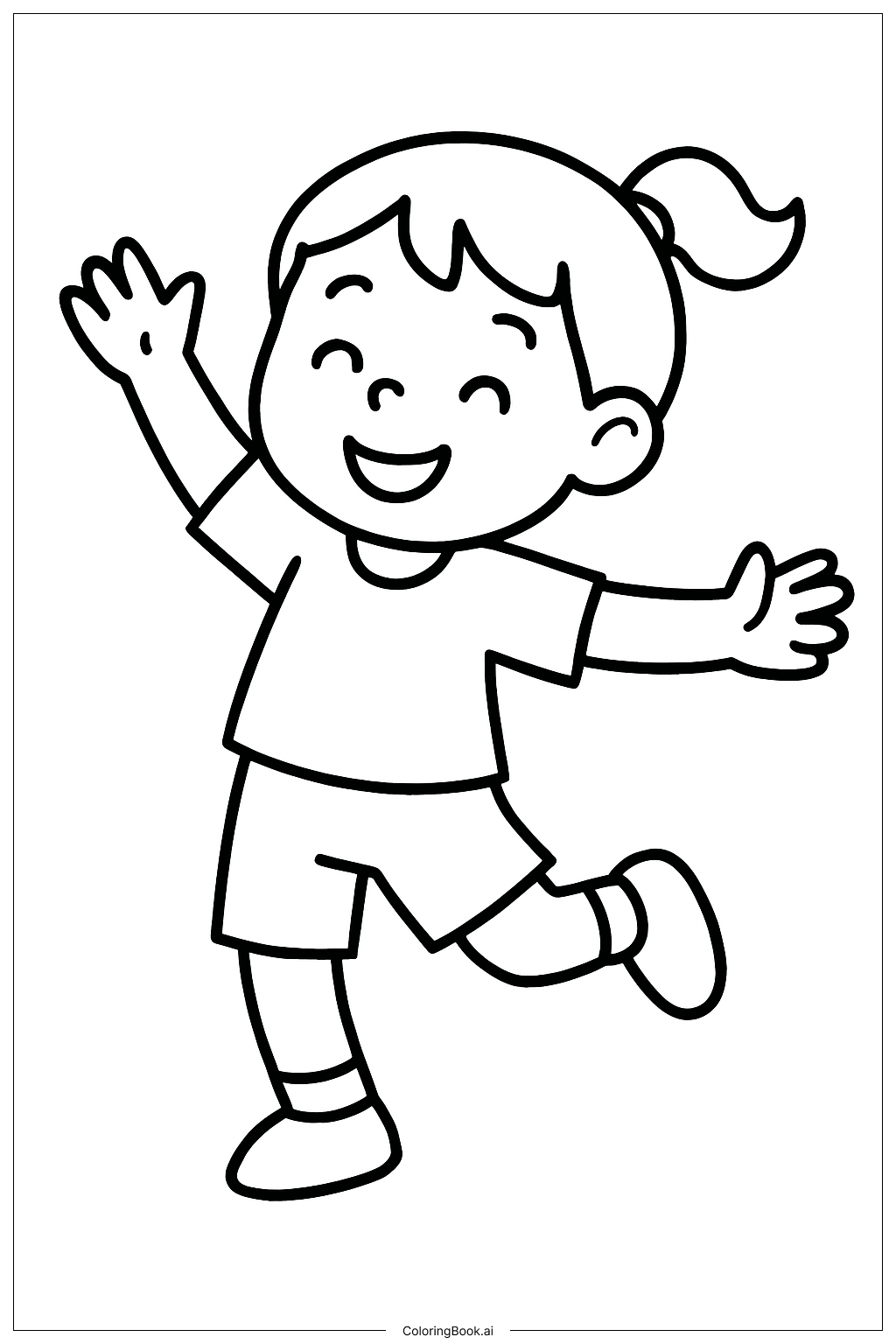
Coloring tips: How to color Dance In Park coloring page well?
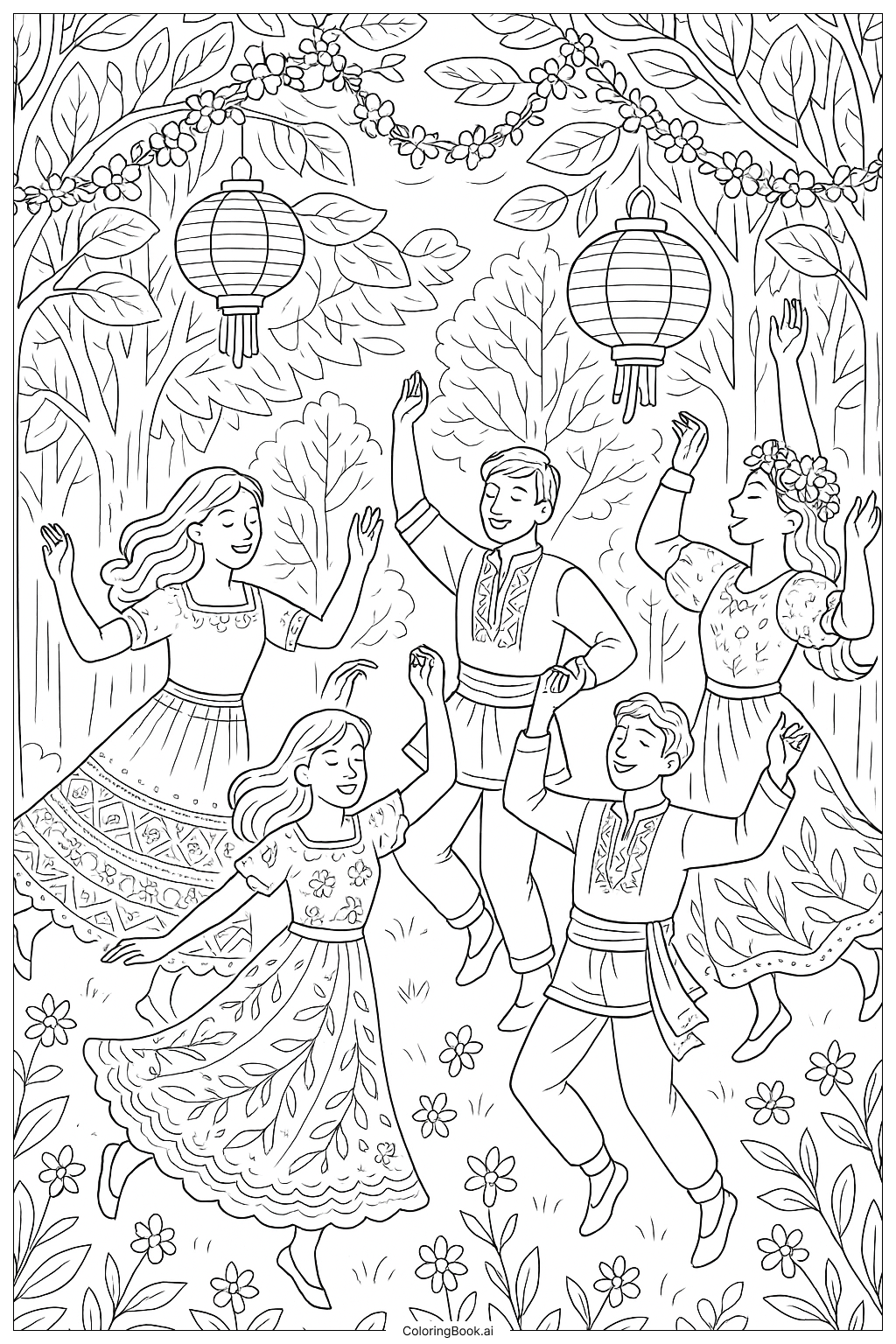
Start with the dancers' skin tones using light peach or warm brown shades. Use bright, cheerful colors for their clothing — think reds, yellows, blues, and purples to capture the energy of dance. Let skirts and scarves flow with gradient colors like pink to orange or light blue to purple. For the park background, use fresh greens for the grass and trees, and a soft sky blue for any visible sky. Add pops of color with flowers in the grass using pink, yellow, and orange. Keep the tree trunks in warm browns. Use lighter shades in the center to draw attention to the dancers, and slightly darker tones toward the edges to create depth. Have fun mixing colors freely — this is a celebration scene, so bold and lively choices work great!
Coloring challenges: Which parts are difficult to color and need attention for Dance In Park coloring page?
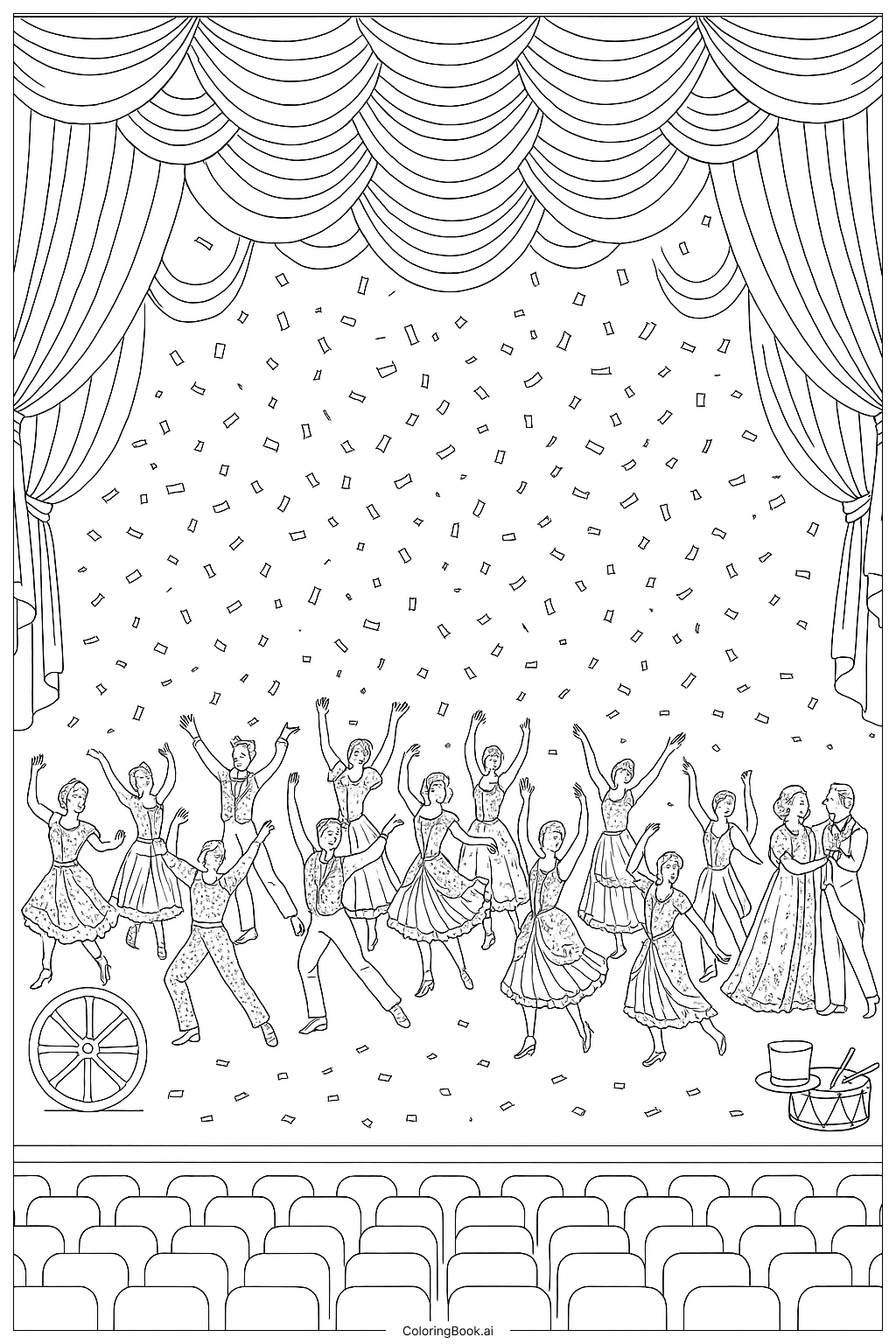
• Flowing Fabric and Clothing Folds: The dancers' outfits contain many curved folds, ruffles, and flowing sections that move with the body. Coloring these realistically requires using lighter and darker shades of the same color to show depth and movement. Children may find it tricky to stay within the small, curved sections without smudging or going outside the lines.
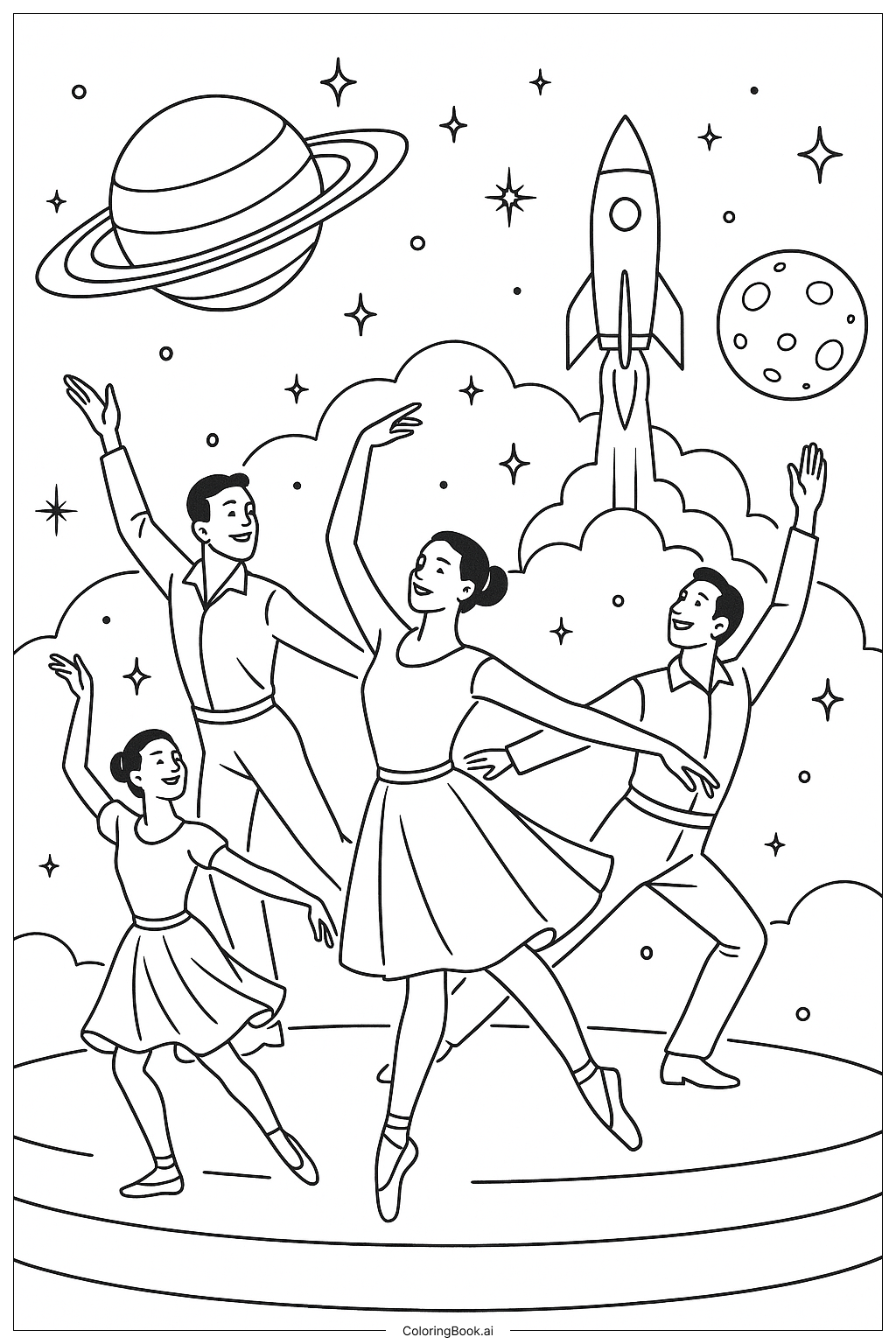
• Overlapping Figures and Limbs: Because multiple dancers appear in motion, their arms, legs, and bodies often overlap each other. This creates areas where two different color zones meet closely together. Care must be taken to use contrasting colors in adjacent areas so the figures remain clearly separated and easy to read.
• Background Natural Details: The park setting includes trees, leaves, grass blades, and possibly flowers. These small and detailed elements require patience and precision, especially when using colored pencils or fine-tip markers. Blending greens of different shades will help the background feel lush and layered rather than flat.
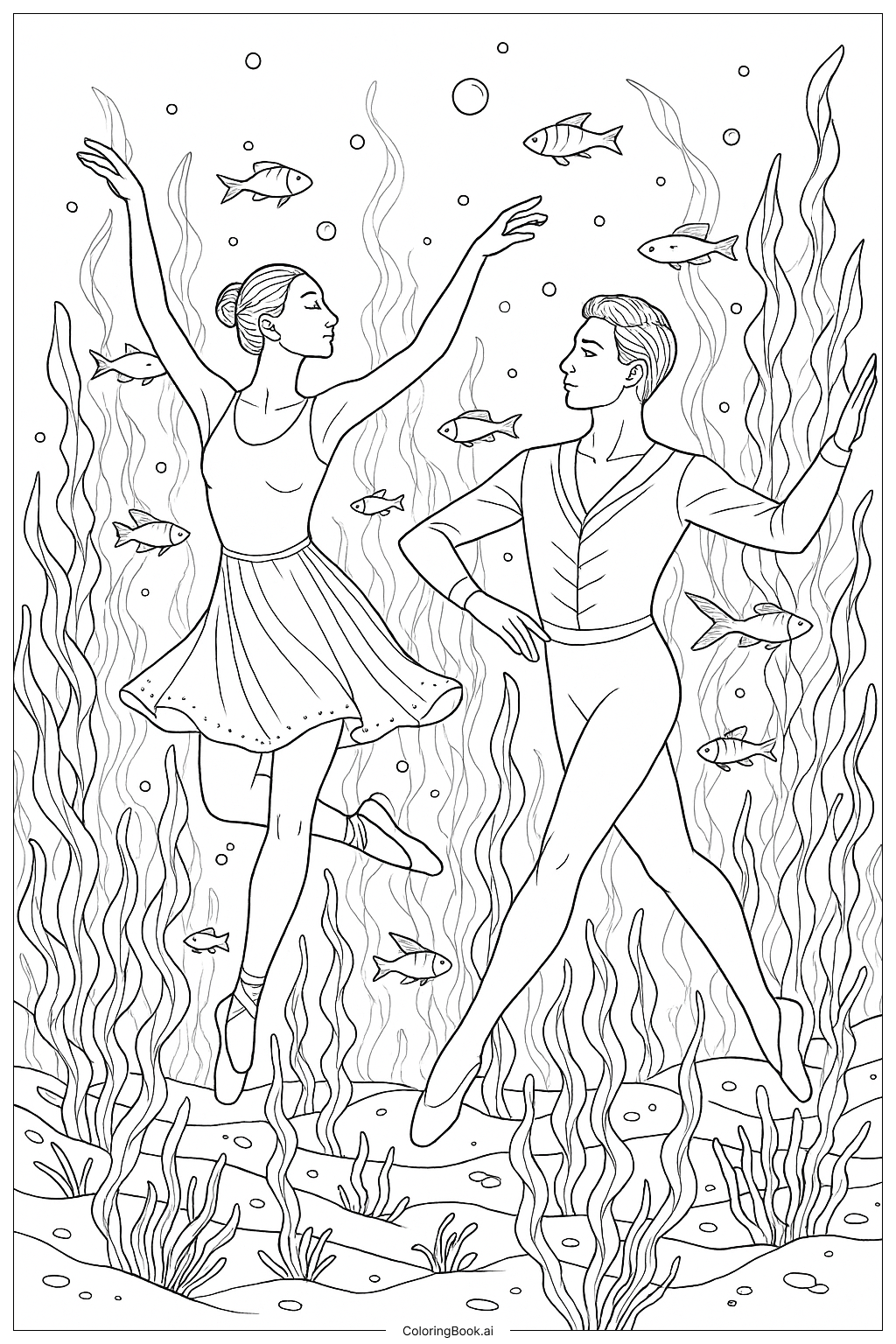
• Body Proportions and Skin Tones: The human figures in dance poses have stretched, angled, and dynamic proportions. Choosing consistent and natural-looking skin tones across multiple figures, while keeping each dancer visually distinct, can be a challenge for younger colorists.
• Creating a Sense of Movement: Dance is all about energy and motion. Conveying that through color choices — such as using warm, bright tones on active areas and cooler shades in resting spots — takes creative thinking and adds an extra layer of challenge to the coloring process.
Benefits of coloring books: Advantages of drawing Dance In Park coloring page
Coloring this Dance In Park scene offers wonderful benefits for kids and adults alike. The dynamic poses and flowing forms encourage careful observation skills as colorists study how bodies move and how fabric drapes and flows. This helps develop attention to detail and visual thinking.
Choosing colors for costumes, skin tones, and nature backgrounds sparks creativity and personal expression. There is no single right answer, so colorists feel free to experiment and develop their own artistic style.
The fine details in the clothing folds, grass, and tree textures make this a great exercise for building hand control and fine motor skills. Staying within curved and irregular lines strengthens pencil grip and precision — skills that support writing and drawing development.
For younger children, this scene introduces the joy of movement, nature, and community in a visual and engaging way. It can inspire conversations about dance, outdoor activities, and expression through the body.
For older kids and adults, the complexity of the scene provides a calming and focused activity. Coloring is known to reduce stress and promote mindfulness. Spending time on a detailed image like this encourages patience, concentration, and a satisfying sense of accomplishment when the page is complete.