Coloring tips: How to color Classical Ballet Dance Scene coloring page well?
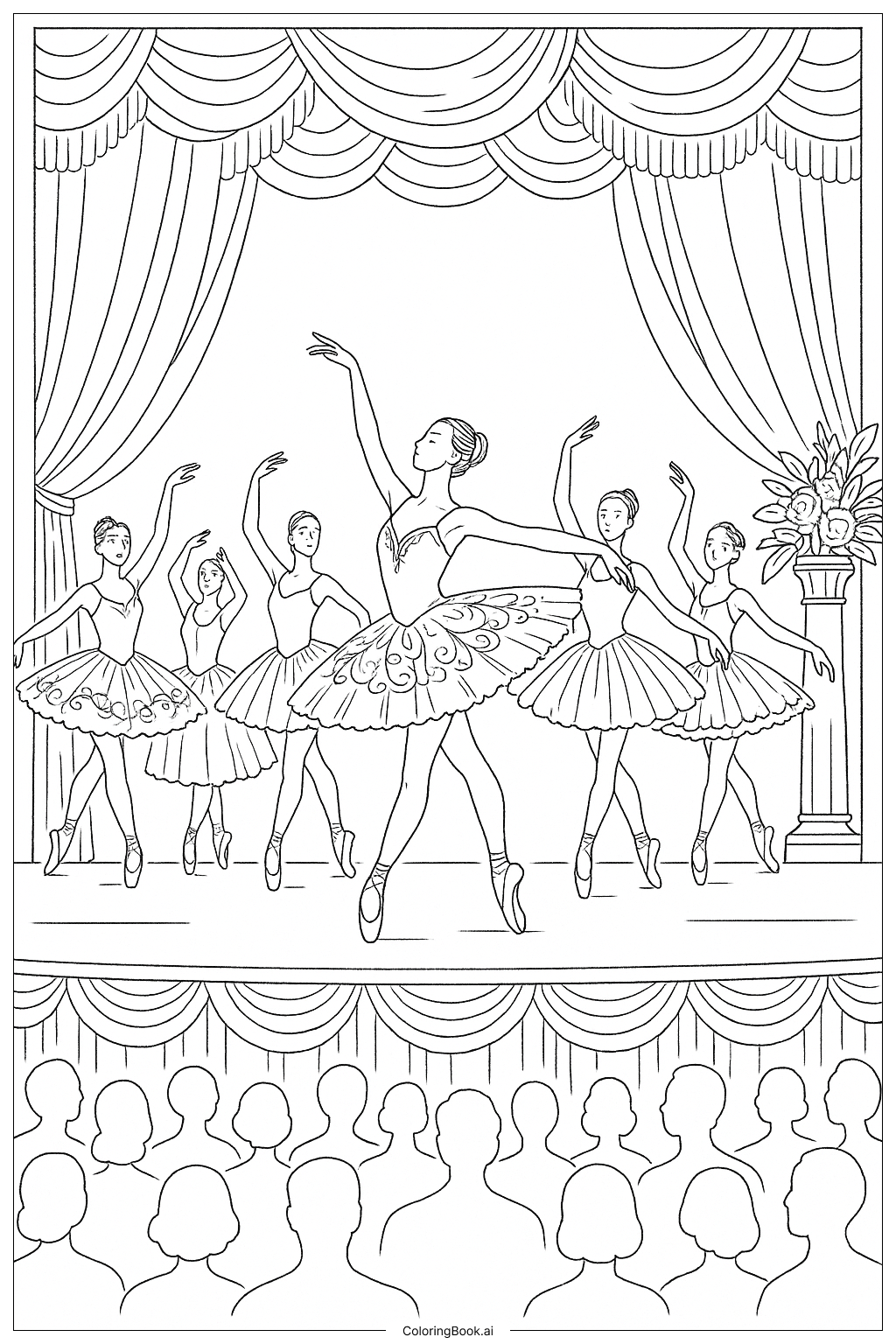
Start with the ballerina's tutu using soft pastel shades like pale pink, lavender, or light blue to give it an airy, dreamy look. Use a slightly darker tone for the folds and layers to create depth. For the male dancer's costume, classic white or deep navy works well. Color the skin tones with warm, natural shades, and use a light peach or rose for the cheeks. The pointe shoes look best in pale pink or soft cream. For the stage background and curtains, try deep burgundy, royal blue, or golden velvet tones to create a grand theater atmosphere. Add warm yellow or amber hues to suggest stage lighting from above. Use light gray or gold for the floor details. Take your time with small areas like ribbon laces and decorative trim — fine-tipped colored pencils work great here. Feel free to mix and blend colors for a more realistic, polished result.
Coloring challenges: Which parts are difficult to color and need attention for Classical Ballet Dance Scene coloring page?
• Tutu Layers and Folds: The ballerina's tutu has multiple overlapping layers of fabric. Coloring each layer with slightly different shades of the same color helps show depth and dimension. This requires patience and careful blending, especially where layers overlap or create shadows.
• Facial Features and Expressions: The dancers' faces are small but detailed. Coloring the eyes, lips, and subtle facial expressions takes a steady hand and fine-tipped tools. Using the wrong shade can make the faces look flat or unnatural, so choosing soft, realistic skin tones is important.
• Pointe Shoes and Ribbon Laces: The pointe shoes feature delicate ribbon laces that wrap around the ankles. These thin, curving lines are easy to color outside of, making them one of the trickiest parts of the image. Light pink or satin-effect shading works well, but staying within the lines requires focus.
• Stage Background and Curtains: The curtain folds and stage floor patterns have complex curves and repeating shapes. Creating a sense of depth and dramatic lighting in the background — while keeping it from overpowering the dancers — is a balance that takes planning. Try using darker tones at the edges and lighter tones toward the center.
• Costume Details and Trim: Bodice stitching, decorative edging, and fitted costume details are small and closely spaced. These fine details reward careful coloring but can be frustrating for younger artists. Using colored pencils rather than markers gives better control in tight spaces.
Benefits of coloring books: Advantages of drawing Classical Ballet Dance Scene coloring page
Coloring this classical ballet scene offers a wonderful mix of creative and educational benefits for children and adults alike. Working through the detailed tutu layers and costume elements builds fine motor skills and strengthens hand-eye coordination. Choosing color palettes for the stage, costumes, and lighting encourages creative thinking and artistic decision-making. For younger children, staying within the delicate lines of ribbon laces and facial features develops patience and focus — skills that carry over into school and everyday tasks. Older children and teens can explore more advanced techniques like shading and blending to bring the scene to life. The ballet theme also sparks curiosity about dance, music, and performing arts, making it a great conversation starter between kids and parents or teachers. For adults, the repetitive, mindful coloring process is a calming activity that helps reduce stress and quiet a busy mind. Completing a detailed scene like this also gives a real sense of accomplishment. Whether you are a beginner or experienced colorist, this page offers a joyful and enriching creative experience.