Coloring tips: How to color Cut Bandage coloring page well?
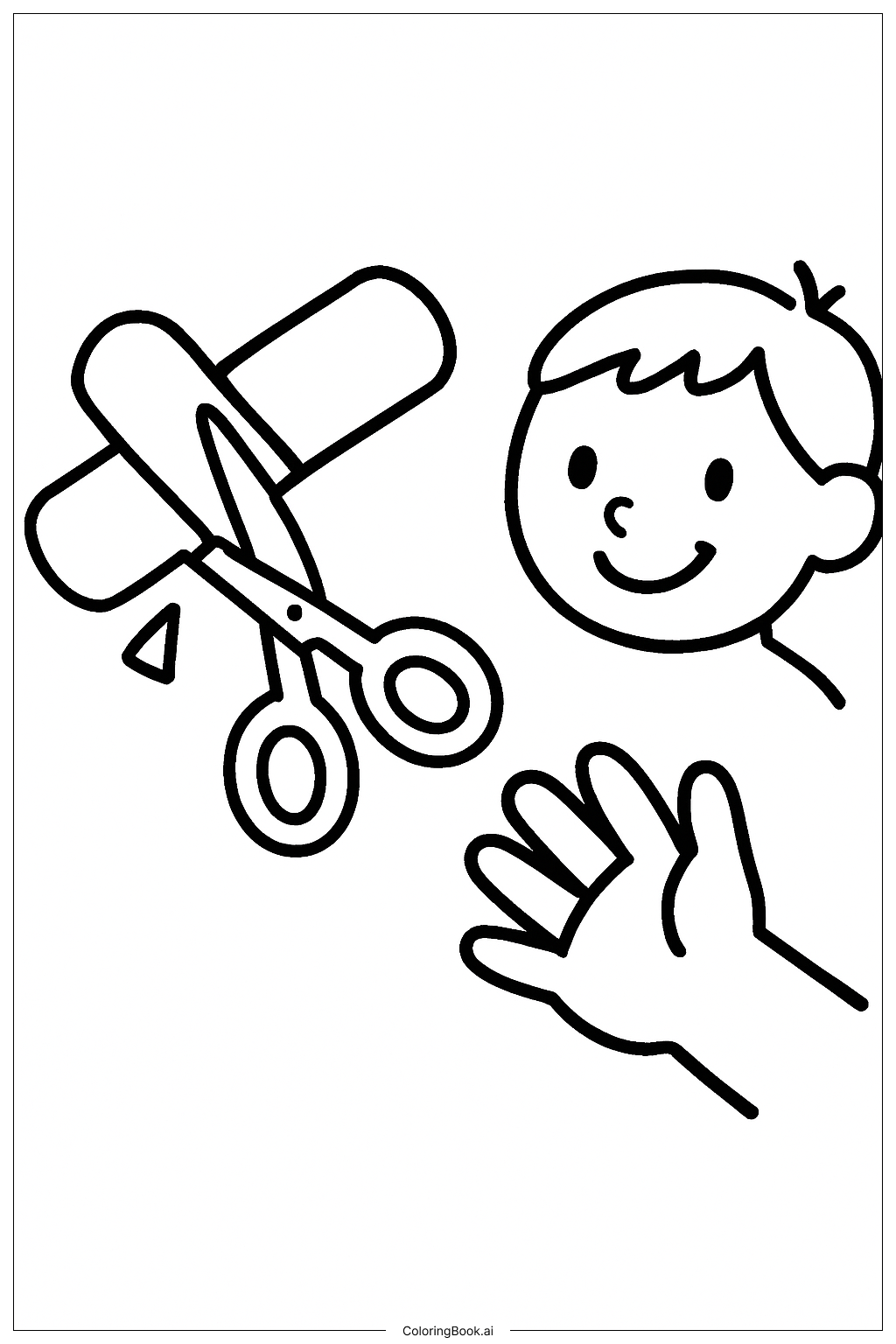
Use soft and bright colors to make the picture look friendly and comforting. For the child’s skin, use warm tones like light pink or peach. Color the hair with natural tones such as brown, black, or blonde. The bandage can be colored light beige, yellow, or even light blue to show it is clean and safe. Use metallic gray or silver for the scissors to make them look real. The background can be left white or given a soft pastel color to keep the focus on the main objects. Avoid dark colors so the picture stays cheerful and easy to see.
Coloring challenges: Which parts are difficult to color and need attention for Cut Bandage coloring page?
1. Coloring the small parts of the scissors, like the handles, may require careful attention to stay within the lines. 2. The bandage shape has smooth edges but needs even coloring so it does not look patchy. 3. The hand and face have smaller details such as fingers and facial features that need precise coloring. 4. Keeping the colors bright and soft without over-darkening can be a challenge. 5. Balancing the colors between the child, scissors, and bandage so the picture looks harmonious might need some thought.
Benefits of coloring books: Advantages of drawing Cut Bandage coloring page
Coloring this page helps children learn about care and kindness through the concept of bandages and healing. It improves fine motor skills as they carefully color small shapes like fingers and scissors. Coloring the smiling child encourages positive emotions and creativity. This activity also teaches children how to use colors to show different textures, like the shininess of scissors or softness of a bandage. Overall, it is a fun and educational way to develop focus and imagination.