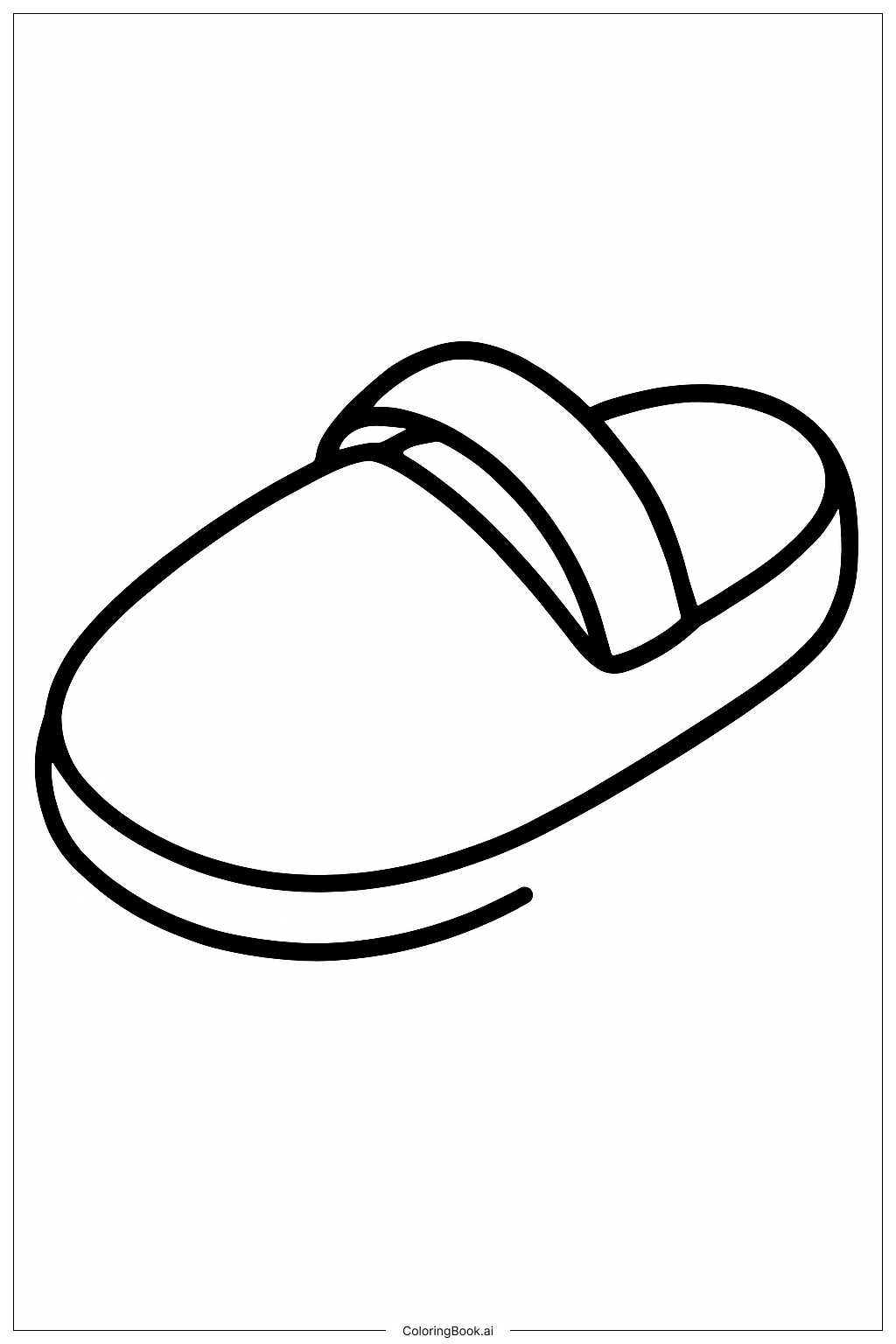
Coloring tips: How to color A Single Cozy Slipper coloring page well?
For this cozy slipper, consider using warm, inviting colors that reflect comfort. Soft pastels like baby pink, lavender, or powder blue create a gentle, relaxing feel. For a more vibrant look, try bright coral, sunny yellow, or mint green. The fuzzy collar area works beautifully with lighter shades to show its soft texture. Add darker tones along the stitching lines to create depth and dimension. The sole can be colored in brown, gray, or beige for a realistic touch. Consider using colored pencils to create soft shading that mimics the fluffy material. Blend colors gently to show the plush texture. The decorative element on top can be a contrasting color to make it pop. Try adding small dots or patterns inside the slipper for extra detail and personality.
Coloring challenges: Which parts are difficult to color and need attention for A Single Cozy Slipper coloring page?
• Texture Representation: The biggest challenge is capturing the soft, fuzzy texture of the slipper material. Young colorists may struggle to show the difference between the plush upper fabric and the firmer sole. Creating this distinction requires layering colors and using lighter pressure for softer areas while applying firmer strokes for denser materials. Understanding how to make flat areas appear three-dimensional through shading takes practice and patience.
• Stitching Details: The decorative stitching lines running along the edges require precision and a steady hand. These thin lines need careful coloring to avoid going outside the boundaries. Children may find it challenging to maintain consistent color within these narrow spaces. Deciding whether to color the stitching differently from the main fabric or keep it uniform adds another layer of decision-making that can be overwhelming for younger artists.
• Shading and Depth: Creating realistic shadows and highlights to make the slipper appear rounded and three-dimensional is complex. The curved surfaces require gradual color transitions from light to dark. Understanding where light would naturally hit the slipper and where shadows would form requires spatial awareness. Blending colors smoothly without harsh lines or patches demands good motor control and technique.
• Pattern Consistency: If adding decorative patterns to the slipper, maintaining consistency across the curved surface presents a challenge. Patterns need to follow the contours of the slipper shape, which means they should appear to wrap around the form rather than lying flat. This requires understanding perspective and how patterns distort on rounded objects.
Benefits of coloring books: Advantages of drawing A Single Cozy Slipper coloring page
Coloring this cozy slipper offers wonderful benefits for young artists. It helps develop fine motor skills through careful coloring within detailed areas like stitching and decorative elements. The simple yet engaging subject builds confidence, as children can easily complete it and feel proud of their work. The slipper theme connects to everyday life, helping kids appreciate ordinary objects as art subjects. Working with curved lines and rounded shapes improves hand-eye coordination and spatial awareness. Choosing colors for different textures encourages creative thinking and decision-making skills. The calming subject matter of a cozy slipper creates a relaxing coloring experience that reduces stress and promotes mindfulness. Children learn about texture representation and how to show softness through color choices. This coloring page also sparks conversations about comfort, home, and self-care, building emotional awareness while having creative fun.