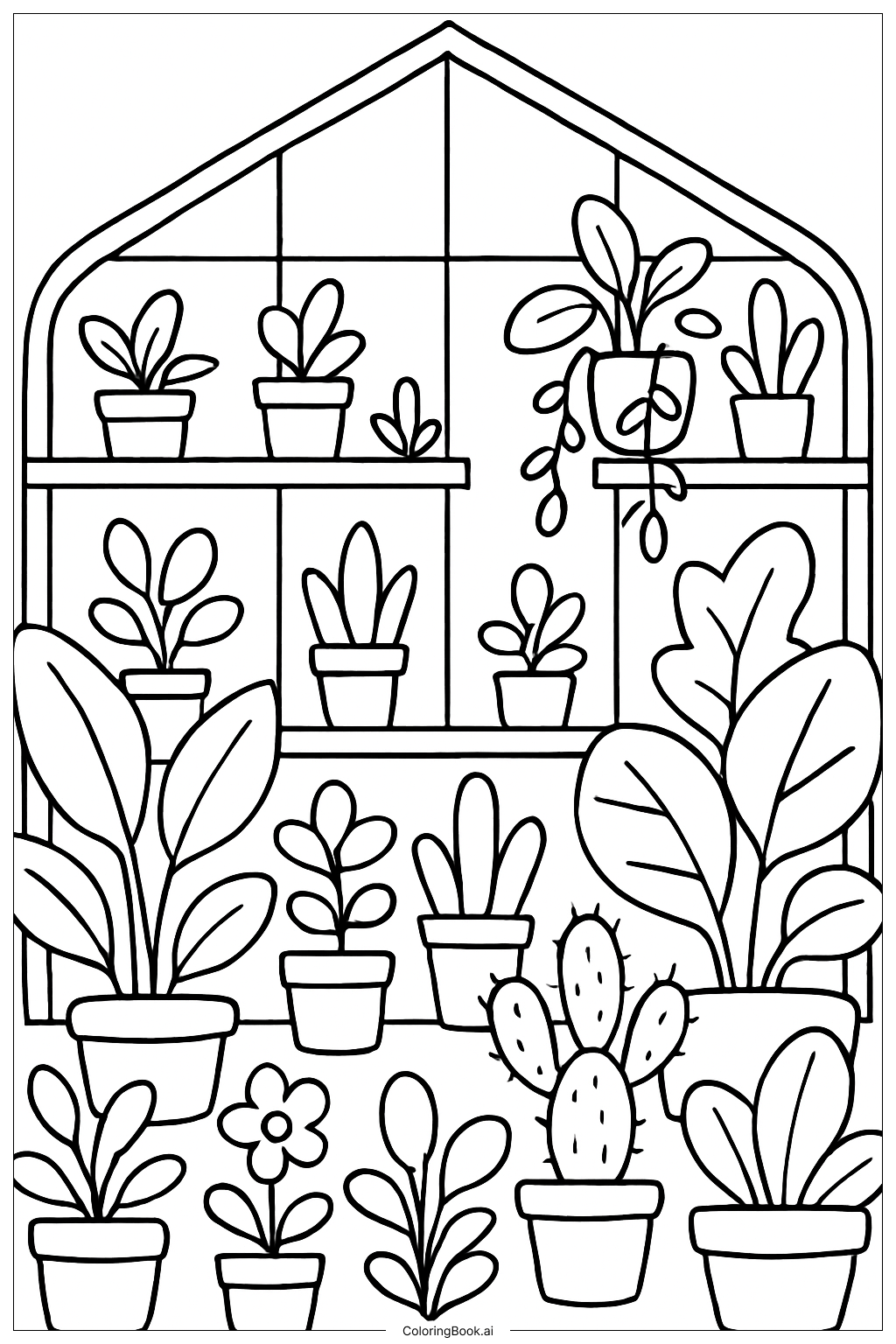
Coloring tips: How to color A Cozy Greenhouse Full Of Plants coloring page well?
Start with the large background elements like the shelves and glass walls. Use light browns and tans for the wooden structures. For the plants, explore a wide range of greens — lime, olive, forest, and mint — to make each plant feel unique. Add pops of color with flowers in red, pink, yellow, or purple. Use warm terracotta or earthy clay tones for the pots. The watering can could be a cheerful blue or shiny silver. For the glass windows, try a soft pale blue or leave them lightly shaded to suggest light streaming in. The wooden bench looks great in honey brown or warm chestnut. Try to vary the shades of green across neighboring plants so they stand apart from each other. Adding a gentle yellow glow near the windows can give the whole scene a sunny, warm feel. Take your time with each leaf and petal — this scene rewards patience and creativity.
Coloring challenges: Which parts are difficult to color and need attention for A Cozy Greenhouse Full Of Plants coloring page?
• Plant Variety and Leaf Shapes: The greenhouse contains many different types of plants, each with their own unique leaf shapes and textures. Coloring each plant to look distinct from its neighbor requires careful color selection and the ability to vary shades of green across a crowded scene. Beginners may find it tricky to keep adjacent plants from blending together visually.
• Small Pots and Containers: The shelves are filled with rows of small pots and planters. These tiny spaces are difficult to color neatly, especially along the rims and edges where pot meets soil or stem. Staying inside the lines on small, closely spaced objects demands steady hands and a fine-tipped coloring tool.
• Hanging Vines and Trailing Stems: The hanging baskets and trailing vines create overlapping lines and curves that weave through the image. Following each vine without accidentally coloring over a neighboring element takes focus and patience. It can be easy to lose track of which line belongs to which plant.
• Wooden Textures and Surfaces: The shelves, bench, and other wooden elements benefit from a sense of wood grain or layered shading to look realistic. Achieving that natural texture with pencils or markers can be challenging, especially for younger colorists who are still developing blending techniques.
• Light and Atmosphere: The greenhouse has a warm, light-filled mood suggested by the arched glass windows. Capturing that soft glow — without overcoloring the light areas — requires a gentle touch and an understanding of how to use light and shadow to create depth across the whole scene.
Benefits of coloring books: Advantages of drawing A Cozy Greenhouse Full Of Plants coloring page
Coloring this cozy greenhouse scene offers a wonderful range of benefits for kids and adults alike. Working through all the plants and details encourages focus and concentration, helping to build attention span in a fun and relaxed way. The wide variety of plant shapes gives colorists plenty of practice with different stroke directions and shading techniques, making it a great learning experience for beginners and more experienced colorists too. Choosing colors for so many different plants sparks creativity and imagination — there is no single right answer, which builds confidence and self-expression. The peaceful, nature-filled setting has a naturally calming effect. Spending time with this image can help reduce stress and quiet a busy mind, making it a great activity after school or at the end of a long day. For younger children, carefully coloring small pots and fine leaf details helps develop fine motor skills and hand-eye coordination. For older kids and adults, the complexity of the scene provides a satisfying creative challenge. Overall, this greenhouse coloring page is a joyful way to connect with the beauty of nature while building useful skills through art.