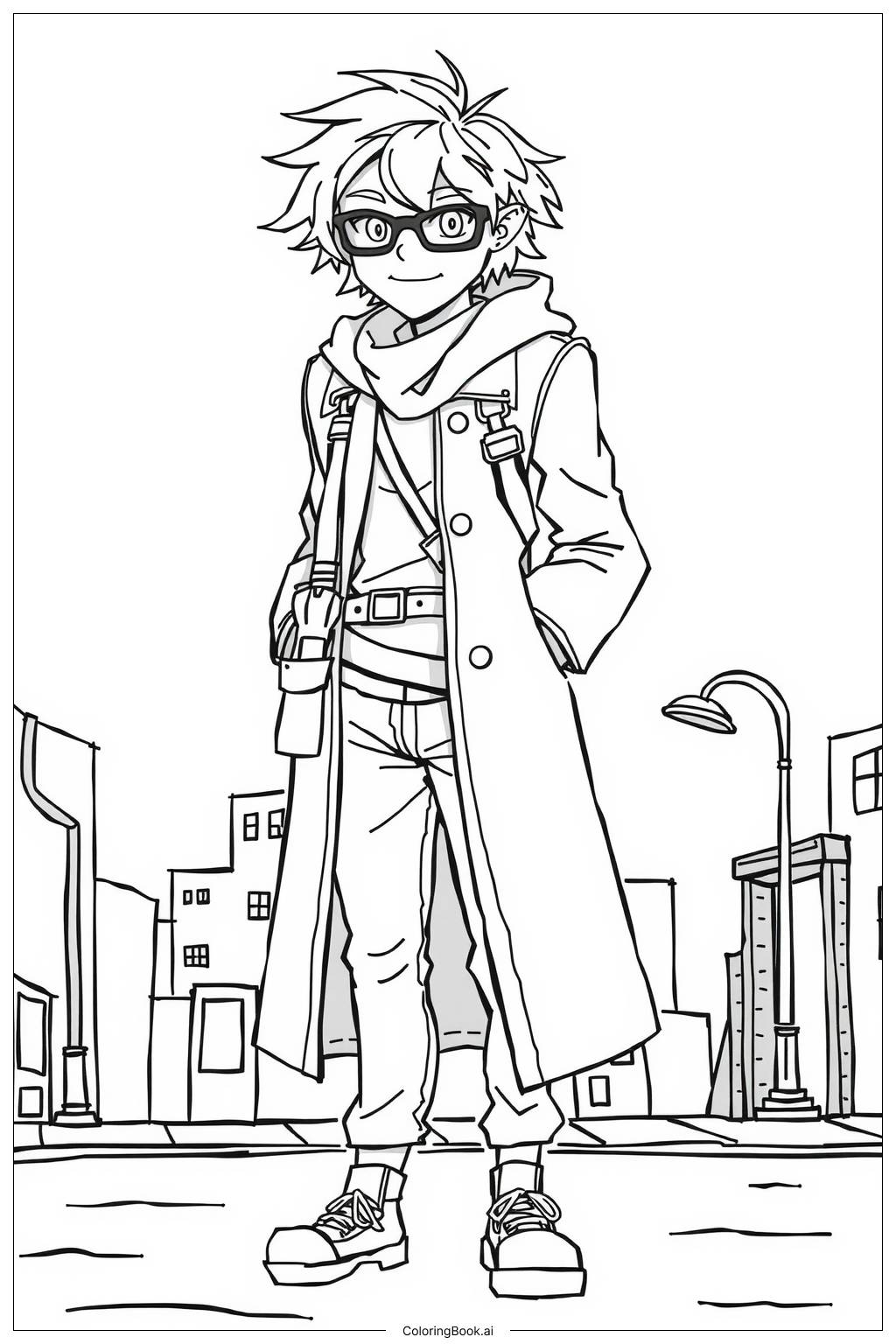
Coloring tips: How to color Cowboy Bebop-Inspired City Character coloring page well?
Start with the character's outfit. The long jacket looks great in muted earth tones like tan, olive, or burnt orange. Use dark navy or charcoal for the pants and boots to give a sleek look. The hair can be colored in warm browns, deep black, or even a bold auburn to match that laid-back, stylish vibe.
For the city background, think about moody lighting. Try deep blues and purples for the sky to capture a nighttime or dusk setting. Use yellow and amber tones for lit windows to give the scene a warm, lively glow. Add grays and steel blues to the buildings for an urban, industrial feel.
Blend lighter and darker shades of the same color to add depth. Kids can keep it simple with flat colors, while older colorists can try shading the jacket folds or adding light reflections on the buildings. Use a fine-tip pen or sharp pencil to color small details without going outside the lines.
Coloring challenges: Which parts are difficult to color and need attention for Cowboy Bebop-Inspired City Character coloring page?
• Jacket Folds and Fabric Details: The long flowing jacket has many overlapping folds and creases. Staying within each fold's outline while trying to add shading or depth can be tricky. Colorists need to carefully follow each line to show the fabric's movement without muddying the overall shape.
• Facial Features and Hair: The character's expressive face and wild hairstyle contain fine, closely spaced lines. These small areas require precision, especially around the eyes, nose, and mouth. Using a very fine tool and working slowly helps prevent colors from bleeding into each other.
• Layered Background Buildings: The city backdrop includes multiple layers of buildings at different depths. Keeping the foreground, mid-ground, and background visually distinct requires choosing a range of values — lighter shades for far-away buildings and darker or more saturated tones for those closer to the viewer. This layering effect takes planning before you start.
• Window and Architectural Details: The buildings are filled with small rectangular windows, ledges, and structural lines. Coloring each window individually without accidentally filling surrounding wall areas demands patience and a steady hand. A fine-tip marker or a sharpened colored pencil works best here.
• Consistent Lighting Across the Scene: Because this is a city at night or dusk, maintaining a consistent light source throughout the whole image is challenging. The character and buildings should all reflect light from the same direction. Beginners may want to skip this and use flat colors, while more experienced colorists can try adding subtle highlights and shadows to unify the scene.
Benefits of coloring books: Advantages of drawing Cowboy Bebop-Inspired City Character coloring page
Coloring this Cowboy Bebop-inspired city scene offers a wide range of creative and developmental benefits for kids and teens alike.
Working on the detailed city background helps build focus and patience. Kids practice staying within lines and thinking about how colors interact across a complex scene. This kind of careful, deliberate work strengthens fine motor skills and hand-eye coordination over time.
Choosing colors for the character's outfit and the cityscape encourages creative thinking. There is no single right answer — colorists get to make their own choices and see the direct result of their decisions. This builds confidence and a sense of personal expression.
For fans of anime and urban art styles, this page also connects coloring to something they already love. That emotional connection makes the activity feel meaningful and fun rather than just a task.
The scene's moody, cinematic atmosphere invites colorists to think about storytelling through color — what time of day is it, what mood does the city have, what kind of person is this character? These questions spark imagination and narrative thinking.
Finally, completing a detailed, multi-element image like this gives a real sense of accomplishment. It teaches young colorists that big, complex tasks can be finished one small section at a time — a mindset that carries over into school and everyday life.