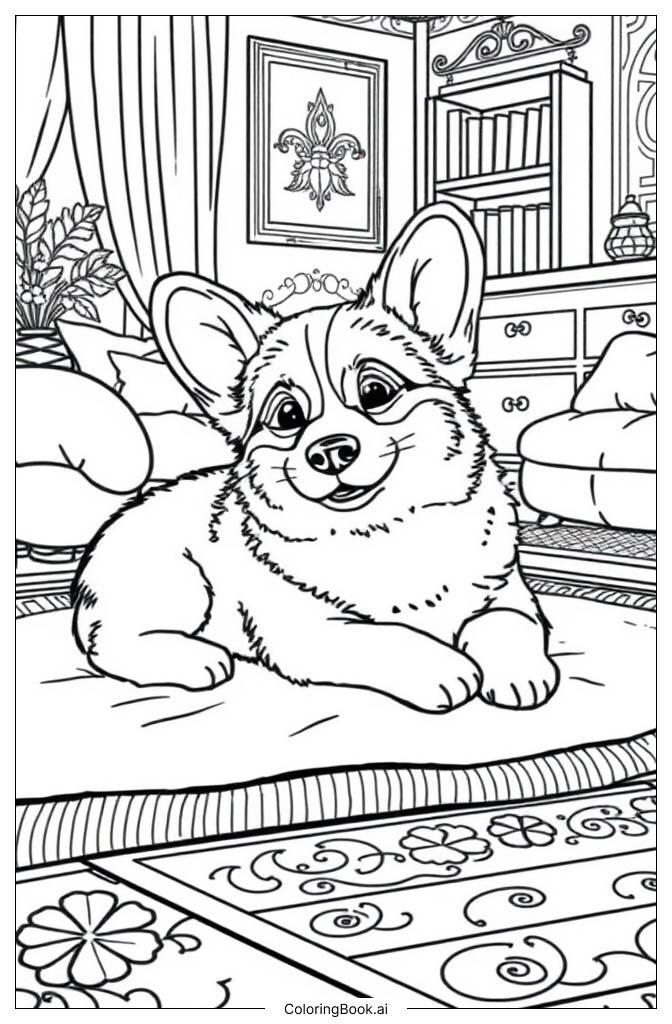
Coloring tips: How to color Lying Baby Corgi coloring page well?
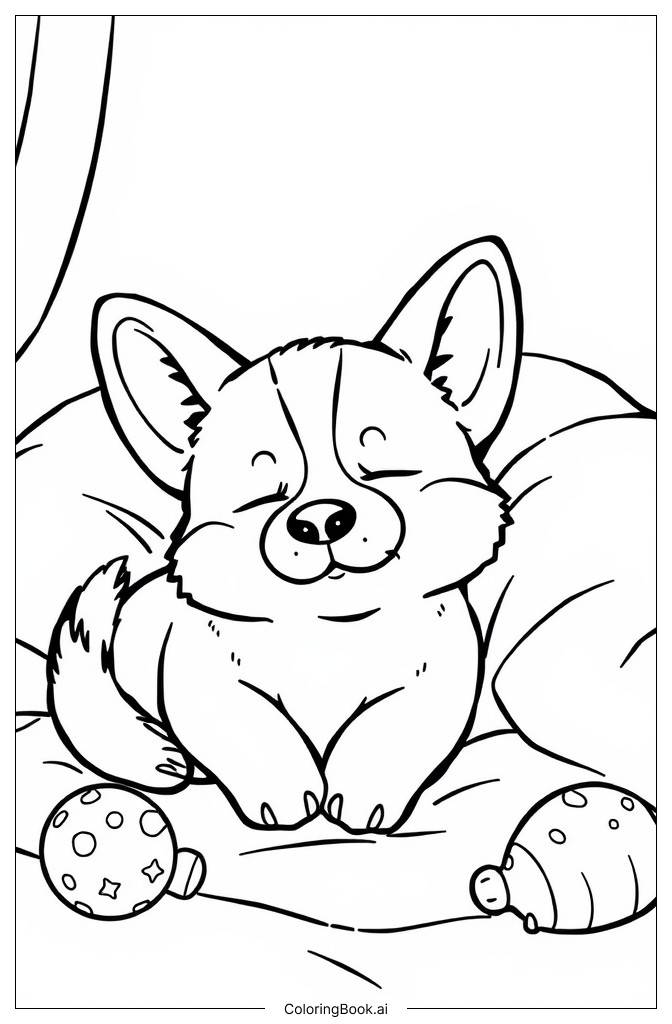
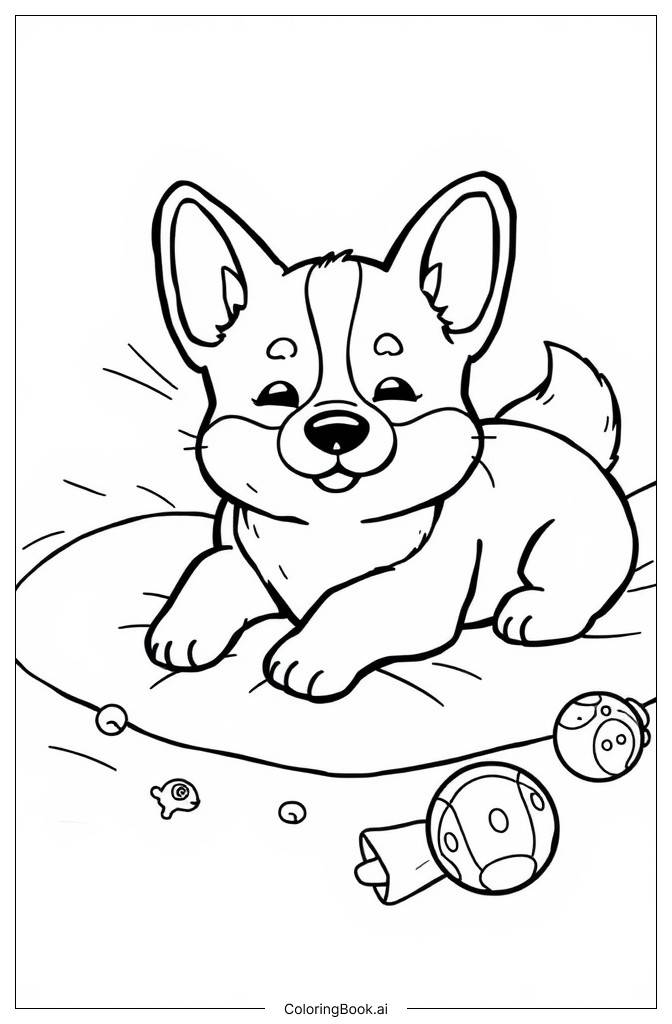
For this Lying Baby Corgi image, start by choosing warm colors for the corgi’s fur. Typical corgis have reddish-orange coats with white patches, so you can use shades like light brown, orange, cream, and white to make it look natural. Consider coloring the ears a soft pink inside to add a touch of warmth. For the eyes, use dark brown or black to make them look bright and shiny. You might want to color the surrounding leaves or flowers in green, yellow, or soft pastels to create a gentle background that complements the puppy’s colors. Don’t be afraid to add light shading to the puppy’s fur to show its fluffiness and depth. Using crayons, colored pencils, or even markers will give nice textures to this adorable scene.
Coloring challenges: Which parts are difficult to color and need attention for Lying Baby Corgi coloring page?
• Fur Texture: Capturing the fluffy and soft texture of the baby corgi’s fur can be tricky. The short, thick fur requires careful shading to show volume without looking flat or messy. • Small Details: The corgi’s face, especially its eyes, nose, and ears, have small areas that need precise coloring for expressions to come alive. Coloring inside the lines delicately is important. • Color Gradation: Because corgi fur often changes color between reddish-orange and cream, blending these smoothly can be challenging, especially for young children still mastering coloring skills. • Background Elements: The light floral or leaf decorations around the puppy need gentle coloring to avoid overpowering the main subject, requiring a balance between detail and subtlety. • Body Proportions: Coloring the legs, paws, and tail appropriately involves understanding the corgi’s unique short-legged, chunky shape, so it looks natural and cute.
Benefits of coloring books: Advantages of drawing Lying Baby Corgi coloring page
Coloring this Lying Baby Corgi can help children improve their fine motor skills by practicing controlled strokes and precise filling in of small areas. It encourages attention to detail as they try to capture the textures of fur and subtle color changes. This image also stimulates creativity by allowing kids to experiment with warm and soft color palettes that match a real puppy or create imaginative hues. For younger children, it can boost hand-eye coordination and patience. Overall, the gentle and cute subject matter promotes relaxation and a positive emotional response, making coloring fun and rewarding.