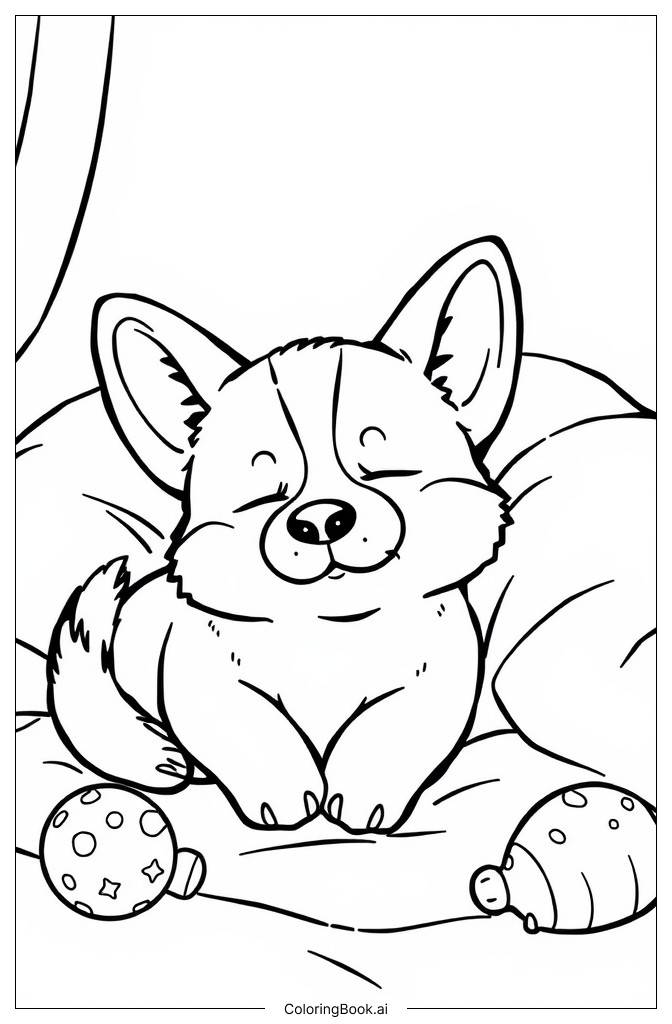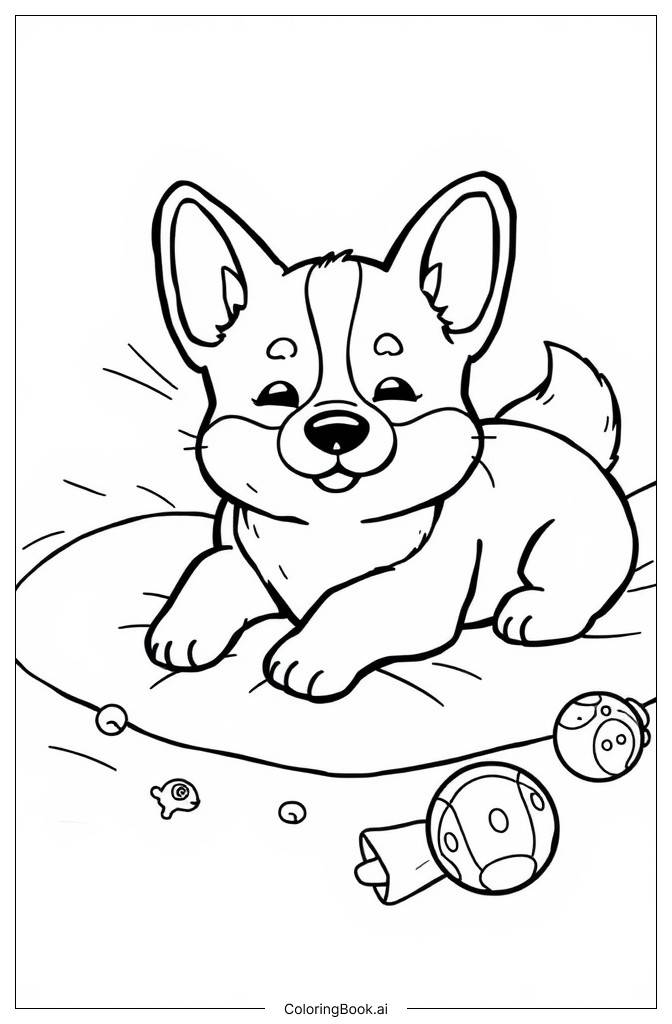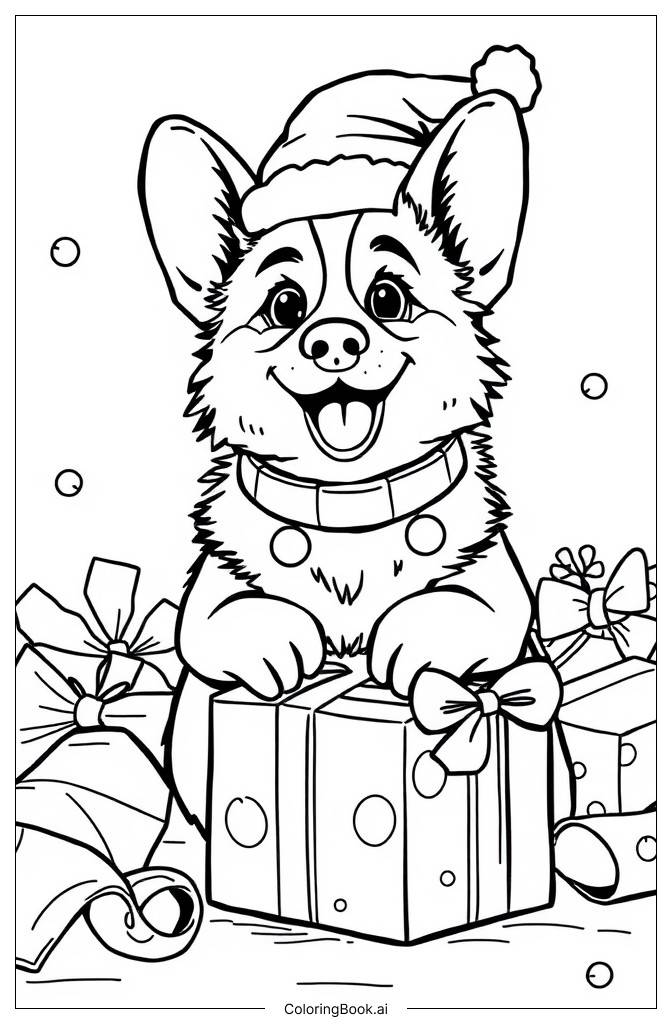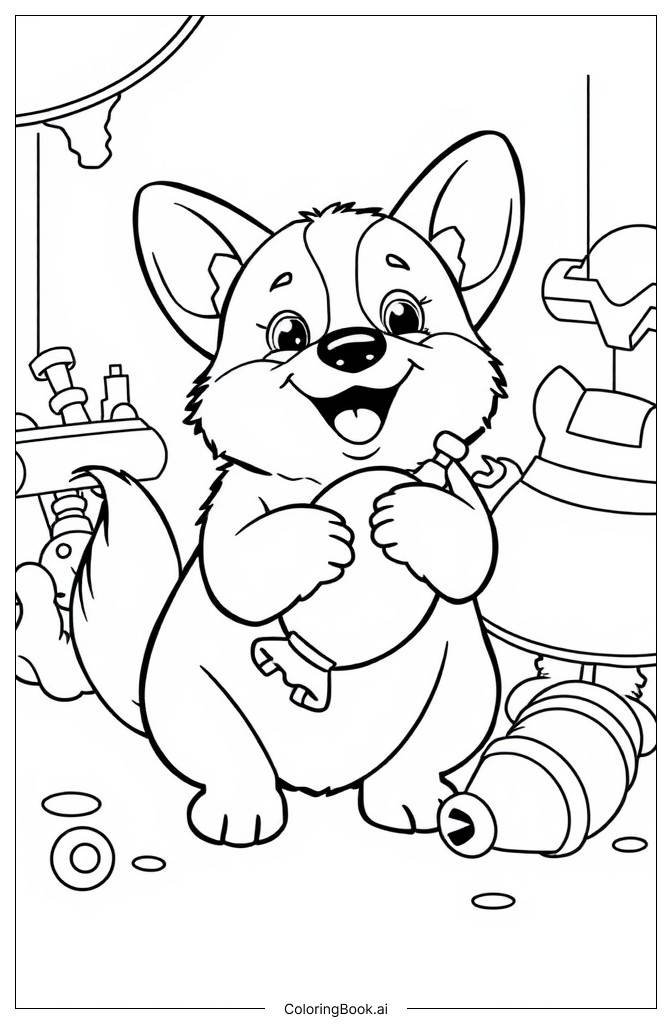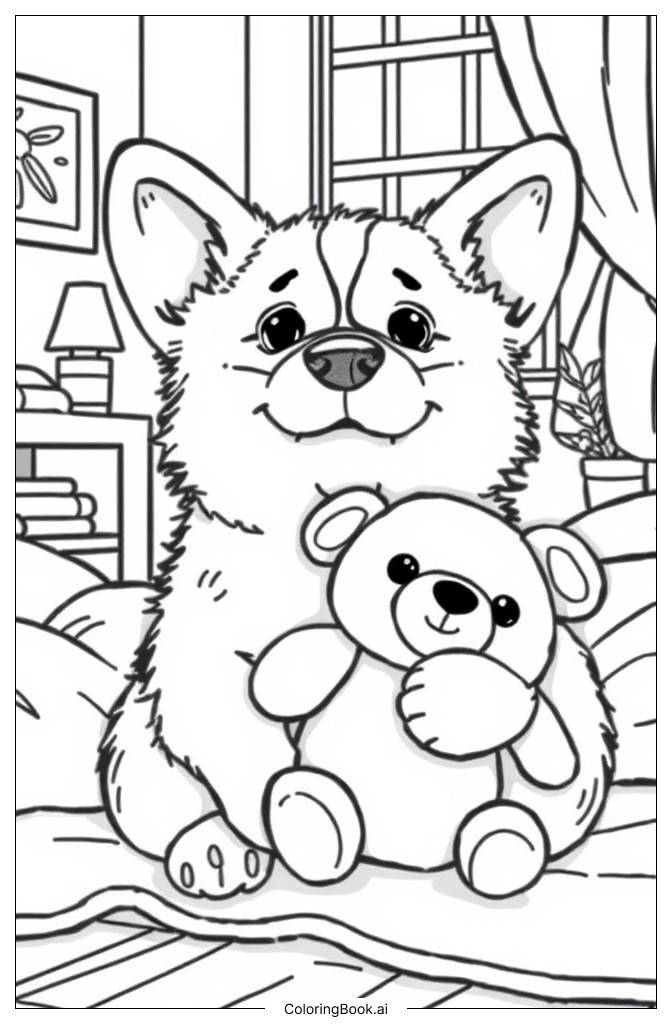
Coloring tips: How to color Baby Corgi Hugging Toy coloring page well?
Start with the corgi's fur. Corgis are usually golden, orange-brown, or cream colored. Use warm shades like golden yellow, light orange, or sandy beige for most of the body. Leave the chest, paws, and inner ears a creamy white or very light tan. For the eyes, use dark brown with a tiny white dot to make them sparkle. Color the nose black or dark brown. For the stuffed toy, you can pick any fun color you like — pastel pink, soft blue, or lavender all look great. Add a little rosy blush to the cheeks for extra cuteness. Use light, gentle strokes to show the soft, fluffy texture of the fur. Try pressing harder in the shadowed areas, like under the chin and between the paws, to give the image more depth. Have fun and make it your own.
Coloring challenges: Which parts are difficult to color and need attention for Baby Corgi Hugging Toy coloring page?
• Fur Texture Detail: The corgi's body is covered with short, layered fur lines. Staying inside these tiny lines while still making the coat look soft and fluffy can be tricky. Try using short, light strokes that follow the direction of the fur rather than filling in large areas with flat color.
• Two-Tone Coat Blending: Corgis have a naturally two-toned coat with darker coloring on top and lighter coloring on the belly, chest, and face markings. Smoothly transitioning between the warm golden tones and the creamy white areas without creating a harsh line requires patience and careful blending.
• Small Facial Features: The baby corgi's face has tiny, closely spaced features — small eyes, a little nose, and a delicate mouth. Coloring these details neatly without smudging or going outside the lines is one of the most challenging parts of the page. Using a sharpened pencil or a fine-tip marker will help greatly.
• Paw and Toy Overlap: The area where the corgi's paws wrap around the stuffed toy involves overlapping shapes. It can be hard to tell exactly where the paw ends and the toy begins. Look carefully at the outlines and use two clearly different colors for the paw and the toy to keep them visually separate.
• Depth and Shadow: Because this is a hugging pose, parts of the image sit in front of or behind other parts. Adding subtle shading under the chin, between the paws, and around the toy will make the image look three-dimensional, but knowing where to place those shadows takes a careful eye.
Benefits of coloring books: Advantages of drawing Baby Corgi Hugging Toy coloring page
Coloring this sweet baby corgi page offers many wonderful benefits for kids and anyone who picks up their colored pencils. First, it helps build fine motor skills. Carefully staying inside the small fur lines and tiny facial features trains the hand muscles used for writing and drawing. Second, it encourages focus and patience. The detailed coat and the overlapping paws and toy give colorists a gentle challenge that rewards slow, thoughtful work. Third, choosing colors sparks creativity. There is no single right answer — kids can create a classic golden corgi or dream up a rainbow puppy, making every finished page unique. Fourth, completing the image builds a sense of pride and accomplishment, which is great for self-confidence. Finally, the calming, repetitive motion of coloring is a wonderful way to relax and unwind after a busy day. The cheerful subject — a tiny puppy hugging its favorite toy — also brings joy and positive feelings throughout the process. This page is a perfect activity for kids who love animals or anyone looking for a fun, low-pressure creative outlet.