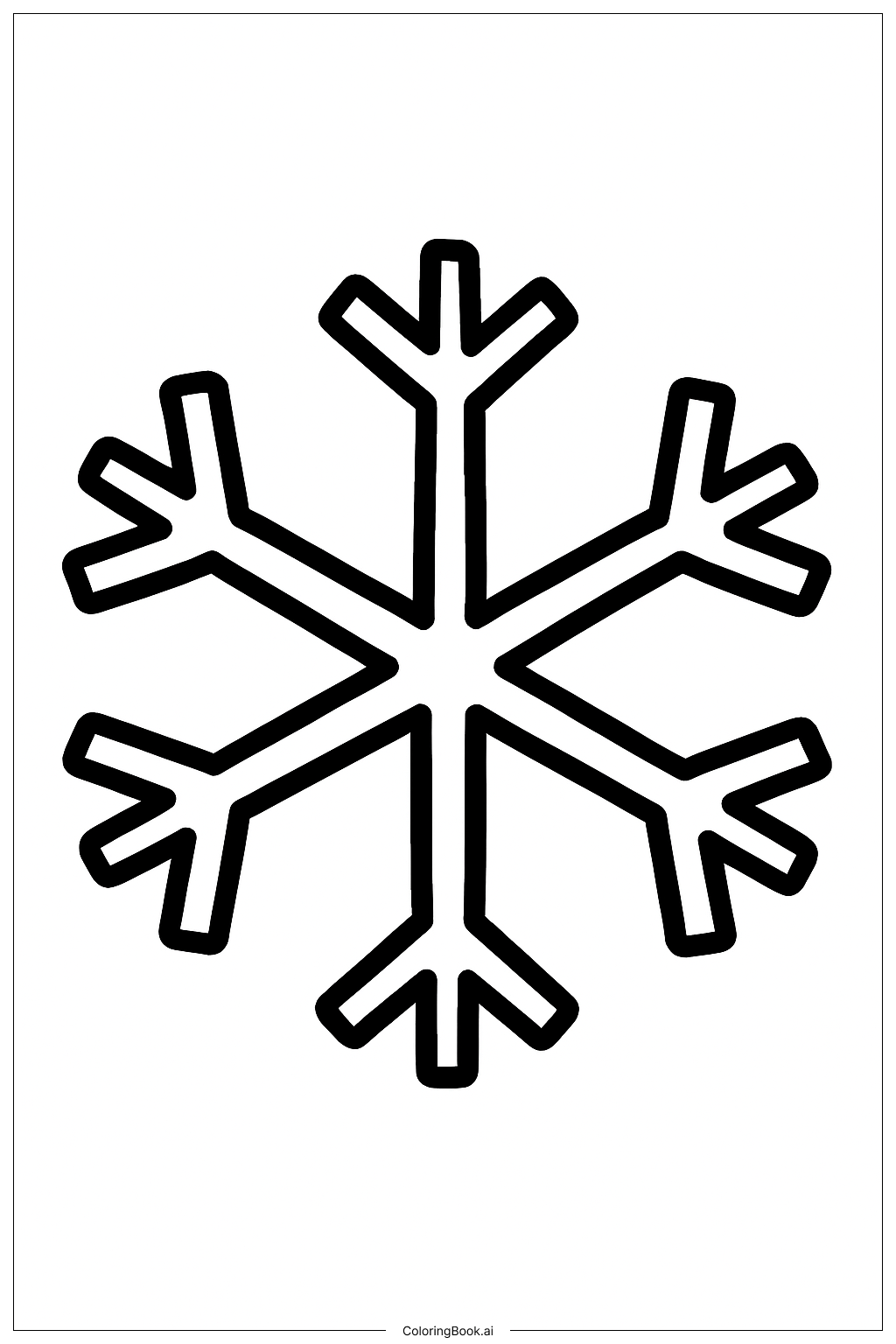
Coloring tips: How to color Cool Little Snowflake coloring page well?
Consider using shades of blue and white for a traditional snowflake look. Light blues can represent icy tones, while whites can add highlights. For a fun touch, try adding glitter or metallic colors. Experiment with blending colors to create gradients. You can also mix colors on different sections of the snowflake to create an unexpected and playful design! Let your imagination guide your color choices. Remember, there are no rules in creativity, so have fun!
Coloring challenges: Which parts are difficult to color and need attention for Cool Little Snowflake coloring page?
1. **Intricate Patterns**: The snowflake design features complex shapes, which can be challenging to color without going outside the lines. Precision is key to keep the colors inside the lines.
2. **Color Blending**: Achieving smooth transitions between different colors may be difficult. Kids need to practice blending techniques to create beautiful gradients.
3. **Layering Colors**: Some areas may require multiple layers to achieve the desired depth. This can be tricky, as too many layers might lead to a messy look.
4. **Choosing Colors**: Deciding which colors to use can also pose a challenge. Young artists might struggle with whether to stick to traditional colors or go for something bold and different.
5. **Highlighting**: Adding highlights to give the snowflake depth can be challenging for young kids, as it requires a certain level of understanding how light interacts with shapes.
Benefits of coloring books: Advantages of drawing Cool Little Snowflake coloring page
Coloring this snowflake is not only fun but also beneficial for children. It enhances fine motor skills as they practice holding crayons or markers. This activity encourages creativity and imagination, allowing kids to express themselves through color choices. Coloring also improves focus and concentration, as children invest time in completing the design. Moreover, it provides a calming experience, reducing stress and anxiety. Kids can share their artwork with others, boosting their confidence. Finally, it can foster discussions about winter, nature, and geometry, expanding their knowledge in a fun way.