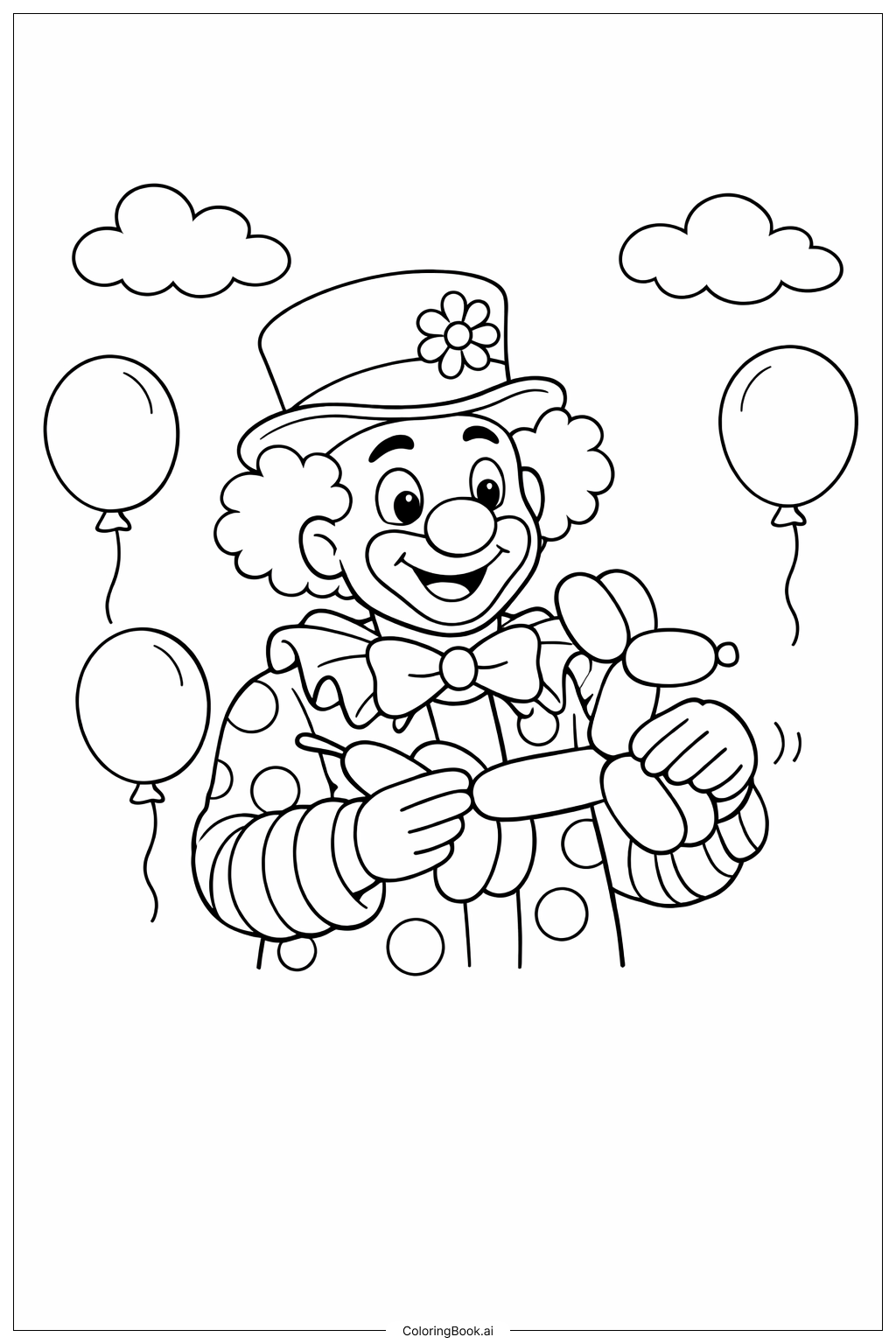
Coloring tips: How to color Clown Making Balloon Animal coloring page well?
Use bright and cheerful colors for the Clown's outfit to make him stand out. Reds, blues, and yellows work well for his clothes, hat, and shoes. The balloon animal can be colored in contrasting shades like green or orange to highlight its shape. For the Clown’s face, soft pink for cheeks and red for the nose add a friendly touch. The background details like confetti and streamers can be multicolored to create a festive mood. Try using lighter colors in the areas that catch light to give a sense of roundness and volume, especially on the balloon and hat. Don’t hesitate to use your imagination and mix colors to make the picture vibrant and fun.
Coloring challenges: Which parts are difficult to color and need attention for Clown Making Balloon Animal coloring page?
• Balloon Twisting Detail: The balloon animal has many small loops and twists that require careful coloring without crossing the lines to keep its shape clear.
• Facial Expressions: Capturing the Clown’s friendly face needs attention to small features like eyes, nose, and mouth to convey joy and charm.
• Clothing Patterns: The Clown’s ruffled collar, buttons, and hat details have repetitive patterns that need consistency in coloring to look neat.
• Overlapping Elements: The hands overlap the balloon, so careful coloring is needed to maintain the separation between these parts without blending colors.
• Light and Shadow Areas: Suggesting roundness on the balloon and hat means softly blending colors in some places, which can be challenging for young colorers to master.
Benefits of coloring books: Advantages of drawing Clown Making Balloon Animal coloring page
Coloring this Clown Making Balloon Animal image helps develop hand-eye coordination and fine motor skills as children carefully color inside intricate lines and overlapping sections. It encourages creativity by allowing them to choose bright and playful colors, promoting imagination. The detailed shapes and patterns also aid in improving concentration and attention to detail. Coloring faces with expressions can build emotional recognition and empathy. Additionally, completing this cheerful image can boost a child’s sense of accomplishment and joy, encouraging further artistic exploration and self-expression.