Coloring tips: How to color Chucky with a Teddy coloring page well?
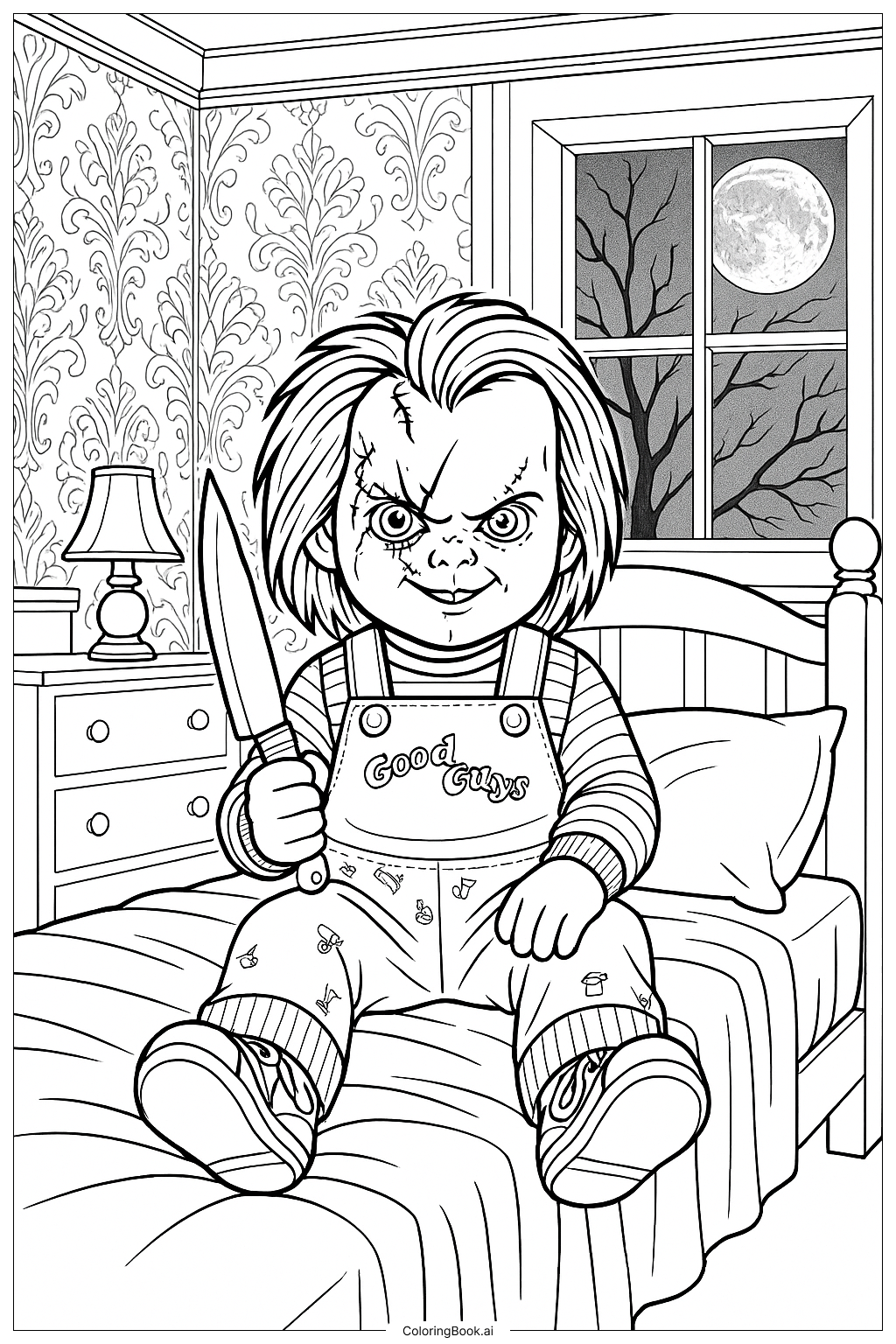
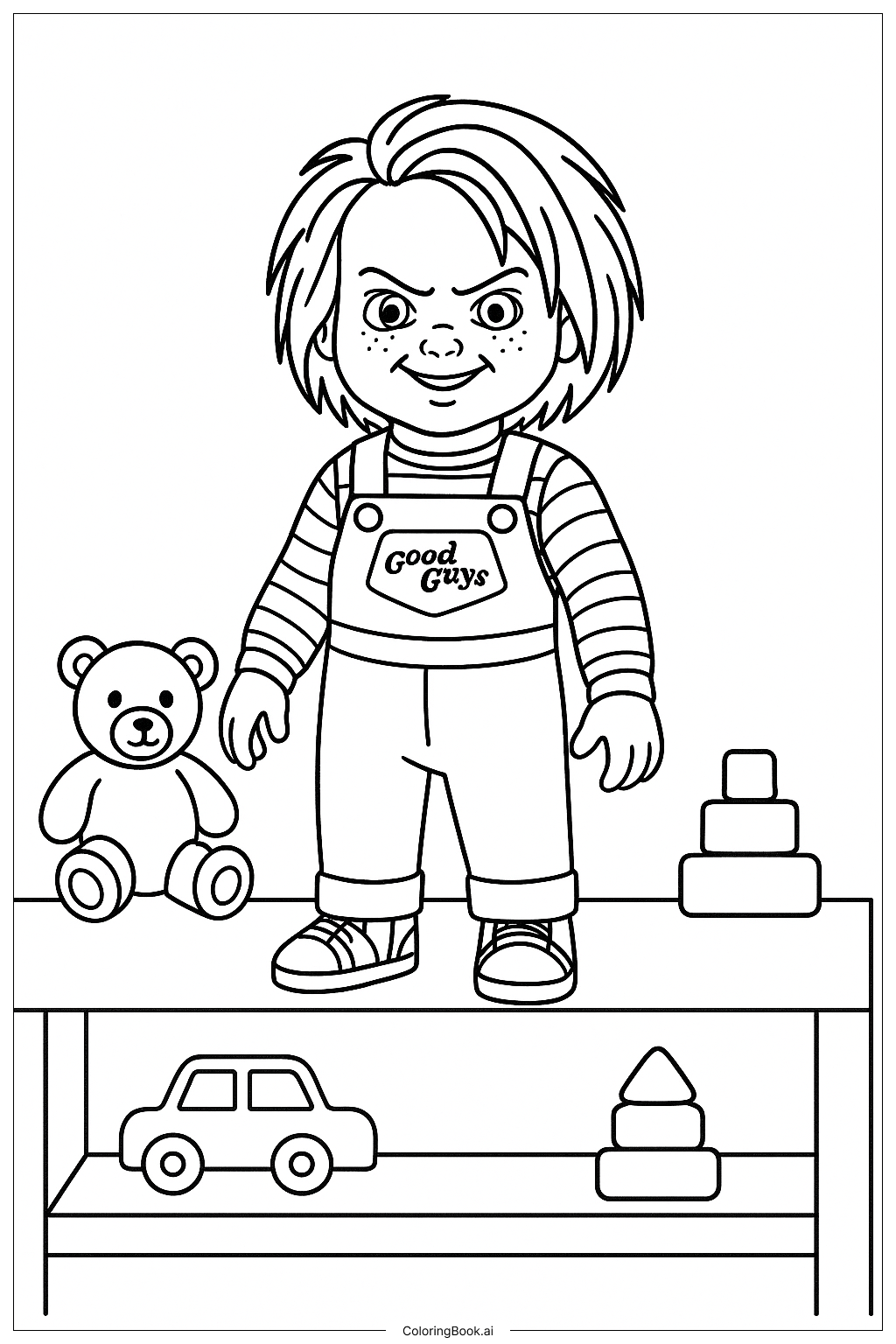
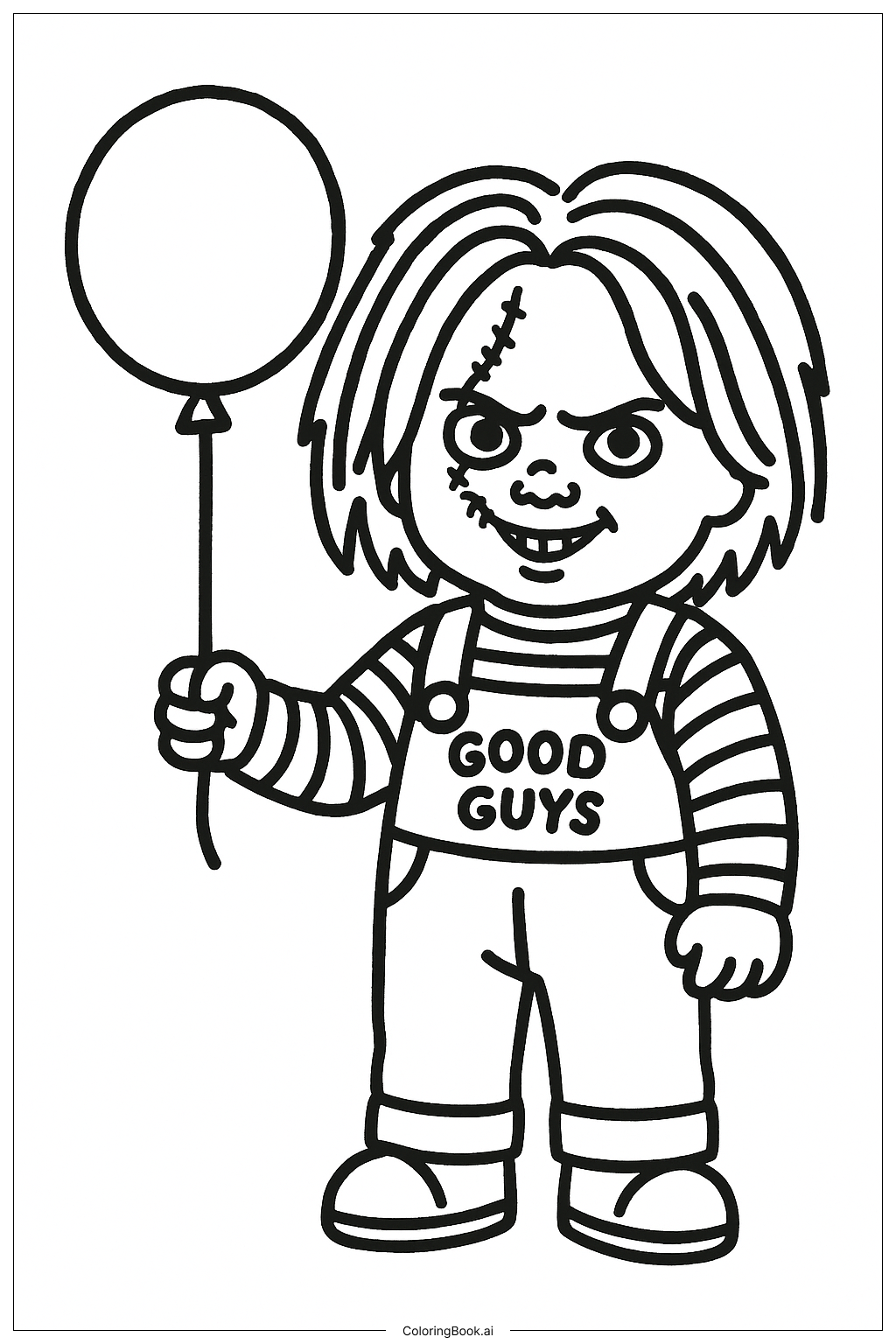
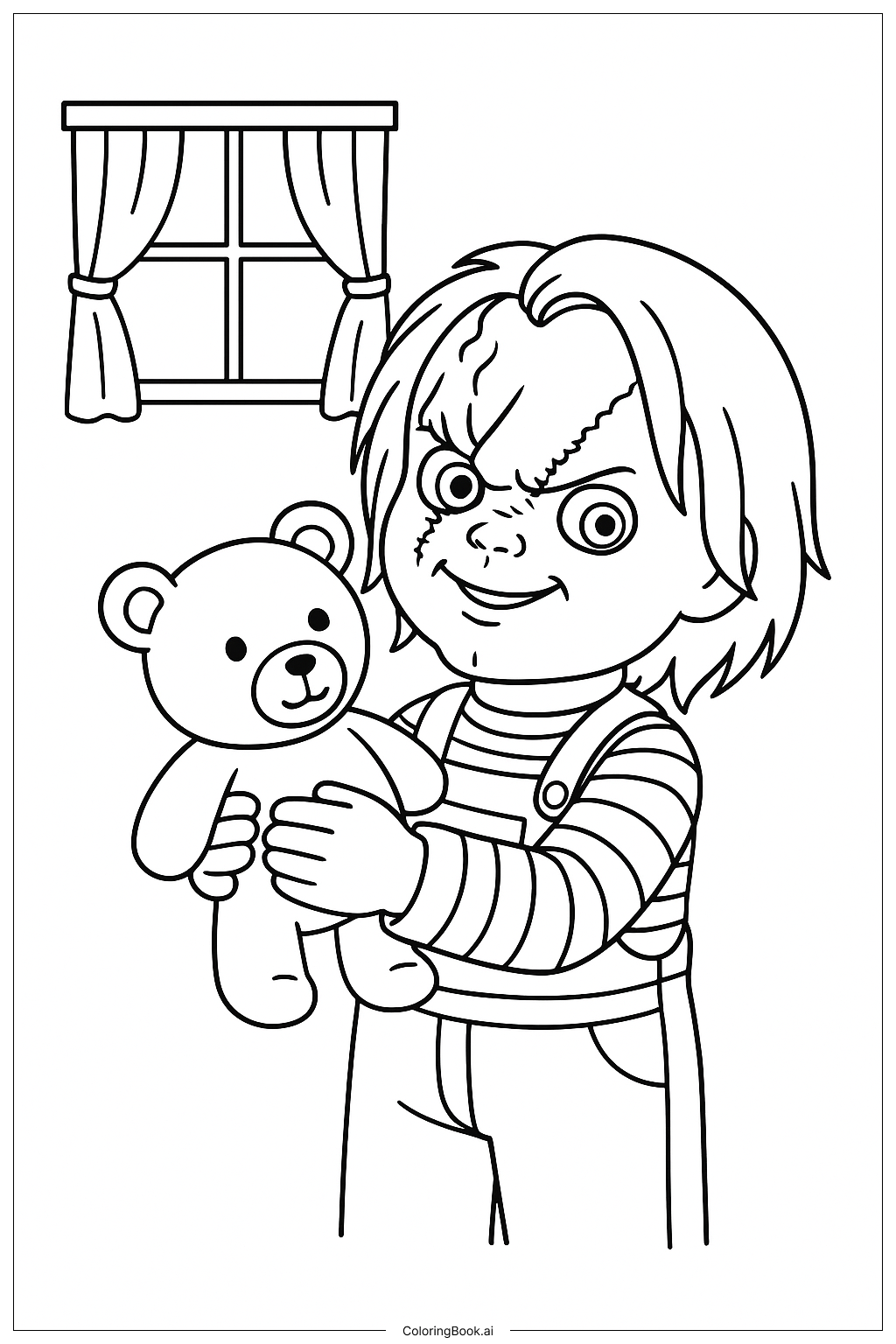
For this image, start by using bright, cheerful colors for the teddy bear such as soft browns or warm yellows to create a comforting feel. Chucky’s shirt can be colored with bold stripes of red, blue, and green to match his classic look, while his overalls can be shaded in denim blue. Use orange or reddish tones for his hair to capture its wild appearance. To highlight the contrast, consider coloring Chucky’s eyes and facial features with darker shades to keep his mischievous character. Soft pastel colors can be used for the background to make the characters stand out clearly. You can experiment with shading to give the teddy bear a fuzzy texture and use different shades of blue for the overalls to add depth.
Coloring challenges: Which parts are difficult to color and need attention for Chucky with a Teddy coloring page?
• Facial Expression Details: Capturing Chucky’s mischievous and slightly creepy smile with color can be challenging. It requires careful work around the eyes and mouth to balance his eerie yet playful look.
• Hair Texture: Chucky’s hair is wild and messy, so coloring it needs patience to add highlights and shadows to give it a natural, three-dimensional effect.
• Clothing Patterns: The striped shirt demands careful coloring to keep the lines neat and evenly spaced, especially when mixing bright colors that can bleed into each other.
• Teddy Bear Fur: Representing the softness of the teddy bear means using gentle shading techniques to create the appearance of fluffiness, which can be tricky with pencil or marker.
• Contrast Management: Balancing the dark tones of Chucky’s features with the lighter, softer teddy requires attention to contrast so both elements remain visually distinct without overpowering each other.
Benefits of coloring books: Advantages of drawing Chucky with a Teddy coloring page
Coloring this image helps develop fine motor skills through the detailed work required for Chucky’s facial features and clothing stripes. It encourages creativity by blending bright and soft colors to express the unique contrast between the doll and the teddy bear. Working on the teddy’s fluffy texture supports shading practice and an understanding of light and shadow. For children and beginners, it is a fun way to improve focus and patience as they carefully color the small and large areas. Additionally, coloring this image sparks imagination by mixing playful and slightly spooky themes, making it an engaging activity that brings storytelling to life through art.