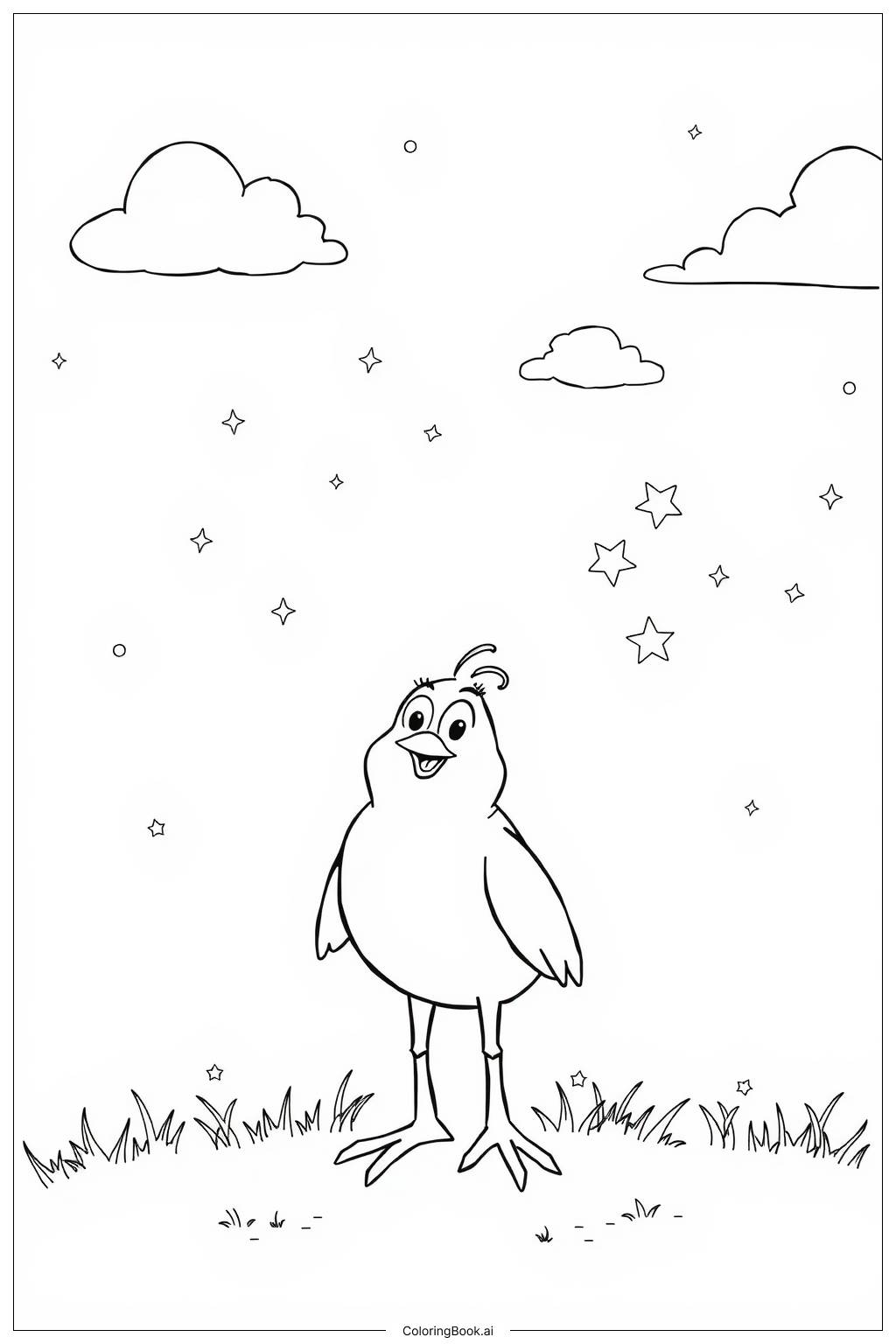
Coloring tips: How to color Chicken Little Adventure3 coloring page well?
For Chicken Little, bright yellows and oranges will make him stand out as the star of the adventure. Use different shades of brown or beige for his feathers to add variety and texture. The grass and bushes can be colored in multiple shades of green to give a natural and lively feel. Soft blue shades suit the sky and white or light gray can be used for the clouds to keep them fluffy and airy. Consider adding touches of red or brown to the barn to make it pop against the green background. You can also get creative by adding small details like colorful flowers or insects hidden in the grass to make the scenery more vibrant and engaging.
Coloring challenges: Which parts are difficult to color and need attention for Chicken Little Adventure3 coloring page?
• Feather Texture: Capturing the subtle variations in Chicken Little’s feathers can be tricky because it requires layering and blending different yellows and browns to show depth and softness without losing the shape of each feather.
• Background Details: The tall grasses and bushes have many small leaves and blades that need careful coloring to avoid smudging or mixing colors unintentionally. Careful attention helps maintain the structure and realism.
• Barn Structure: The barn has slanted lines and patterns that demand precision to color neatly, especially for younger children who might struggle with straight edges and staying inside the lines.
• Sky and Clouds: The clouds require gentle shading to appear fluffy rather than flat. Applying the right amount of light blues and grays without over-darkening can be challenging.
• Expression and Features: Keeping Chicken Little’s facial features clear and expressive while coloring around them may require steady hand control, especially to avoid covering his bright eyes or confident smile.
Benefits of coloring books: Advantages of drawing Chicken Little Adventure3 coloring page
Coloring this Chicken Little Adventure3 image helps children improve fine motor skills by practicing careful coloring in small and detailed areas. It encourages creativity as they choose and blend various colors to bring the farm scene to life. The detailed textures and layers stimulate visual perception and attention to detail. Coloring animals like Chicken Little fosters connection with nature and imagination, prompting storytelling and adventurous thinking. Lastly, the playful scene offers emotional benefits by allowing kids to relax and focus, promoting mindfulness and patience as they complete each part of the picture.