Coloring tips: How to color Chameleon In Tropical Canopy coloring page well?
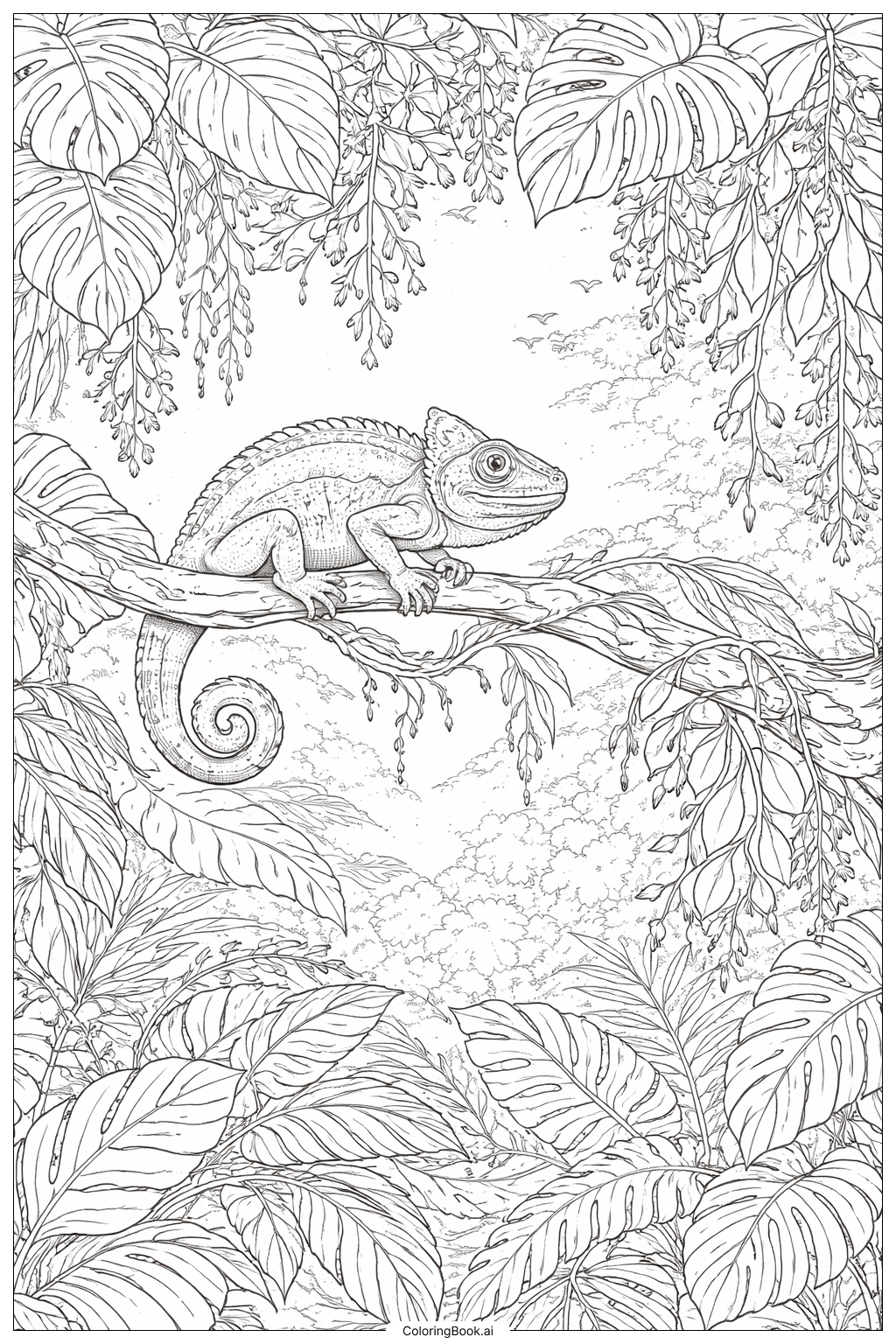
For coloring this image, you can start by choosing bright and varied shades for the chameleon. Think of green tones mixed with touches of yellow, orange, or blue to show its unique skin changes. Use different greens for the tropical leaves to give the jungle a vibrant, lively look. Browns and earthy colors work well for the branch and vines to create a natural base. Try layering colors with light to dark tones to add depth and dimension on both the chameleon and the plants. You may also add subtle shadows under leaves and along the branch to give the picture a realistic feel while keeping it fun and colorful.
Coloring challenges: Which parts are difficult to color and need attention for Chameleon In Tropical Canopy coloring page?
• Detailed Patterns: The chameleon's skin includes many small scales and patterns, which require careful coloring to stay within the lines and keep the details clear.
• Leaf Texture: The tropical leaves have intricate veins and edges that can be challenging to color neatly while showing their natural texture.
• Layering Colors: Creating depth by blending different shades on the chameleon and plants can be tricky, especially for young artists.
• Overlapping Elements: The vines, leaves, and chameleon overlap in many places, so it takes patience to color each part distinctly without mixing areas.
• Small Spaces: Some parts of the image have tiny gaps and tight curves, needing controlled hand movements to avoid coloring outside the lines.
Benefits of coloring books: Advantages of drawing Chameleon In Tropical Canopy coloring page
Coloring this image helps improve fine motor skills by encouraging careful movement within detailed shapes. It stimulates creativity through experimenting with different colors and shading techniques, especially to represent the chameleon's changing skin. Working on this picture also enhances focus and patience, as the many small parts require sustained attention. Additionally, it teaches about nature by engaging with a tropical environment and an interesting animal. Finally, completing this page can boost confidence and satisfaction as children see their artwork come to life with bright, natural colors.