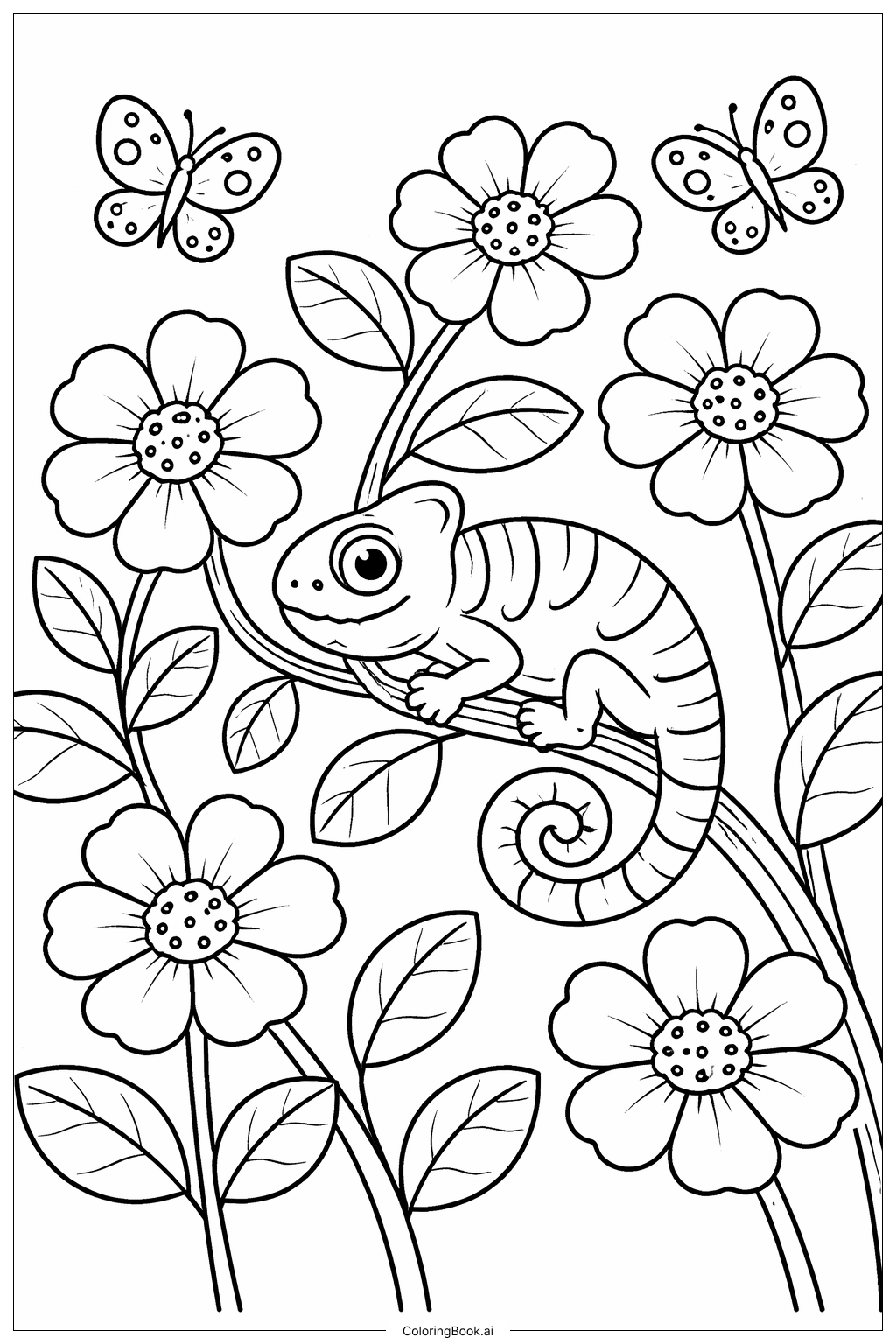
Coloring tips: How to color Chameleon In A Flower Garden coloring page well?
For this Chameleon In A Flower Garden image, try using bright greens and yellows on the Chameleon to show its unique colors. You can add fun patterns like stripes or spots in blues or oranges to make it stand out. For the flowers, pick a variety of colors such as pink, purple, red, and white. Use different shades to add depth. Color the leaves in different tones of green to create a fresh garden feel. Consider using lighter colors for the background to highlight the Chameleon and flowers. Feel free to blend colors softly to make the picture lively and vibrant.
Coloring challenges: Which parts are difficult to color and need attention for Chameleon In A Flower Garden coloring page?
• Fine Details: The Chameleon and flowers have many small parts like eyes, petals, and leaf veins, which may require careful coloring to stay inside the lines. • Color Patterns: The Chameleon’s skin can be intricate with changing colors and textures, making it challenging to replicate realistic shading or patterns. • Overlapping Elements: Leaves and flowers overlap with the Chameleon, so paying attention to which parts come in front or behind is important to avoid mixing colors. • Shading and Depth: Achieving a natural look means shading parts of the Chameleon and flowers differently, which can be tricky for younger children learning how to blend or layer colors. • Patience Needed: The many elements in the image require some patience as you focus on coloring each flower and leaf, helping develop fine motor skills.
Benefits of coloring books: Advantages of drawing Chameleon In A Flower Garden coloring page
Coloring this Chameleon In A Flower Garden helps improve focus and attention to detail by working on small parts like the Chameleon’s body and flower petals. It encourages creativity as you decide how to use colors and patterns for an animal known for changing its look. This activity can teach children about nature, the beauty of gardens, and animal adaptations. It also supports hand-eye coordination and fine motor skills as kids color carefully within lines. Finally, coloring such a lively scene can reduce stress and build confidence when children see their artwork come alive with bright and varied colors.