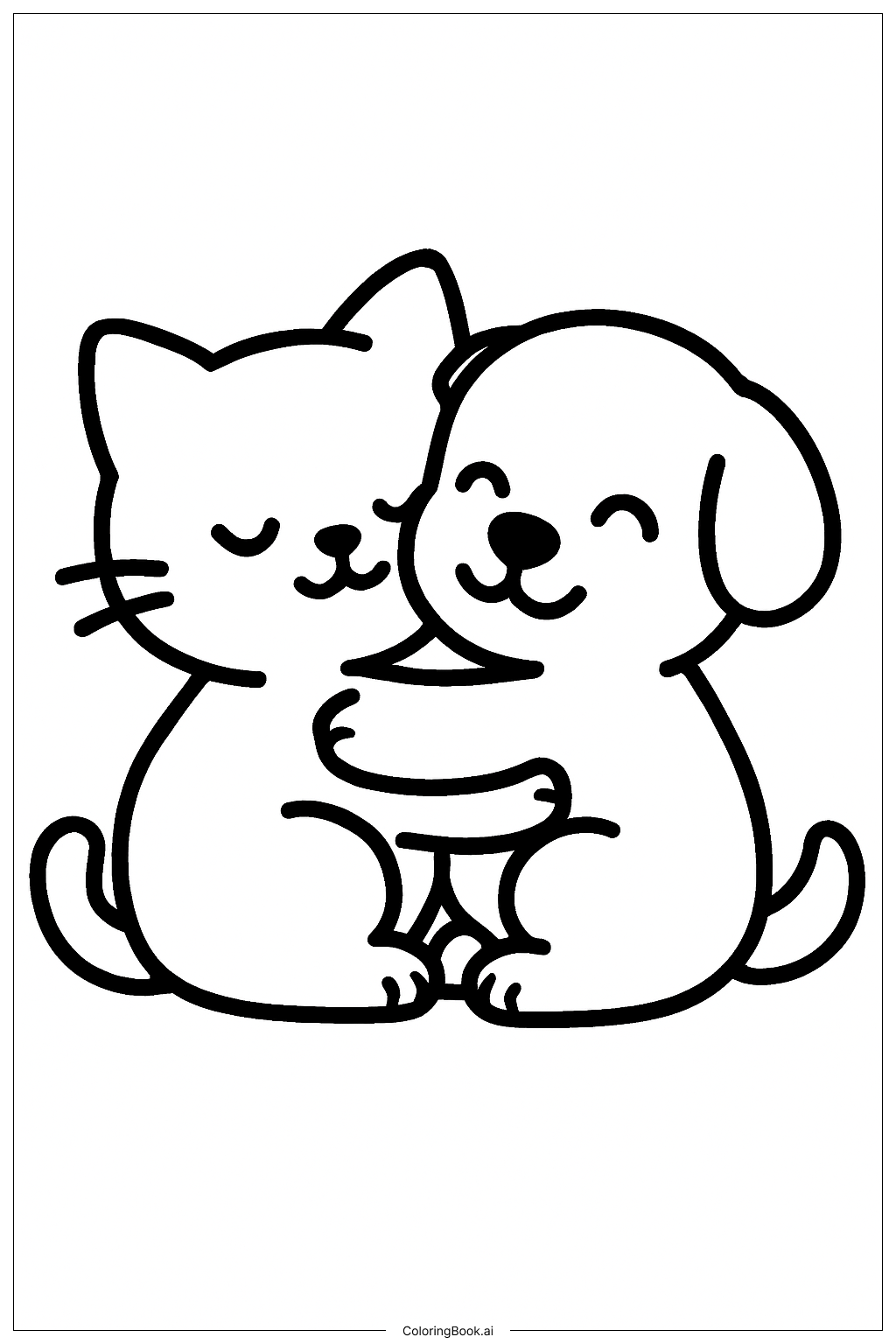
Coloring tips: How to color Cat And Dog Hugging coloring page well?
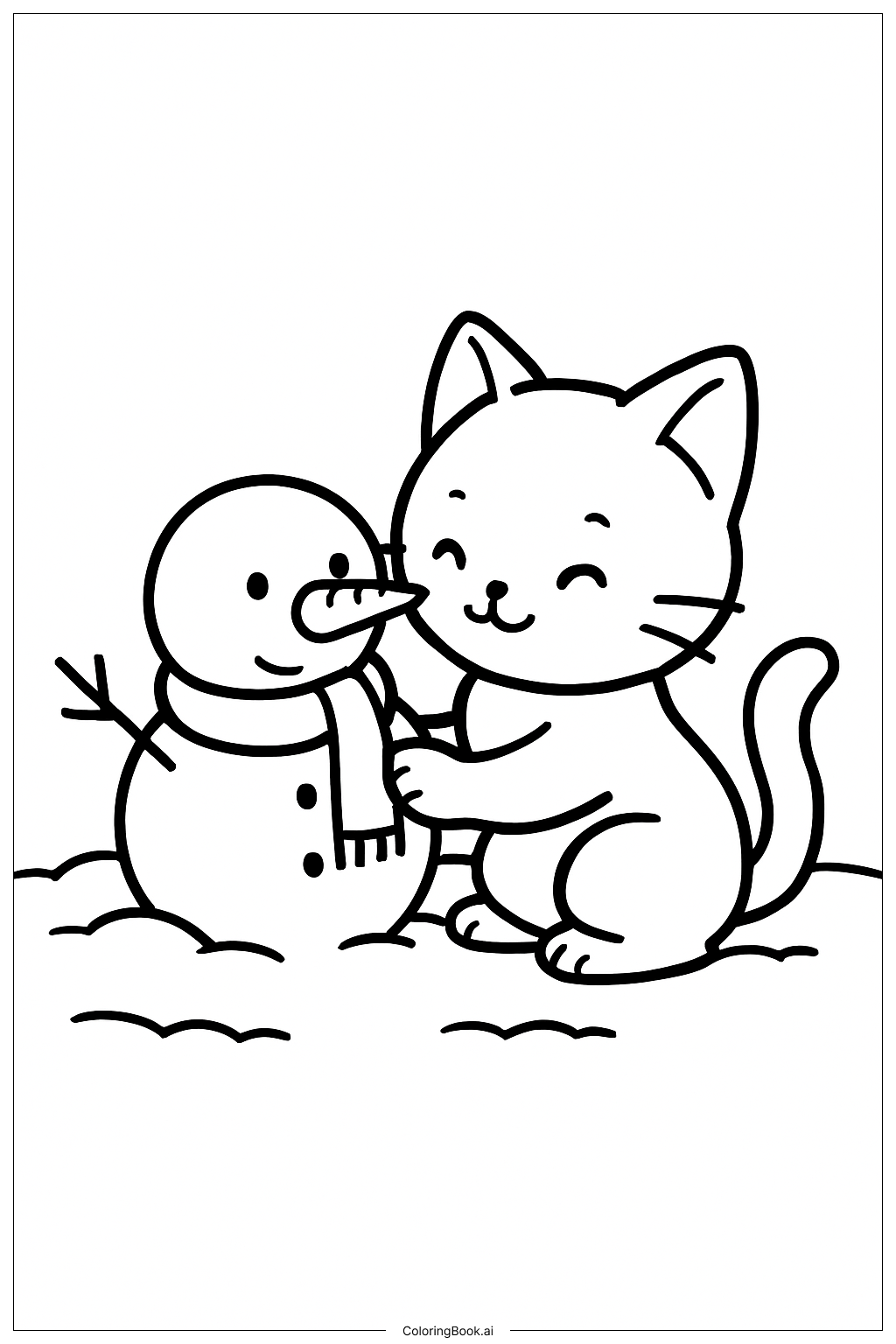
Start with the lightest colors first and work toward the darker shades. For the cat, try warm tones like orange, tan, or gray, and add darker streaks for fur texture. For the dog, golden brown, cream, or spotted patterns look great. Use a soft pink for the inner ears, nose tips, and paw pads of both animals. Color the eyes with bright shades like brown, green, or blue, and add a small white dot to make them look shiny and alive. For the background, choose cheerful colors like light blue, yellow, or soft green to set a happy, friendly mood. You can add patterns or flowers around the animals to make the scene feel more lively. Take your time on the fur by using short, light strokes to mimic the natural direction of animal hair. This will make both the cat and the dog look soft and fluffy.
Coloring challenges: Which parts are difficult to color and need attention for Cat And Dog Hugging coloring page?
• Fur Texture Details: Both the cat and the dog have detailed fur lines throughout their bodies. Coloring these small, closely spaced lines neatly requires patience and a sharp, fine-tipped colored pencil or marker. Rushing through this area can cause colors to bleed together and lose the sense of texture and depth.
• Overlapping Paws and Bodies: In the hugging pose, the animals' paws and bodies overlap each other. This makes it tricky to decide where one animal ends and the other begins. You need to pick clearly different colors for each animal so the two figures stay visually separate and easy to tell apart.
• Small Facial Features: The whiskers, eyes, eyebrows, and noses of both animals are small and detailed. Staying inside the lines in these areas is challenging, especially for younger colorists. Using a fine-tip tool and coloring slowly will help keep these features neat and expressive.
• Matching Shading Consistency: Keeping a consistent light source across both animals is a real challenge. If you add shading to make the fur look three-dimensional, you need to apply shadows and highlights on the same side for both the cat and the dog. Inconsistent shading can make the image look uneven or flat.
• Background Composition: Deciding how to color the background without distracting from the main subjects takes careful thought. Too many bold colors in the background can overwhelm the characters. Choosing softer, lighter tones and keeping the background simple helps the hugging cat and dog remain the clear focal point of the image.
Benefits of coloring books: Advantages of drawing Cat And Dog Hugging coloring page
Coloring this sweet image of a cat and dog hugging brings a wide range of wonderful benefits for kids and adults alike. For children, it helps build fine motor skills as they carefully guide their coloring tools along the detailed fur lines, small facial features, and overlapping shapes. This kind of focused hand work strengthens the muscles used for writing and other precise tasks.
The image also encourages creativity. Choosing color combinations for the cat and the dog sparks imagination and gives colorists a chance to express their own unique style. There are no wrong choices, which builds confidence and a love of art.
Working on a detailed scene like this also improves concentration and patience. Staying inside the lines and planning which colors to use next trains the mind to focus and think ahead.
On an emotional level, the image of two animals hugging is naturally calming and uplifting. Coloring it can help reduce stress and anxiety, making it a great activity after a long or tiring day. It promotes feelings of warmth, friendship, and kindness.
Finally, this page opens up conversations about empathy and getting along with others. It gently teaches children that friendship can exist even between very different individuals, which is a valuable life lesson wrapped in a fun, creative activity.