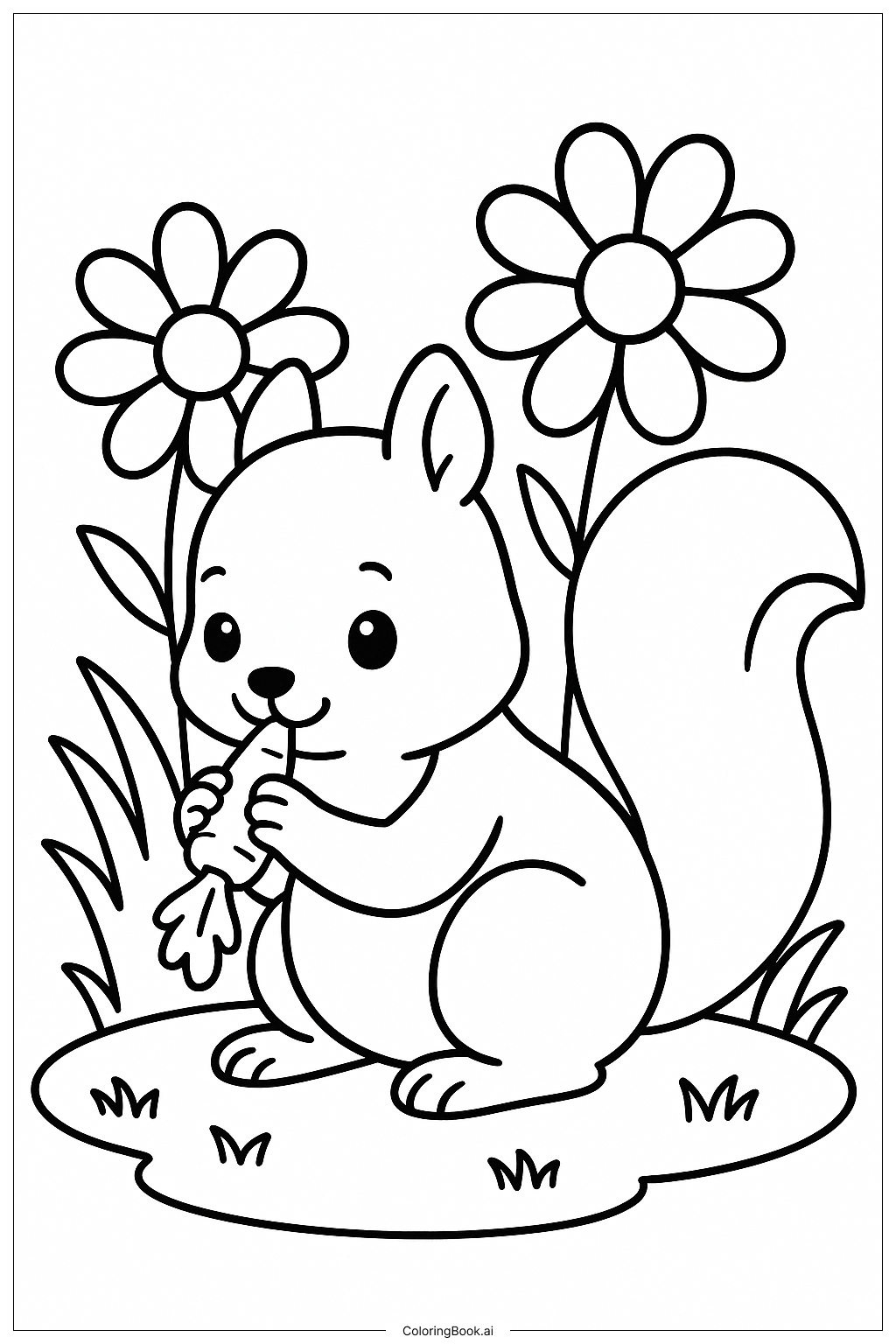
Coloring tips: How to color Squirrel Nibbling On A Small Carrot coloring page well?
Start with the squirrel's body by using warm shades of brown, orange-brown, or gray. Use a lighter tan or cream color for the belly and the inner ear area. For the fluffy tail, try blending a darker brown at the base and a lighter shade toward the tips to give it a soft, feathery look. Color the carrot in a bright, vivid orange, and use different shades to add depth — darker orange on one side and lighter on the other. The leafy tops of the carrot look great in multiple shades of green. The squirrel's eyes can be colored dark brown or black with a tiny white dot left uncolored to show a sparkle. If there is a background, soft greens and blues work nicely to suggest a peaceful outdoor setting. Use colored pencils or crayons for better control on the smaller details like the paws and face.
Coloring challenges: Which parts are difficult to color and need attention for Squirrel Nibbling On A Small Carrot coloring page?
• Squirrel Fur Texture: The squirrel's body has many fine lines suggesting soft fur. Staying within these small areas and following the direction of the lines takes patience. Young colorists may find it tricky to avoid going outside the lines, especially around the head and chest area.
• Bushy Tail Shading: The large fluffy tail is one of the most detailed parts of the image. It has layered, curved lines to suggest volume and fluffiness. Blending two or more shades of brown to make it look three-dimensional can be challenging, especially for beginners who are just learning how to apply color in layers.
• Small Paw Details: The squirrel's tiny front paws are gripping the carrot, creating a small and intricate area to color. The fingers and claws are very close together, making it easy to accidentally color over the outlines. Using a sharp pencil tip or a fine-tipped marker is recommended here.
• Carrot Shading and Leaves: The carrot may look simple, but adding realistic shading makes it much more appealing. Getting a smooth gradient of orange tones requires a light touch. The feathery green leaves at the top are also small and bunched together, making them hard to color individually without the colors bleeding into each other.
• Expressive Face Details: The squirrel's face has small features including eyes, a tiny nose, and mouth lines. Coloring these accurately without smudging or overshooting the tiny outlines requires a steady hand and careful concentration, especially for younger children.
Benefits of coloring books: Advantages of drawing Squirrel Nibbling On A Small Carrot coloring page
Coloring this squirrel and carrot scene brings many great benefits for kids. It helps build focus and attention as children work carefully within the lines of detailed areas like the fur, tail, and tiny paws. This kind of careful work strengthens fine motor skills and hand-eye coordination, which are important for writing and everyday tasks. Choosing colors for the squirrel and the carrot encourages creativity and self-expression. Kids get to make their own color choices and feel proud of the result. The process of coloring is also calming and relaxing. It gives children a quiet activity that helps reduce stress and supports emotional well-being. Learning to shade and blend colors on the carrot or the bushy tail introduces basic art concepts in a fun, low-pressure way. This image also sparks curiosity about nature and animals, making it a gentle way to connect art with learning about the world. Overall, it is a joyful and rewarding activity for children of all skill levels.