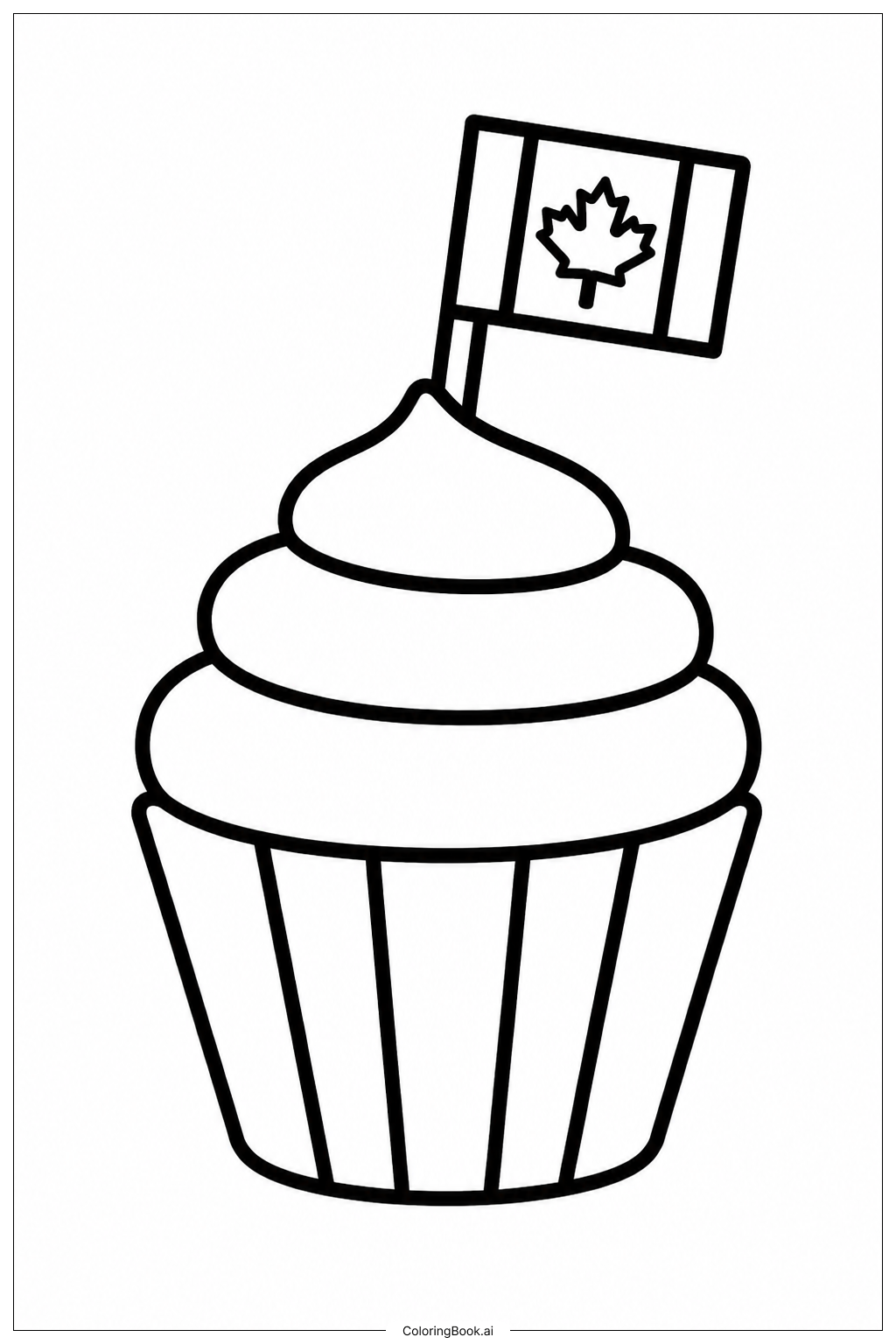
Coloring tips: How to color Canada Flag Cupcake coloring page well?
Use bright red to color the maple leaf and the stripes on the frosting. For the white parts, you can leave them blank or use a light gray or cream color to add gentle shading. The cupcake base can be colored in soft brown or pastel shades like pink, blue, or yellow to make it look delicious and fun. Try adding subtle shadows at the bottom of the frosting and the liner to make the cupcake appear more three-dimensional. You can also decorate the liner with small patterns or dots using other colors to personalize your Canada Flag Cupcake.
Coloring challenges: Which parts are difficult to color and need attention for Canada Flag Cupcake coloring page?
• Maple Leaf Shape: The maple leaf has detailed edges and points that can be challenging for younger colorers to stay within, requiring careful attention to stay neat. • Color Contrast: Balancing the bold red areas of the maple leaf and stripes with the white background demands control to avoid colors bleeding into each other. • Small Spaces: The cupcake liner and the small areas near the swirl’s base need careful coloring due to tight spaces, which can be tricky for children still developing fine motor skills. • Even Coloring: Achieving smooth coverage with red, especially in larger areas like the stripes, may require patience and multiple layers to avoid patchiness. • Shading Effects: Adding depth with shadows or highlights requires a bit more skill in blending colors to make the frosting and cupcake appear more realistic.
Benefits of coloring books: Advantages of drawing Canada Flag Cupcake coloring page
Coloring this Canada Flag Cupcake is a fun way to develop fine motor skills and hand-eye coordination. It encourages creativity through color choices while reinforcing awareness of national symbols like the maple leaf. The image helps children practice control and precision with detailed shapes and small spaces, boosting concentration and patience. Additionally, this artwork can inspire pride in Canadian culture and introduce basic artistic techniques such as shading and layering colors. Overall, it offers an enjoyable activity that combines learning and creativity suitable for children aged 4 to 16.