Coloring tips: How to color Canada Flag Butterfly coloring page well?
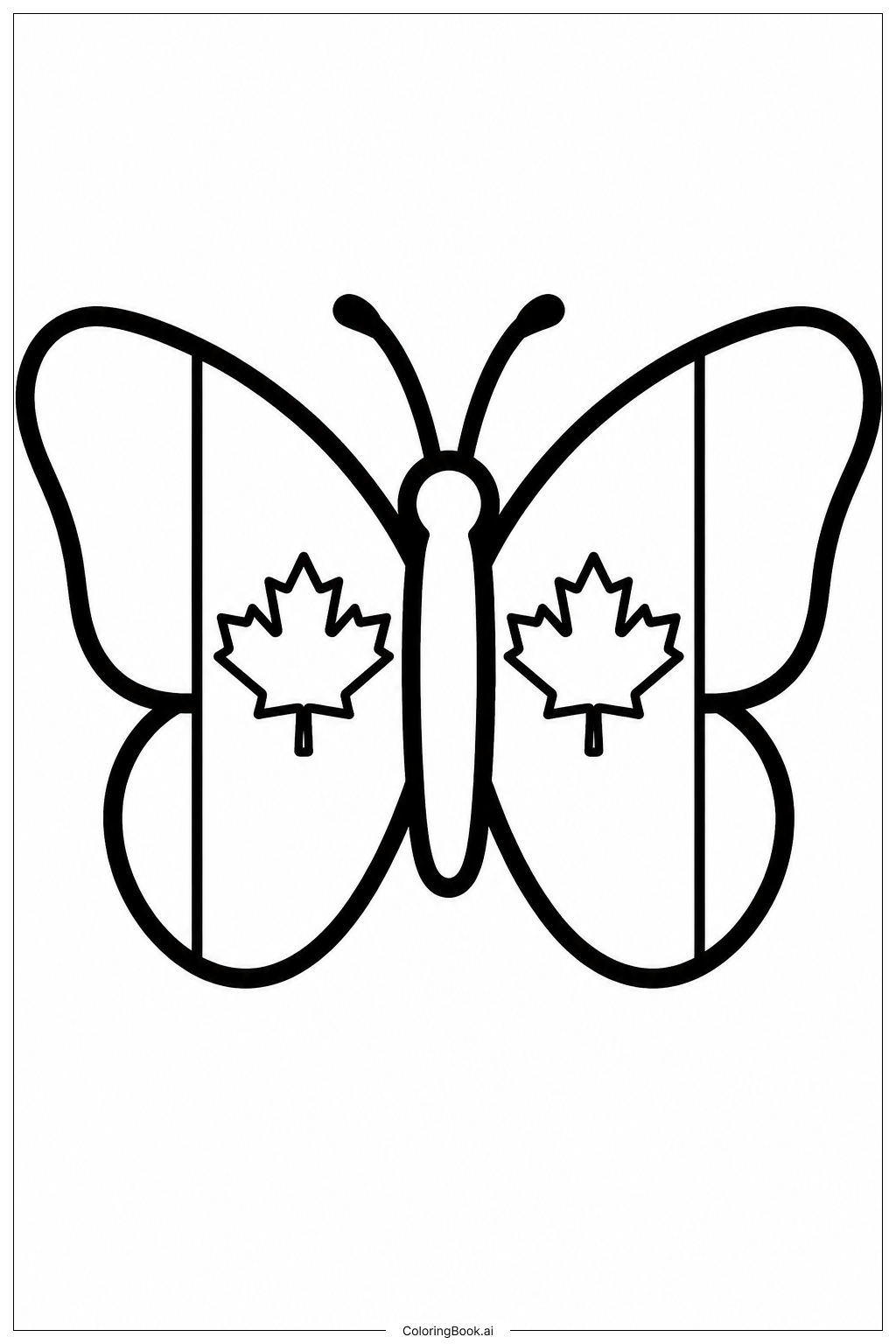
To color this Canada Flag Butterfly, start with bold red for the wings’ outer sections, matching the flag’s true red shade. Use clean white areas for the inner wing parts around the maple leaf, just like on the flag. For the maple leaf, you can use a bright red crayon or marker to make it stand out clearly. The butterfly’s body and antennae can be colored in soft black or dark brown to keep focus on the colorful wings. You can also add gentle shading with lighter red or pink on the wings’ edges to give depth. Feel free to use crayons, markers, or colored pencils for smooth, even colors.
Coloring challenges: Which parts are difficult to color and need attention for Canada Flag Butterfly coloring page?
• Symmetry Challenge: The butterfly’s wings are perfectly symmetrical, so coloring both sides evenly can be tricky. It requires careful attention to make sure colors and patterns match on left and right wings.
• Maple Leaf Details: The maple leaf in the center has several sharp points and intricate shapes. Coloring inside the lines without going outside can be difficult, demanding fine motor skills and patience.
• Color Contrast: The red and white areas have high contrast. Coloring the white parts cleanly without leaving marks from red can be challenging, especially if using markers that may bleed.
• Small Areas: Some parts of the butterfly’s body and antennae are thin and small. Coloring these precisely without smudging the wings needs a steady hand.
• Bold Red Coloring: Achieving a bright, bold red color similar to the Canada Flag requires consistent pressure and possibly multiple layers, which can be hard to master for beginners.
Benefits of coloring books: Advantages of drawing Canada Flag Butterfly coloring page
Coloring this Canada Flag Butterfly helps children develop hand-eye coordination and attention to detail, especially due to the symmetrical wings and defined maple leaf shape. It encourages focus as they color inside the lines and match colors on both sides. Using the national flag’s colors also teaches young artists about Canadian symbols and fosters cultural awareness. The image’s bold shapes and contrasts offer a fun challenge that boosts fine motor skills and color recognition. Overall, this coloring activity promotes creativity, patience, and pride in national identity, making it an enjoyable learning experience for kids aged 4 to 16.