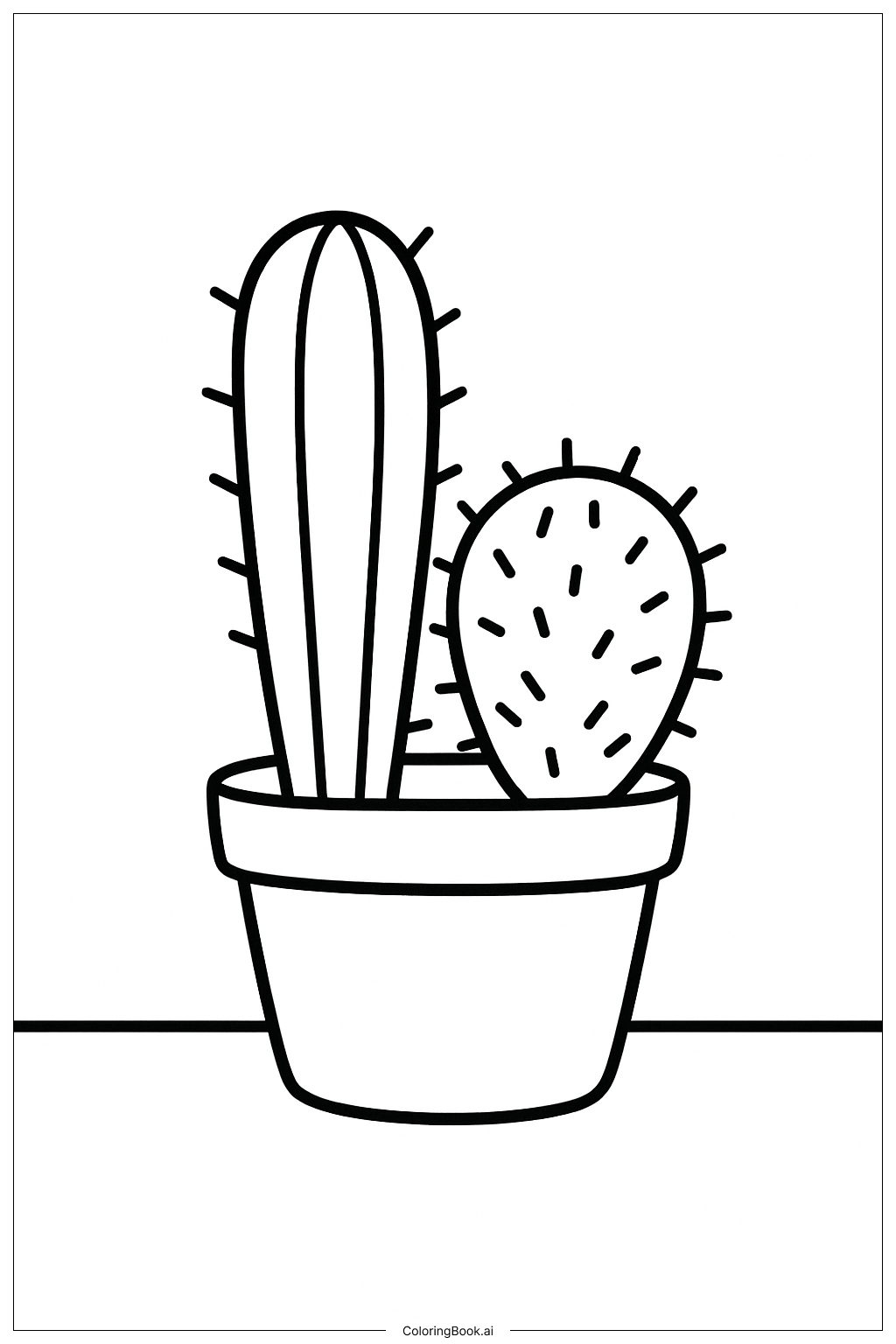
Coloring tips: How to color Two Cacti In Pot coloring page well?
Try using different shades of green to bring the cacti to life. You can color the taller cactus in a bright, fresh green and the shorter cactus in a darker or more muted green to create contrast. For the spines and dots, consider using a light yellow or soft white to make them stand out. The pot can be colored in warm earthy tones like terracotta, brown, or sandy beige. You might also add small touches of shadows to suggest light and depth. Feel free to experiment with backgrounds—maybe a soft blue for the sky or warm peach to complement the warm colors of the cacti and pot.
Coloring challenges: Which parts are difficult to color and need attention for Two Cacti In Pot coloring page?
• Texture Details: The many tiny dots and spikes on the cacti surfaces require careful coloring to avoid smudging and keep each spine distinct. This can be tricky for younger children with less control.
• Color Variation: Creating realistic looking cacti means blending and shading green hues smoothly, which can be challenging to achieve with crayons or markers.
• Pot Curves: The rounded shape of the pot involves coloring curved lines evenly, which tests coordination and precision.
• Small Spaces: The narrow gaps between the spikes and along the edges demand attention to small spaces without going outside the lines.
• Contrast Balance: Balancing darker and lighter greens while keeping the spines visible requires planning and layered coloring, which can be difficult for some artists.
Benefits of coloring books: Advantages of drawing Two Cacti In Pot coloring page
Coloring this picture helps kids practice fine motor skills by working on small details like the spines and dots. It encourages patience and attention to precision. The variation in texture and shapes boosts creativity as children learn to use colors to show differences between each cactus. Coloring the pot and adding shadows gives an early introduction to concepts of light and depth. This activity is relaxing and satisfying, helping children build concentration and a sense of accomplishment. Plus, it invites kids to explore nature-inspired art, sparking interest in plants and the environment.