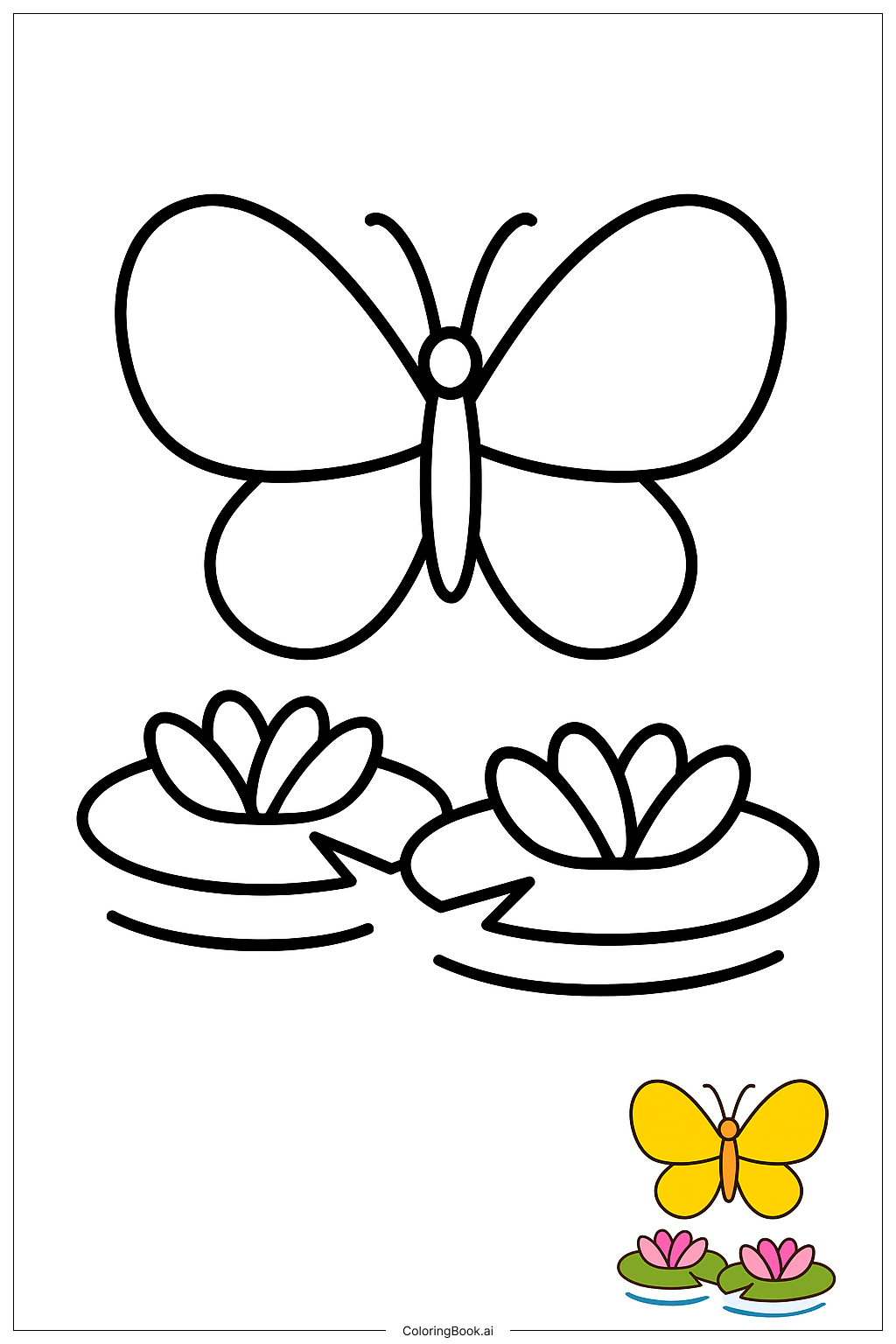
Coloring tips: How to color Butterfly Flying Above Water Lily Pond coloring page well?
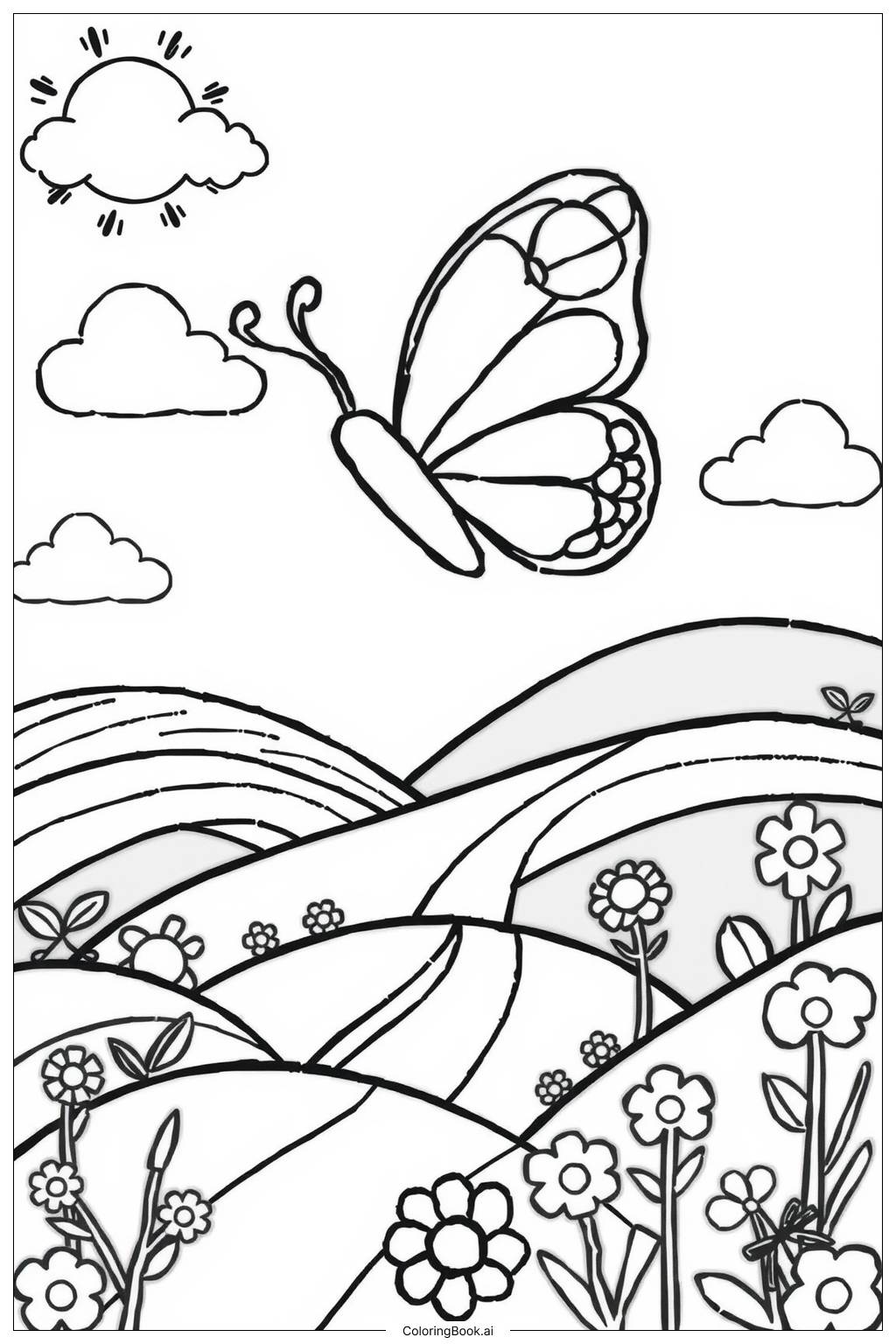
Start with the butterfly's wings. Use bright, warm colors like orange, yellow, or pink for the main wing areas. Add darker shades like black or deep brown along the wing edges and vein lines to make the patterns stand out. For the water lily flowers, try white or soft pink petals with a sunny yellow center. Color the lily pads in different shades of green — use a lighter green for the tops and a darker green near the edges. For the water, use light blue or blue-green. Add soft white areas to show reflections and gentle ripples. The reeds and stems can be colored in olive green or tan. To make the scene feel calm and dreamy, keep the background colors soft and cool, while using brighter, warmer tones on the butterfly to make it the center of attention. Let kids mix colors and try their own combinations too!
Coloring challenges: Which parts are difficult to color and need attention for Butterfly Flying Above Water Lily Pond coloring page?
• Butterfly Wing Patterns: The butterfly's wings are filled with intricate veins, spots, and symmetrical designs. Staying inside the tiny sections without smudging takes patience and a steady hand. Younger children may find it helpful to use thicker crayons or markers and work slowly from the center outward on each wing section.
• Keeping Colors Symmetrical: A butterfly's wings are mirror images of each other. Matching the same colors and shading on both the left and right wings can be tricky. It helps to pick your colors first and then apply the same shade to matching sections on both sides before moving on.
• Water Lily Petal Details: The blooming water lily flowers have many overlapping petals with fine lines running through them. Shading each petal individually to give them a soft, rounded look requires careful blending, especially where petals overlap and create shadows.
• Water Surface Reflections: Coloring the pond water to look natural and shimmery is a challenge. The water needs light and dark areas to suggest depth and ripples. Using two or three shades of blue or green and leaving some white areas uncolored can help create a realistic water effect.
• Layering Greens on Lily Pads: The large lily pads seem flat but benefit from shading to look three-dimensional. Applying a base green and then adding a slightly darker tone near the edges or a lighter highlight in the center makes the pads appear more lifelike and avoids a flat, uniform look.
Benefits of coloring books: Advantages of drawing Butterfly Flying Above Water Lily Pond coloring page
Coloring this butterfly and water lily pond scene brings many wonderful benefits for children and families. First, it builds focus and concentration. Following the fine lines of the butterfly's wings and the details of the lily flowers helps children practice sitting still and working carefully. Second, it sparks creativity. Choosing colors for the wings, petals, and water encourages children to think imaginatively and express themselves freely. There are no wrong color choices — a purple butterfly or a red pond can be just as beautiful! Third, it improves fine motor skills. Holding a pencil or crayon and coloring within small, detailed areas strengthens the hand muscles children need for writing. Fourth, it teaches children about nature. The pond setting introduces young colorists to butterflies, water lilies, and how these living things share the same environment, sparking curiosity about the natural world. Fifth, it is calming and relaxing. The peaceful scene of a butterfly floating above still water has a soothing quality that can help children unwind after a busy day. Coloring together with family or friends also makes it a fun, shared activity that builds connection and confidence.