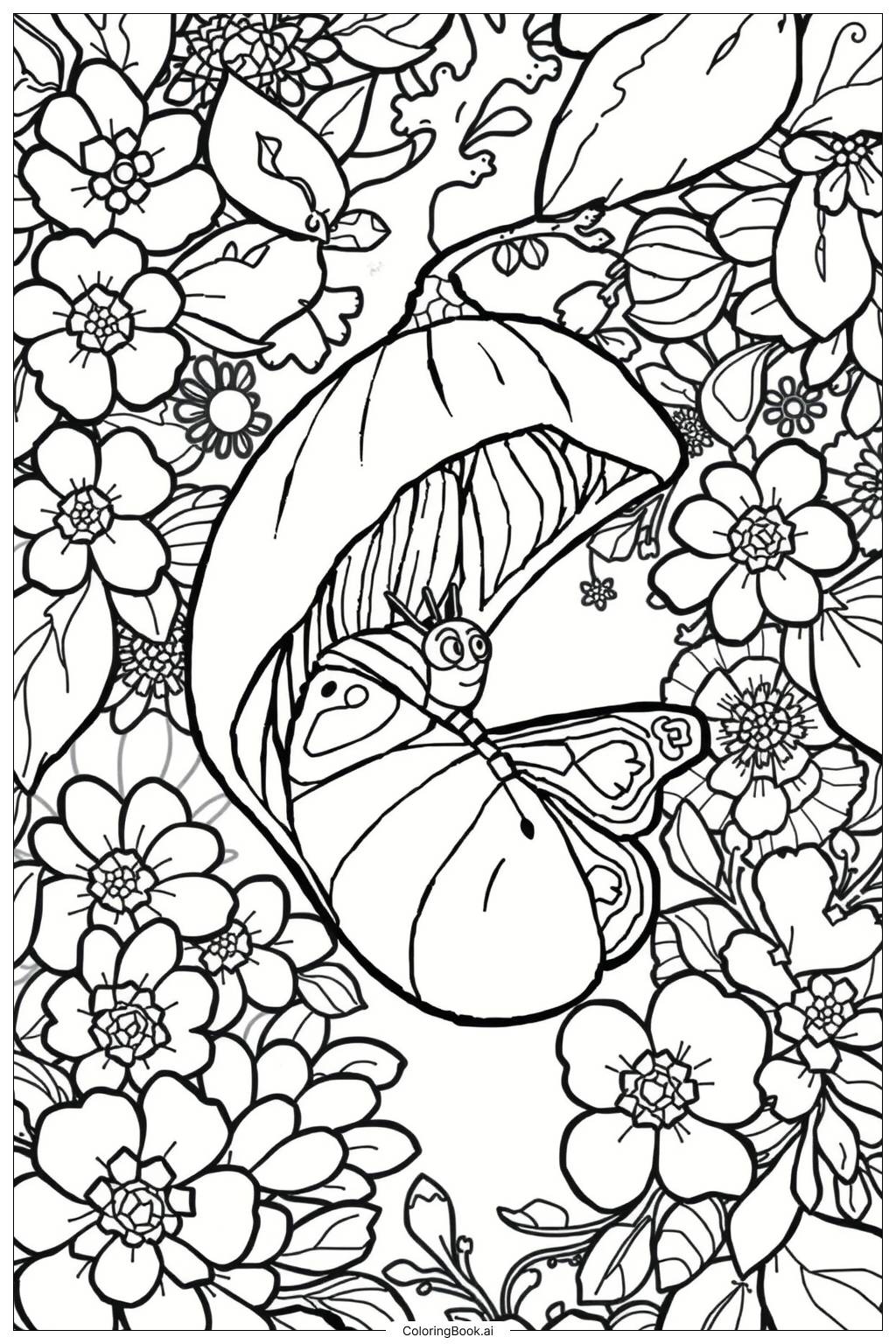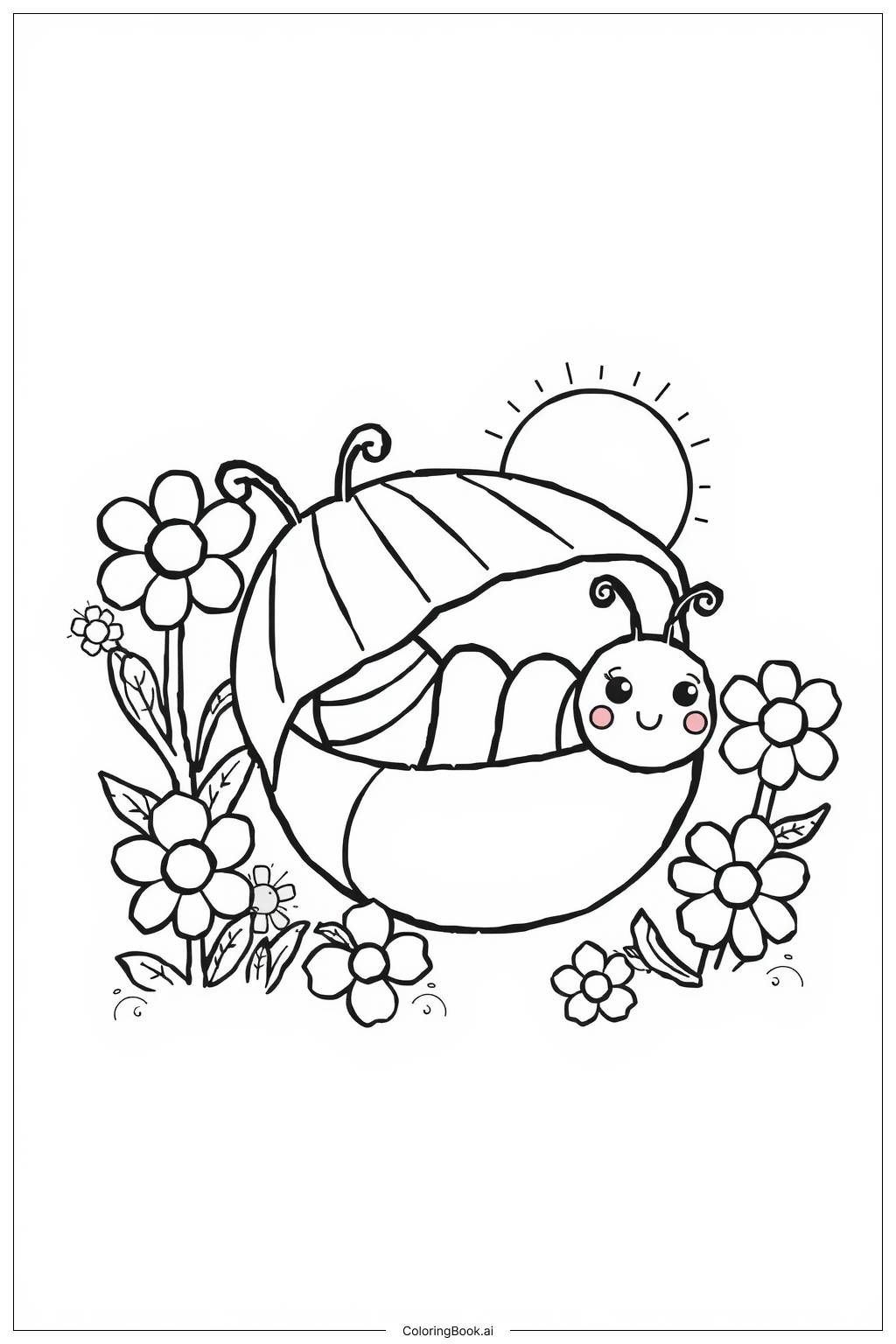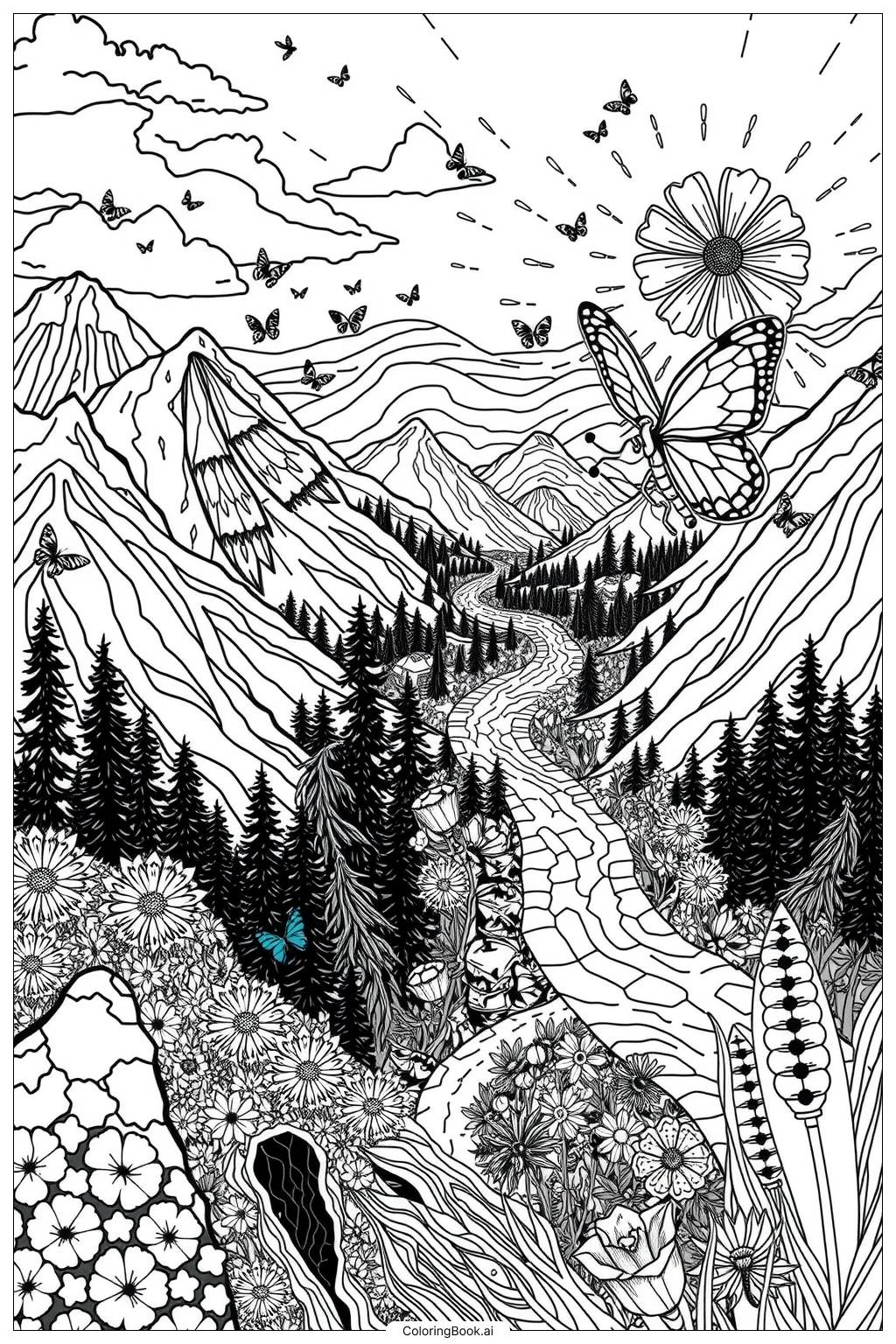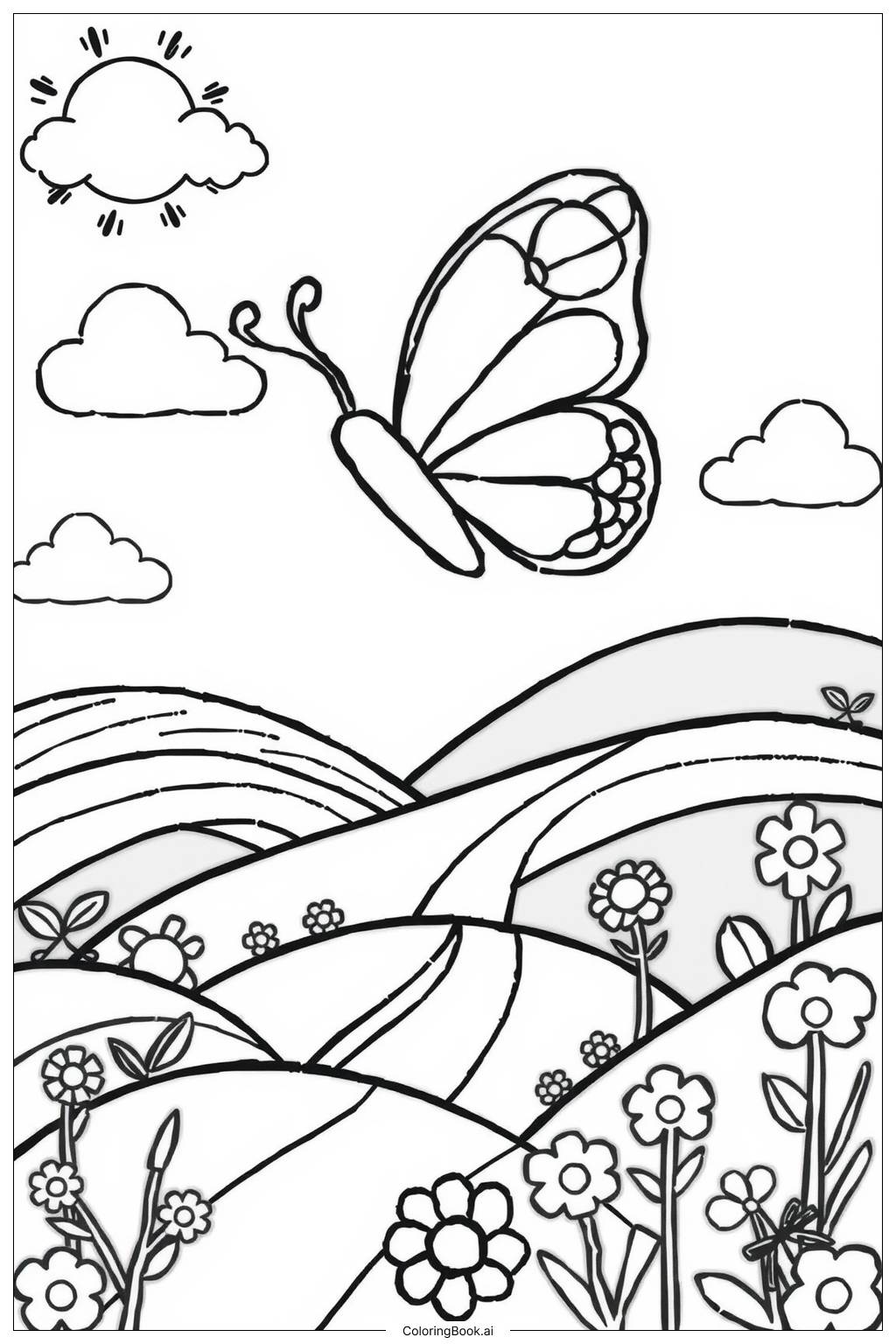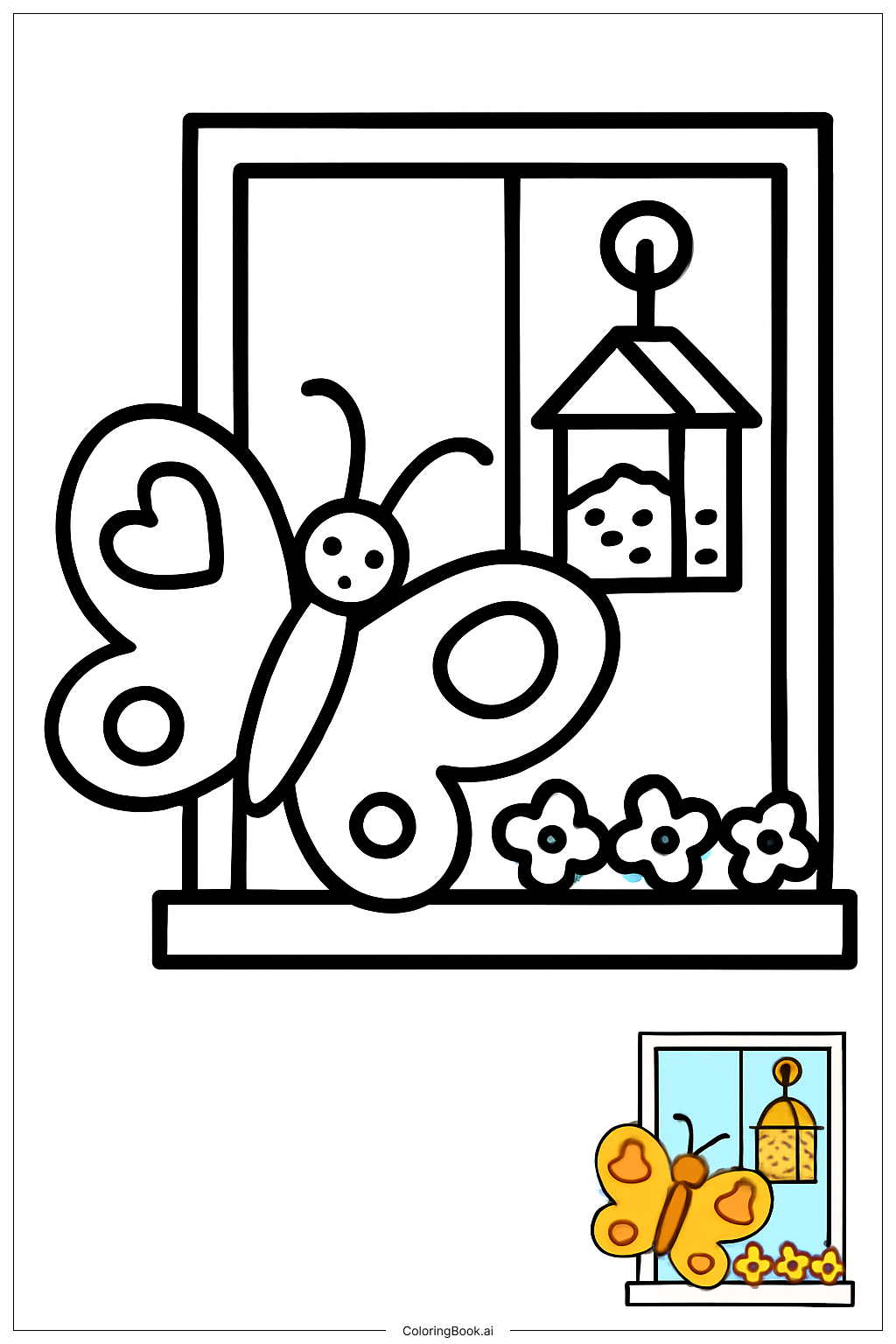
Coloring tips: How to color Butterfly At Window Bird Feeder coloring page well?
Start with the butterfly wings using bright, cheerful colors. Try orange and black like a monarch butterfly, or go with blue and purple for a magical look. Use yellow for a sunny, happy feel. Color the inner wing patterns with a slightly darker shade than the outer edges to add depth. For the bird feeder, use warm browns and tans to make it look wooden and natural. Add a touch of red or green to make it pop. Color the leaves in different shades of green to show light and shadow. Use light blue or soft gray for the window frame. Keep the background simple with a pale sky blue or soft yellow so the butterfly and feeder stand out. Try coloring lightly first, then layer more color to build richness. Have fun mixing colors and making this scene your very own nature moment!
Coloring challenges: Which parts are difficult to color and need attention for Butterfly At Window Bird Feeder coloring page?
• Wing Pattern Precision: The butterfly wings contain many small sections divided by veins and outline lines. Staying inside each tiny section without going over the borders can be tricky. Using a fine-tipped colored pencil or a thin marker helps keep colors neat and accurate within each wing cell.
• Layering Colors for Depth: The wings and feeder look flat if only one color is used. Building up layers of color to show light and shadow takes patience. Start with a light base color, then slowly add darker tones on the edges and shaded areas to give the image a natural, three-dimensional appearance.
• Small Decorative Details: The butterfly has small dots, curves, and fine markings inside its wings. These tiny details need careful attention and a steady hand. Rushing through them may cause colors to bleed into neighboring sections, so taking time on each detail makes a big difference in the final result.
• Bird Feeder Texture: The feeder has small structural lines suggesting wood grain, perches, and feeding ports. Matching realistic wood tones while keeping each small part distinctly colored can be challenging. Using two or three shades of brown and tan, applied in thin strokes following the grain lines, creates a convincing natural texture.
• Color Harmony Across the Scene: Choosing colors that work well together for the butterfly, feeder, leaves, and window frame is a creative challenge. Too many bright colors at once can feel overwhelming. Picking a simple color palette of two or three main tones and using softer shades for background elements helps the whole scene feel balanced and visually pleasing.
Benefits of coloring books: Advantages of drawing Butterfly At Window Bird Feeder coloring page
Coloring this butterfly and bird feeder scene offers many wonderful benefits for kids and adults alike. It helps build focus and concentration as you work carefully on the detailed wing patterns and small feeder parts. Staying inside the lines and choosing colors exercises patience and fine motor skills, which are important for writing and everyday tasks.
This scene also sparks creativity. You get to decide if the butterfly is orange like a monarch or bright blue like a dream. Every choice teaches you about color mixing and artistic expression. Kids learn that there are no wrong answers in art.
Spending time coloring this peaceful nature scene is also a great way to relax. It calms busy minds and reduces stress, making it a healthy and enjoyable activity after school or a long day. The quiet focus needed for coloring is similar to meditation.
Learning about butterflies and bird feeders through coloring also builds a gentle connection with nature. It encourages curiosity about the natural world and may inspire kids to look for butterflies and birds outside. Overall, this coloring page is a fun, educational, and soothing activity that supports creativity, mindfulness, and a love of nature.