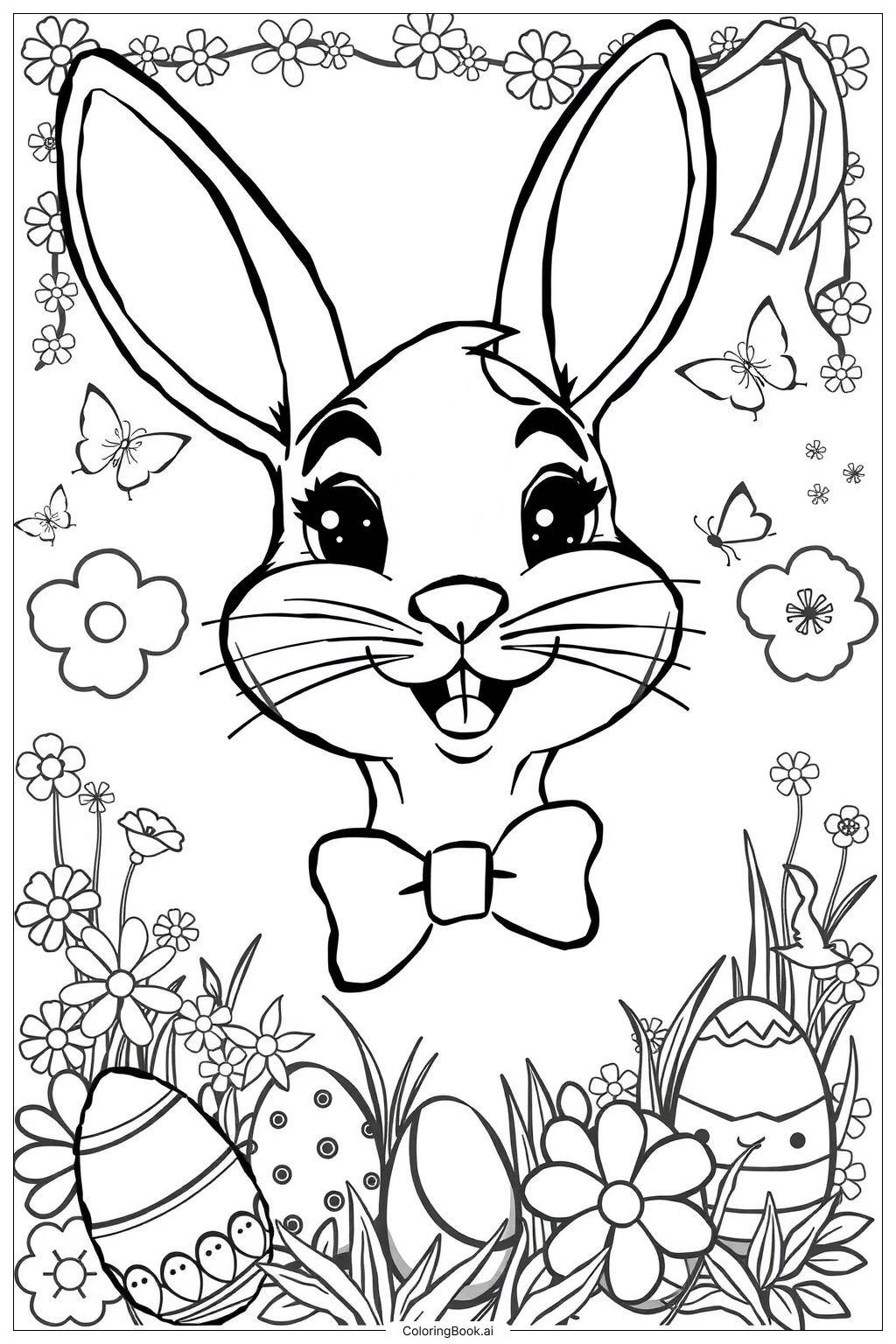
Coloring tips: How to color Easter Bunny Face-2 coloring page well?
To bring this Easter Bunny to life, you can use soft pastel colors like light pink for the ears’ inner parts and gentle gray or white for the fur. Bright, friendly colors for the eyes such as light blue or green can make the face pop. The nose could be a soft pink or peach, adding to its sweet appearance. You can also add subtle shading around the cheeks and forehead to show texture and depth. For extra fun, you might decorate the background with colorful Easter eggs or flowers using vibrant yellows, purples, and greens. Mixing smooth color fills with tiny strokes for the fur details will make your drawing look lively and adorable.
Coloring challenges: Which parts are difficult to color and need attention for Easter Bunny Face-2 coloring page?
• Fine fur details: The curved lines for the bunny’s fluffy cheeks and around the face require careful coloring to keep the design clean without smudging. Coloring small spaces inside these lines can be tricky for younger children. • Inner ear shading: The inside of the ears has thin lines suggesting dimension, which needs delicate coloring to create a soft, realistic look while staying inside the lines. • Facial features balance: Getting the right colors for the eyes, nose, and mouth to look harmonious requires some planning so the bunny’s friendly expression remains clear and inviting. • Whiskers precision: The thin whiskers are small and easily overlooked. Coloring or emphasizing them without breaking their delicate shape can be challenging. • Smooth large areas: The bunny’s face and ears have large spaces that need even coloring to avoid patchiness, which can be difficult without blending techniques.
Benefits of coloring books: Advantages of drawing Easter Bunny Face-2 coloring page
Coloring this Easter Bunny face helps children develop fine motor skills and hand-eye coordination by carefully filling in detailed areas like ears and whiskers. It encourages creativity with color choices, offering a chance to experiment with realistic and imaginative palettes. Working on facial expressions promotes attention to detail and visual analysis. Coloring soft, curvy shapes fosters patience and focus, beneficial skills for young artists. Additionally, engaging with a fun and festive Easter theme can boost mood and provide a sense of seasonal joy, making the creative experience even more rewarding.