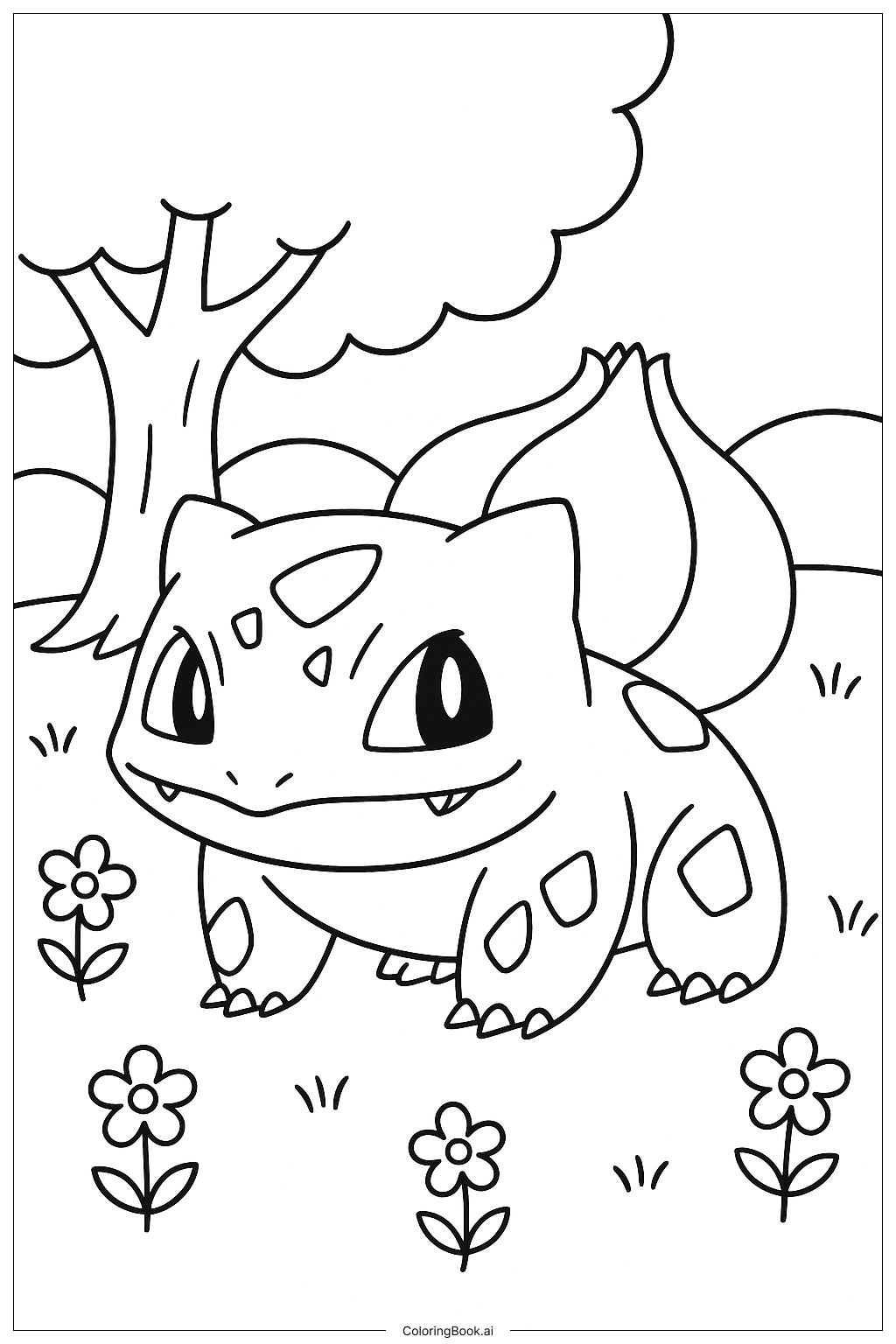
Coloring tips: How to color Bulbasaur On A Winding Forest Path coloring page well?
Start with Bulbasaur's body using a soft blue-green shade. Use a darker green for the spots on its skin to add depth. The bulb on its back can be a medium green, with the leaves a brighter, vivid green. For the forest path, use warm tans and light browns to show a dirt trail. Tree trunks look great in medium and dark brown. Use several shades of green for the leaves and ferns to create a layered, lush feel. Add yellow or white for sunlight filtering through the canopy. Wildflowers can be colored in cheerful yellows, purples, and pinks. Mushrooms work well with red caps and white stems. Take your time blending colors to make the forest feel deep and full of life. There is no single right way — have fun and make it your own!
Coloring challenges: Which parts are difficult to color and need attention for Bulbasaur On A Winding Forest Path coloring page?
• Bulbasaur's Skin Texture: Bulbasaur's body has a unique blue-green base color covered with darker spots and patches. Keeping the base color consistent while carefully adding the spot details without muddying the colors can be tricky, especially for younger colorists. Take it slow and let each layer dry before adding the next.
• The Bulb and Leaves: The large seed bulb on Bulbasaur's back has its own shape and shading needs. The bulb itself is rounder and lighter, while the leaves spreading from it are flatter and broader. Using two or three different shades of green for these two parts helps them look separate and three-dimensional rather than flat.
• Overlapping Forest Elements: The winding path is surrounded by trees, ferns, roots, and flowers that overlap each other. Deciding which element goes in front and which goes behind requires careful attention. Coloring foreground elements darker and background elements lighter is a helpful trick to create depth.
• Tree Bark and Path Details: The twisted tree trunks and the dirt path both use similar brown and tan tones, so it is important to use noticeably different shades to tell them apart. Adding light streaks along the bark and subtle shadows on the path edges makes these areas feel more realistic and textured.
• Lighting and Shadows: The forest canopy creates a dappled light effect, with some areas in bright sunlight and others in soft shadow. Capturing this takes practice. Adding slightly darker tones under branches and near the base of trees, and leaving lighter patches on the open path, can make the whole scene feel alive and immersive.
Benefits of coloring books: Advantages of drawing Bulbasaur On A Winding Forest Path coloring page
Coloring this image of Bulbasaur On A Winding Forest Path offers many wonderful benefits for kids and families. First, it helps children develop fine motor skills as they carefully color within the lines of detailed areas like the bulb, leaves, and forest floor. This kind of focused hand movement builds coordination that supports writing and other everyday tasks. Second, choosing colors for the forest, path, and Bulbasaur encourages creative thinking. Kids learn to make decisions and express themselves through color in a fun, low-pressure way. Third, the peaceful nature setting introduces children to ideas about forests, plants, and wildlife in an engaging format. It can spark curiosity about nature and the world around them. Fourth, coloring is a calming activity that helps reduce stress and improve focus. Spending quiet time on a detailed image like this teaches patience and concentration. Finally, completing the page gives children a real sense of accomplishment, building confidence and pride in their work. Whether coloring solo or together with a friend or family member, this image makes for a joyful and rewarding creative experience for all ages.