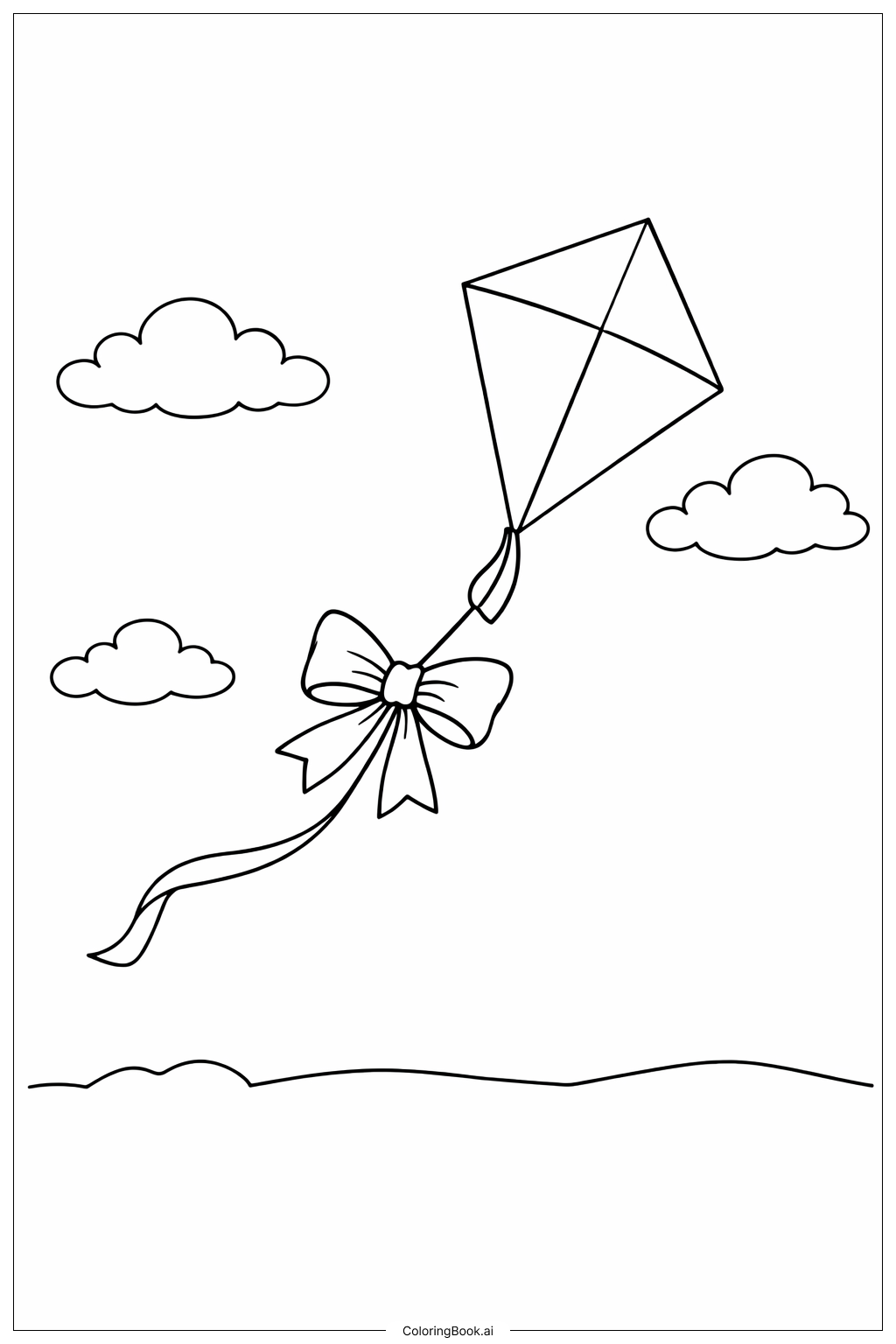
Coloring tips: How to color Bow On Kite coloring page well?
Start with the kite itself. Use bright, bold colors like red, yellow, or blue for the diamond sections. Try alternating two or three colors to make each section pop. For the bow, use a contrasting color such as pink, purple, or orange so it stands out against the kite. Add lighter shades to the ribbon loops to show depth and a shiny look. Color the kite tail in a fun gradient, going from one color to another as it flows downward. Use light blue or pale sky tones for the background to suggest an open sky. The wind lines can be left white or colored in soft gray to keep them subtle. Feel free to add clouds or a bright sun to make the scene feel complete. Use crayons, colored pencils, or markers — all work great on this design. Most importantly, have fun and make the kite your own.
Coloring challenges: Which parts are difficult to color and need attention for Bow On Kite coloring page?
• Bow Ribbon Details: The bow has multiple overlapping loops and a small central knot. Staying inside the tight curves of the ribbon without smudging into neighboring sections can be tricky. Use a fine-tipped tool for the inner areas and switch to a broader tool for the larger ribbon loops.
• Kite Section Divisions: The diamond-shaped kite is divided into several geometric sections by thin lines. Keeping each section a distinct color without bleeding across the dividing lines requires a steady hand and careful control, especially near the corners where sections meet at sharp angles.
• Wind Line Accuracy: The swirling wind lines are thin and curved, running close together in some spots. Deciding whether to color them or leave them as outlines takes thought. If you choose to color them, use a very light touch so they remain visible and do not overpower the main kite design.
• Tail Flow and Shading: The kite tail curves and twists as it trails behind the kite. Creating a sense of movement through color — using gradients or alternating shades — can be challenging for younger colorists. Blending two colors smoothly along the tail length takes patience and practice.
• Color Balance Across the Page: Because the bow and the kite are the two main focal points, balancing color between them without making one look too dominant is a real challenge. Choosing colors that complement rather than compete with each other will take some planning before you start.
Benefits of coloring books: Advantages of drawing Bow On Kite coloring page
Coloring this Bow On Kite page offers wonderful benefits for kids and beginners alike. First, it helps build fine motor skills. Filling in the small sections of the bow and the geometric kite panels trains hand muscles and improves pencil control. This skill supports handwriting and other detailed tasks in daily life. Second, it encourages creativity. Choosing colors for the bow, the kite sections, and the flowing tail lets colorists make their own artistic decisions. There is no wrong answer, which builds confidence. Third, it teaches color theory in a fun way. Trying to balance the bow color against the kite color helps young colorists learn about contrast and harmony without even realizing it. Fourth, the activity is calming. Focusing on staying within the lines and choosing colors helps quiet a busy mind, reducing stress and improving concentration. This is especially helpful after a long school day. Fifth, finishing the page gives a real sense of accomplishment. Seeing a completed, colorful kite ready to hang on the wall is a proud moment for any young artist. Overall, this page is a fun and rewarding coloring experience.