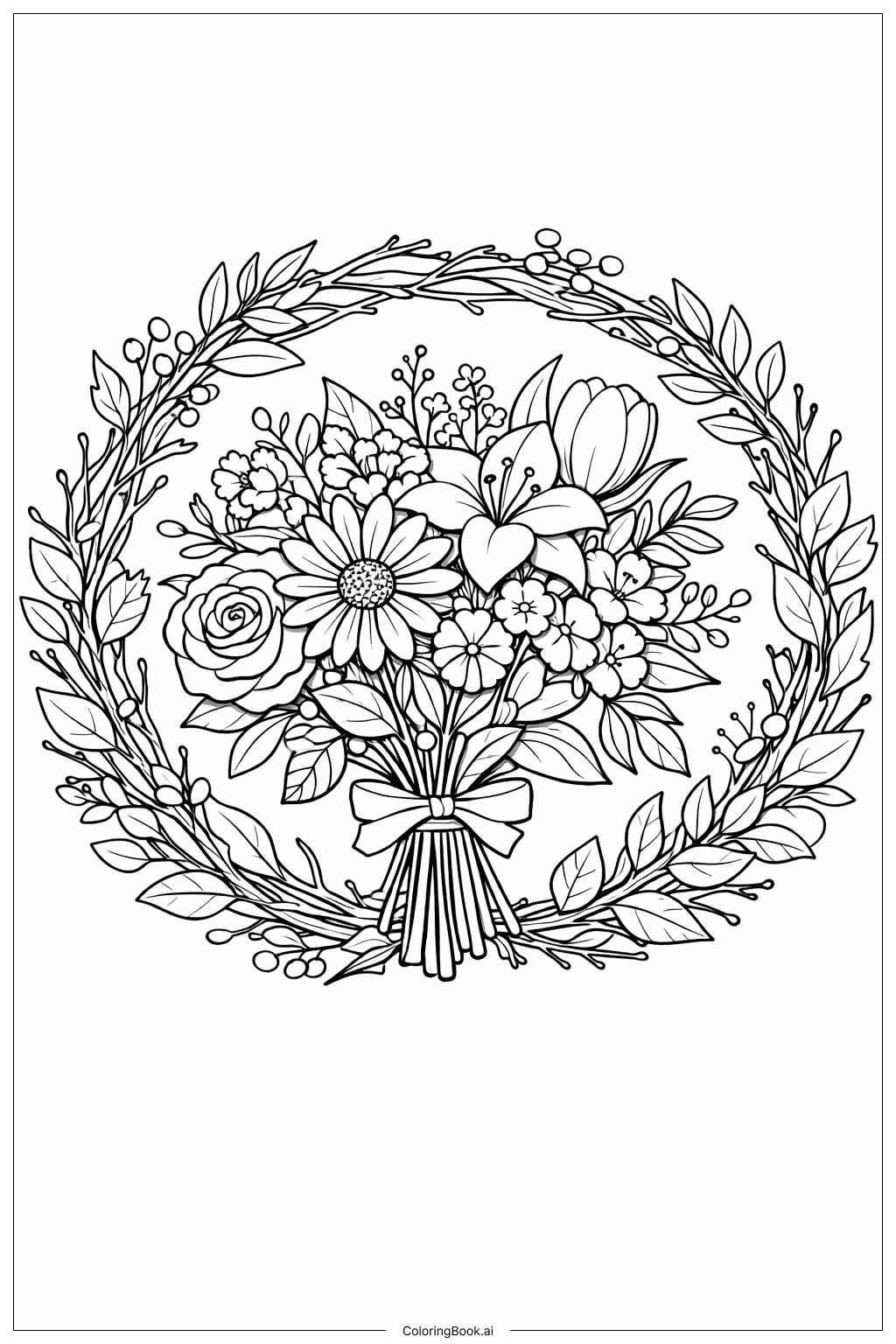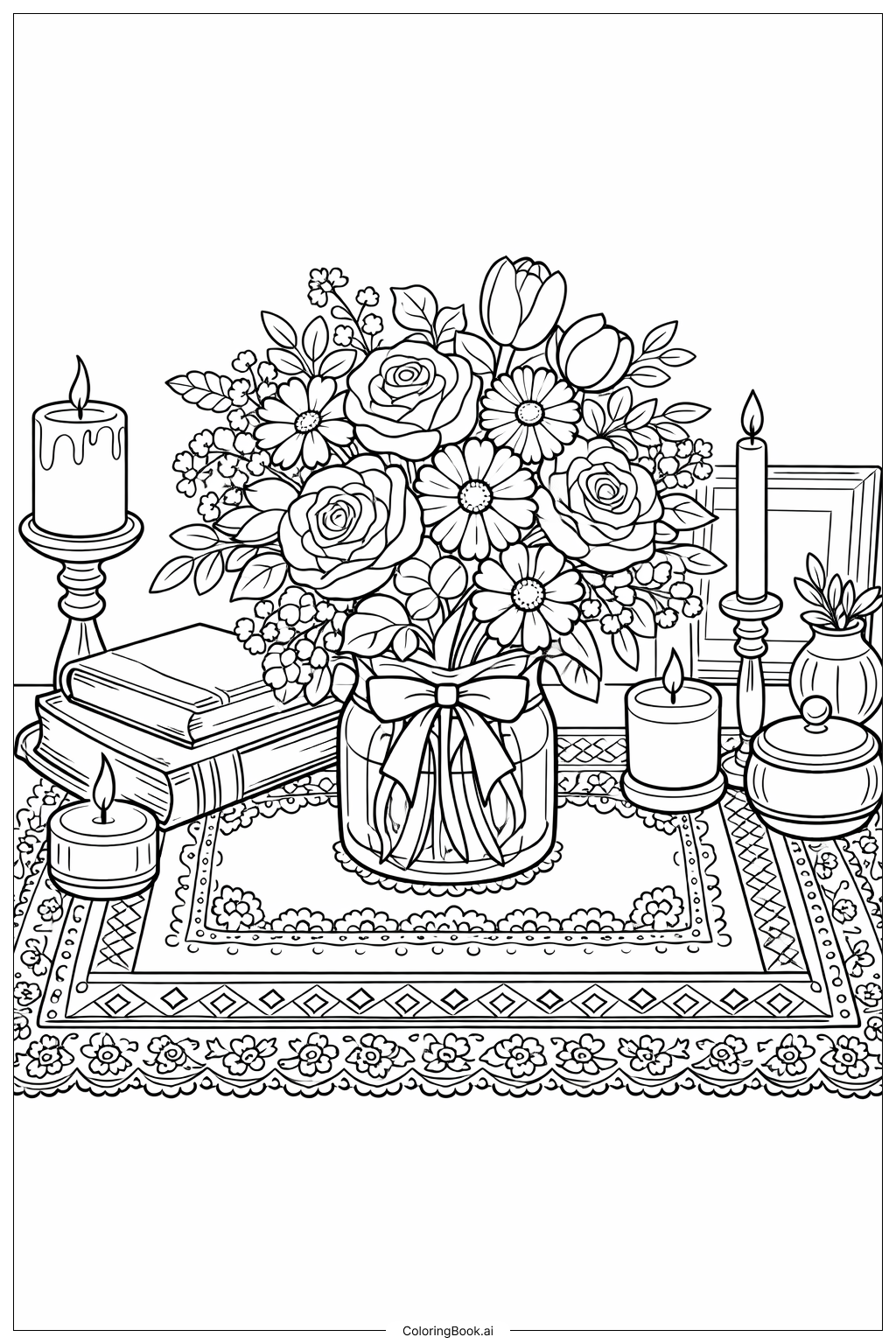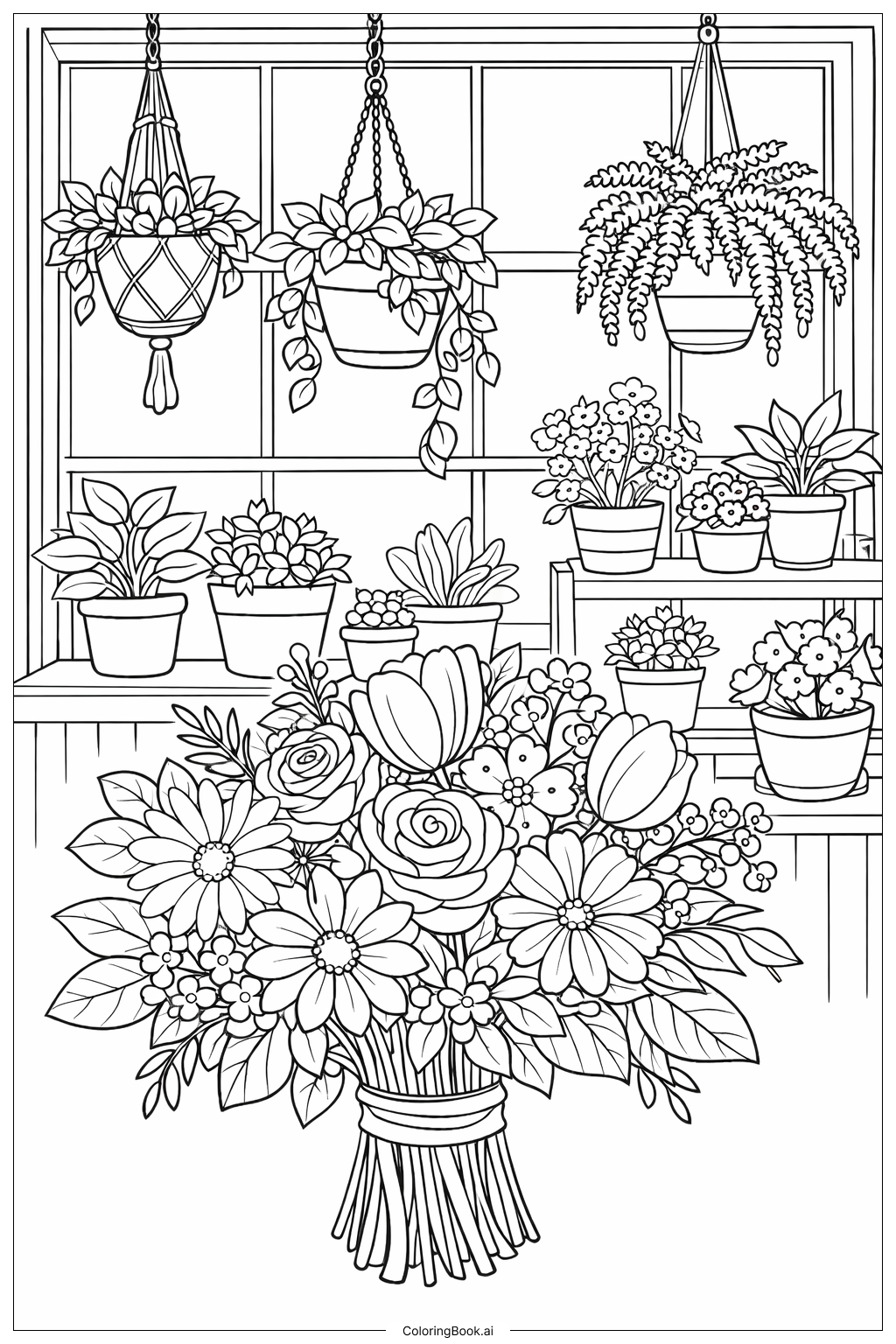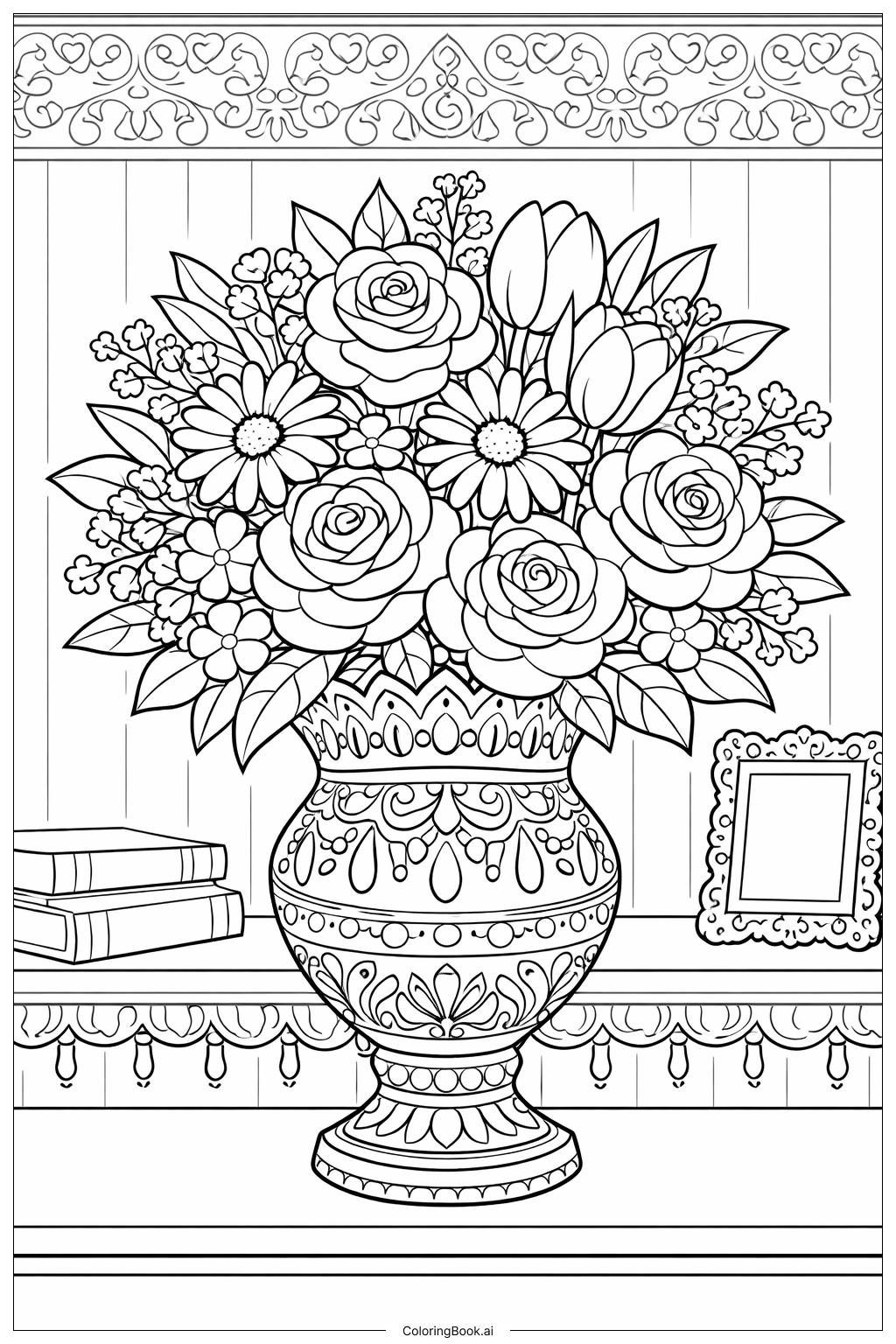
Coloring tips: How to color Bouquet Of Flowers With Fruit Still Life coloring page well?
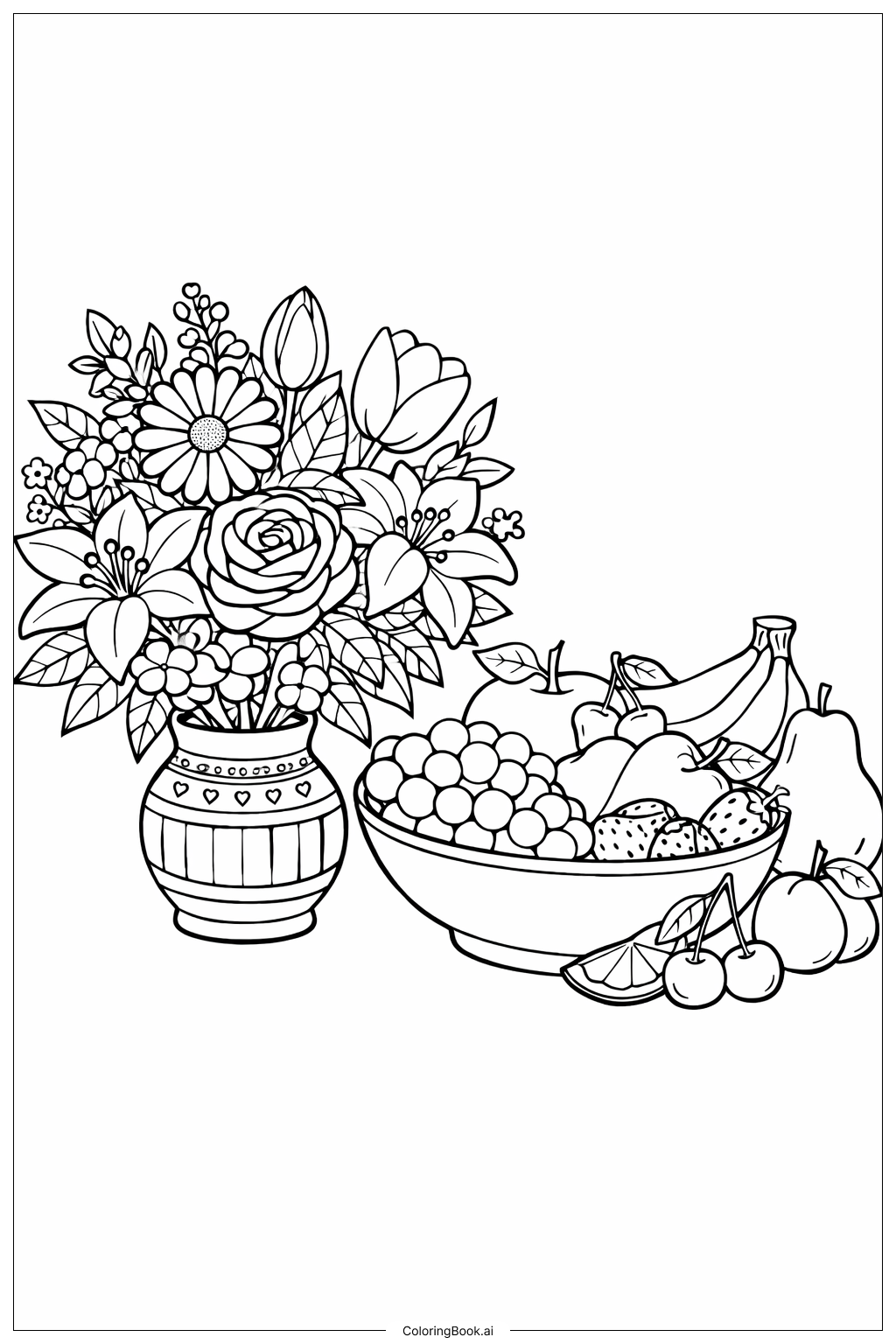
Start with the lightest colors first and work toward the darker shades. For the flowers, try soft pinks and reds for the roses, and bright yellows or whites for the daisies. Use different shades of green for the leaves to show depth. For the fruits, use rich reds and greens for apples, deep purples for grapes, and warm oranges or yellows for other fruits. Try blending two close shades on petals and fruits to give them a rounded, realistic look. Use a darker shade along the edges and a lighter shade in the center. Keep your strokes gentle and smooth. This image looks great with bright, cheerful colors, so don't be afraid to make it bold and colorful. You can also use colored pencils for fine details like leaf veins and petal lines.
Coloring challenges: Which parts are difficult to color and need attention for Bouquet Of Flowers With Fruit Still Life coloring page?
• Petal Layering: The flowers in this image have many overlapping petals. It can be tricky to color each petal separately without mixing up the colors. You need to be careful to stay within the outlines of each petal and use slightly different shades to show where one petal goes behind another. Taking your time on each flower will make a big difference.
• Fruit Shading and Roundness: Fruits like apples and grapes look best when they appear round and three-dimensional. Achieving this effect requires using at least two shades of the same color — a lighter tone in the center or highlight area and a darker tone near the edges. Blending smoothly between these shades is a skill that takes practice.
• Small Details and Fine Lines: The image contains many small details such as leaf veins, grape stems, and tiny flower centers. These areas are very narrow and require a sharp pencil or a fine-tipped marker to color neatly. A broad crayon may fill in too much space and cover the detail lines.
• Color Consistency Across Similar Elements: The bouquet contains multiple flowers and multiple fruits of the same type. Keeping a consistent color style across all similar elements — for example, making all roses the same shade of red — requires attention and planning before you begin coloring.
• Balancing the Overall Composition: With so many elements in one image, it is easy for the final result to look too busy or unbalanced. Choosing a color palette ahead of time and making sure the fruits and flowers complement each other will help the finished piece look harmonious and visually appealing.
Benefits of coloring books: Advantages of drawing Bouquet Of Flowers With Fruit Still Life coloring page
Coloring this Bouquet Of Flowers With Fruit Still Life page offers a wide range of wonderful benefits for children and adults alike. Working through the detailed petals and fruit shapes helps improve hand-eye coordination and fine motor skills, especially when staying within small outline areas. Choosing colors for flowers and fruits encourages creative thinking and helps develop a natural sense of color harmony. Focusing on a calm, nature-inspired image like this one is a great way to reduce stress and promote relaxation after a busy day. For younger colorists, naming the flowers and fruits while coloring builds vocabulary and sparks curiosity about the natural world. The still life format also introduces basic art concepts such as composition, shading, and depth in a fun and approachable way. Completing the full image gives a strong sense of accomplishment and pride, boosting confidence and encouraging a love of art. Whether you use crayons, colored pencils, or markers, this page is a joyful and enriching activity for everyone.