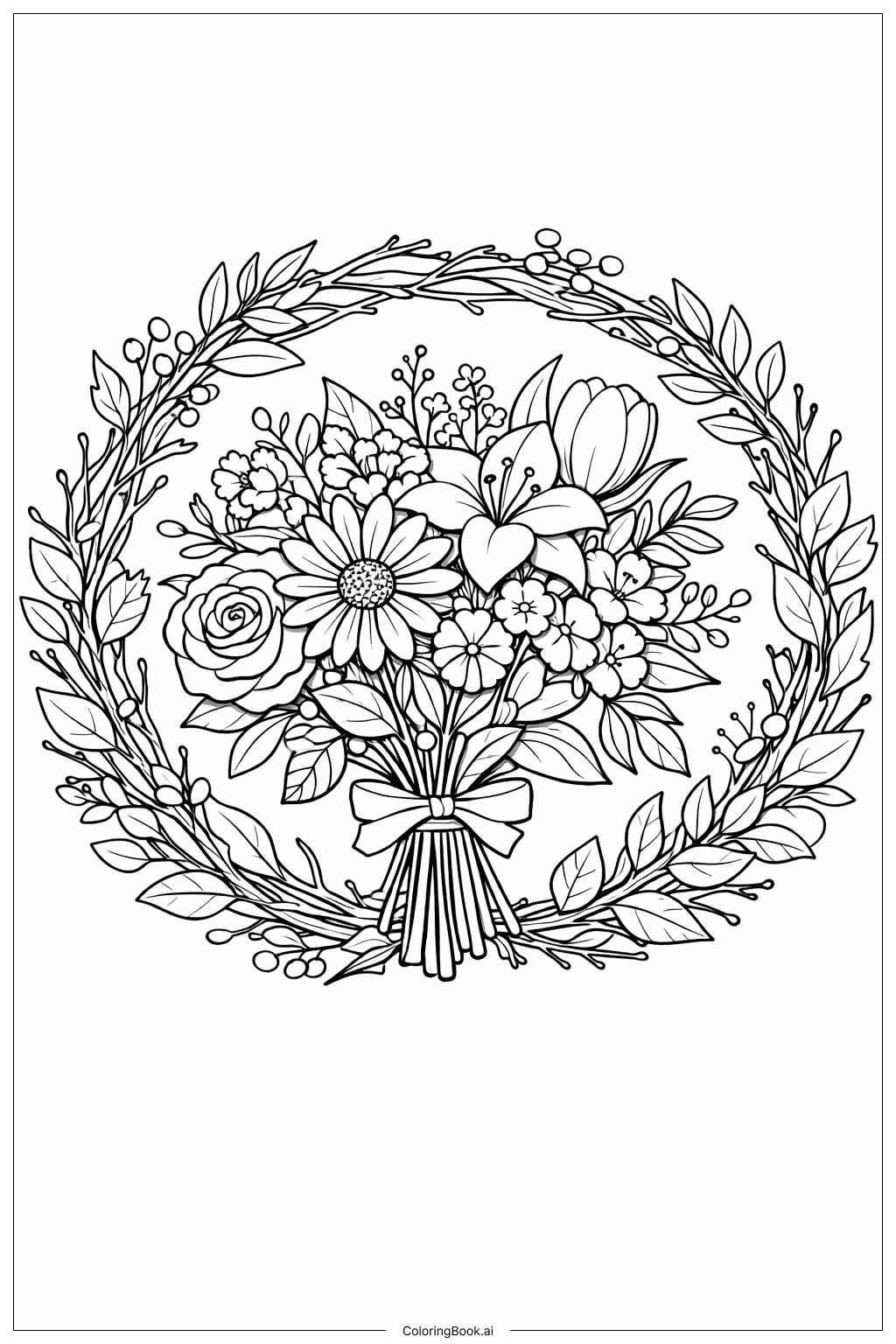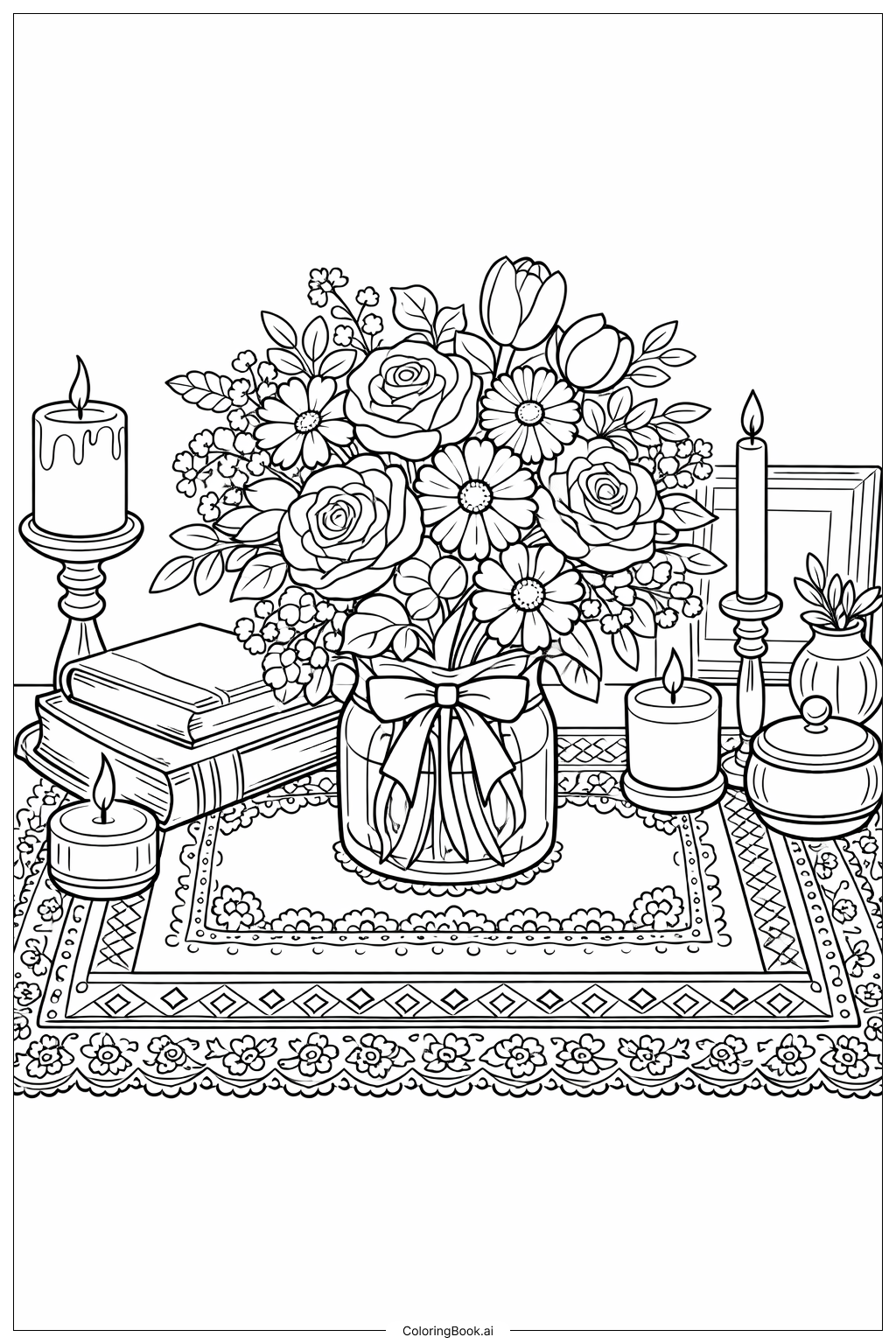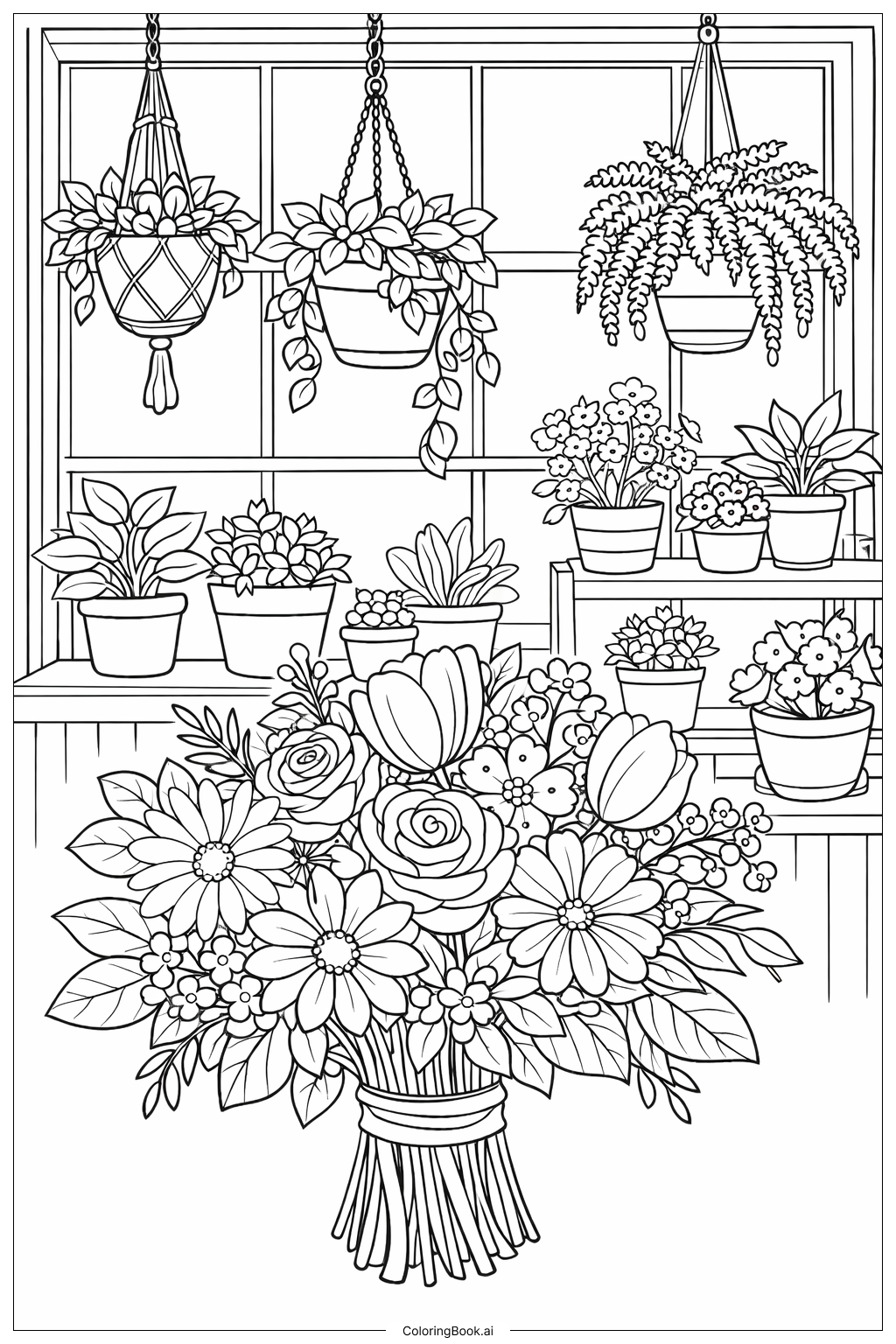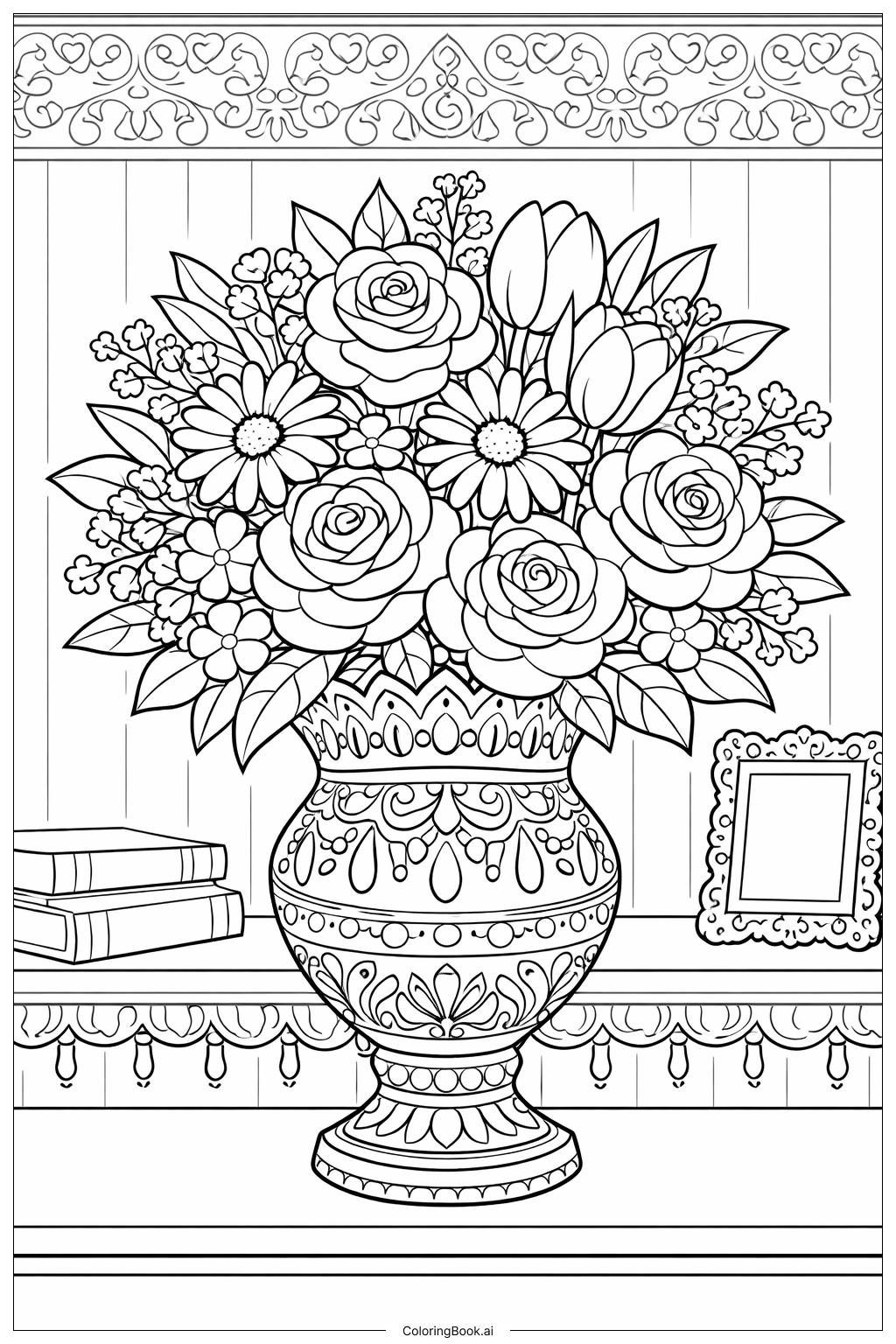
Coloring tips: How to color Bouquet Of Flowers With Bird coloring page well?
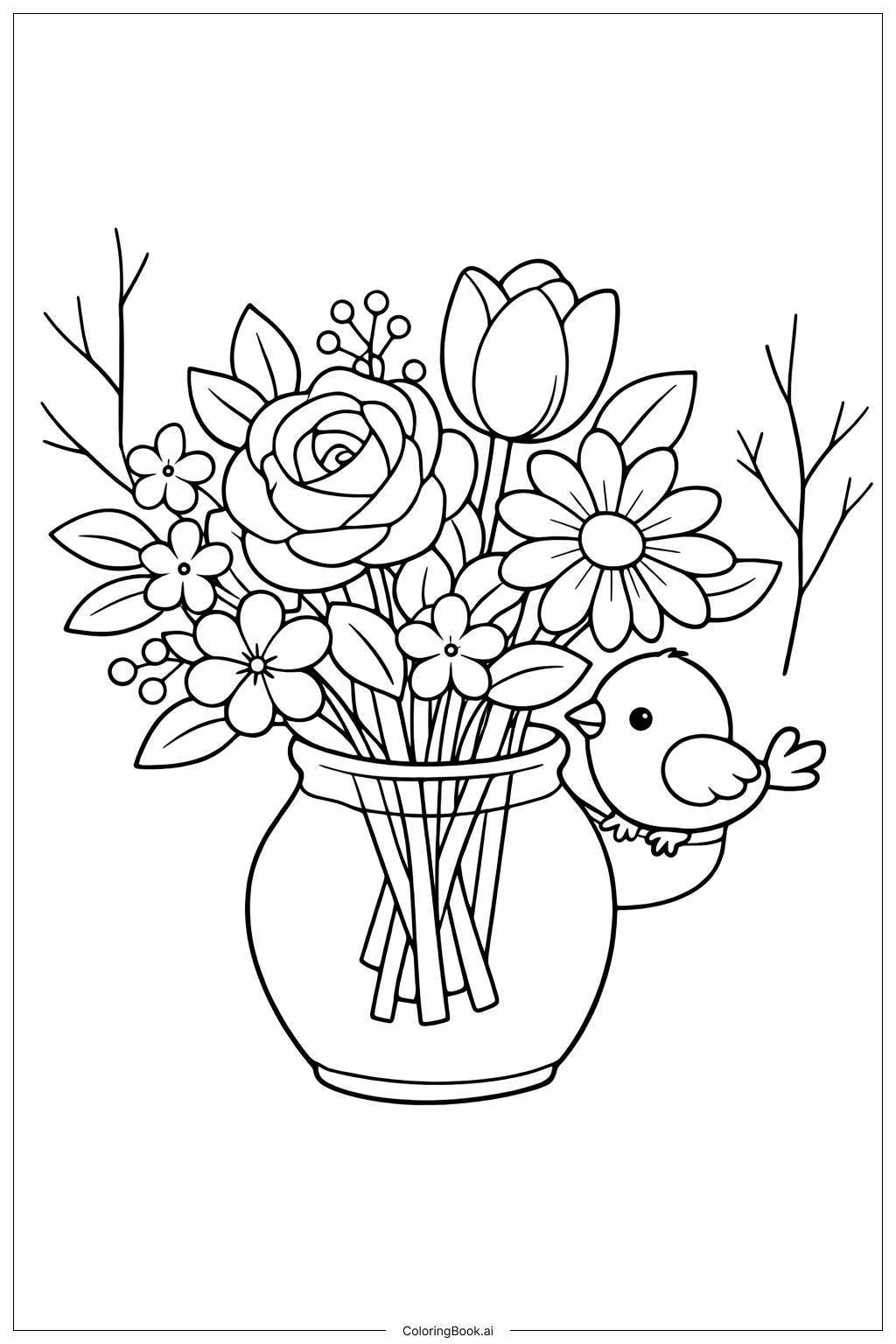
Start with the bird at the center of the bouquet to make it stand out. Use warm colors like golden yellow or soft orange for the bird's body, with a bright beak in orange or red. For the flowers, choose a variety of cheerful colors. Paint the large roses in shades of pink, red, or purple. Use white or light yellow for the daisy-like flowers. Color the smaller blossoms in coral, peach, or lavender. For the leaves, use different shades of green, from light lime to deep forest green, to add depth. The ribbon at the base can be done in a soft blue or light pink. Try blending two similar shades on each petal to give the flowers a lifelike glow. Leave some areas lighter to show where the sunlight touches the petals. Take your time and enjoy filling each small section with color.
Coloring challenges: Which parts are difficult to color and need attention for Bouquet Of Flowers With Bird coloring page?
• Small Bird Details: The bird sitting inside the bouquet has tiny features, including small eyes, a fine beak, and delicate wing feathers. Coloring these areas neatly requires a thin-tipped colored pencil or fine marker. It can be tricky not to color outside the small lines, so work slowly and carefully on this part first.
• Overlapping Petals and Leaves: Many of the flower petals and leaves overlap each other throughout the bouquet. It can be hard to decide which colors go where, and keeping each layer visually separate takes planning. Try using slightly different shades of the same color family for neighboring petals to help them stand out from one another.
• Intricate Petal Layers: The larger flowers, especially the roses, have many curved and layered petals drawn close together. Shading each petal individually to create a rounded, three-dimensional look is challenging. Moving the pencil in the direction of the petal curve helps create a natural and realistic appearance.
• Dense Leaf Areas: The bouquet contains many leaves clustered tightly together. Filling each leaf with smooth, even color without muddying the greens takes patience. Using two or three different green tones and applying darker shades near the stem edges helps bring the foliage to life.
• Ribbon and Base Composition: The ribbon at the base of the bouquet has folds and curves that require careful shading. Adding a slightly darker tone to the inner folds and a lighter tone to the raised sections will make the ribbon look soft, flowing, and realistic.
Benefits of coloring books: Advantages of drawing Bouquet Of Flowers With Bird coloring page
Coloring this Bouquet Of Flowers With Bird page offers a wonderful range of benefits for children and beginners alike. Working through the many petals, leaves, and the little bird encourages fine motor skill development. Holding a pencil or marker and carefully staying within small, detailed lines helps strengthen hand-eye coordination over time.
Choosing colors for each flower, leaf, and the bird sparks creativity and imagination. Kids learn to think about color combinations and how different shades can work together to make a beautiful picture. This kind of creative decision-making builds confidence and artistic thinking.
The peaceful, repetitive motion of coloring petal after petal is naturally calming. It helps children slow down, focus, and find a quiet moment in their day. Many children find this kind of activity relaxing and use it as a way to unwind after school.
Nature-themed coloring pages like this one also gently introduce children to the natural world. Coloring different types of flowers and a small bird encourages curiosity about plants and animals. It can inspire kids to look more closely at real flowers and birds they see outdoors.
Finally, completing a full page builds a sense of accomplishment and pride. Seeing a finished, colorful bouquet is a rewarding experience that motivates children to keep creating and exploring their artistic abilities.