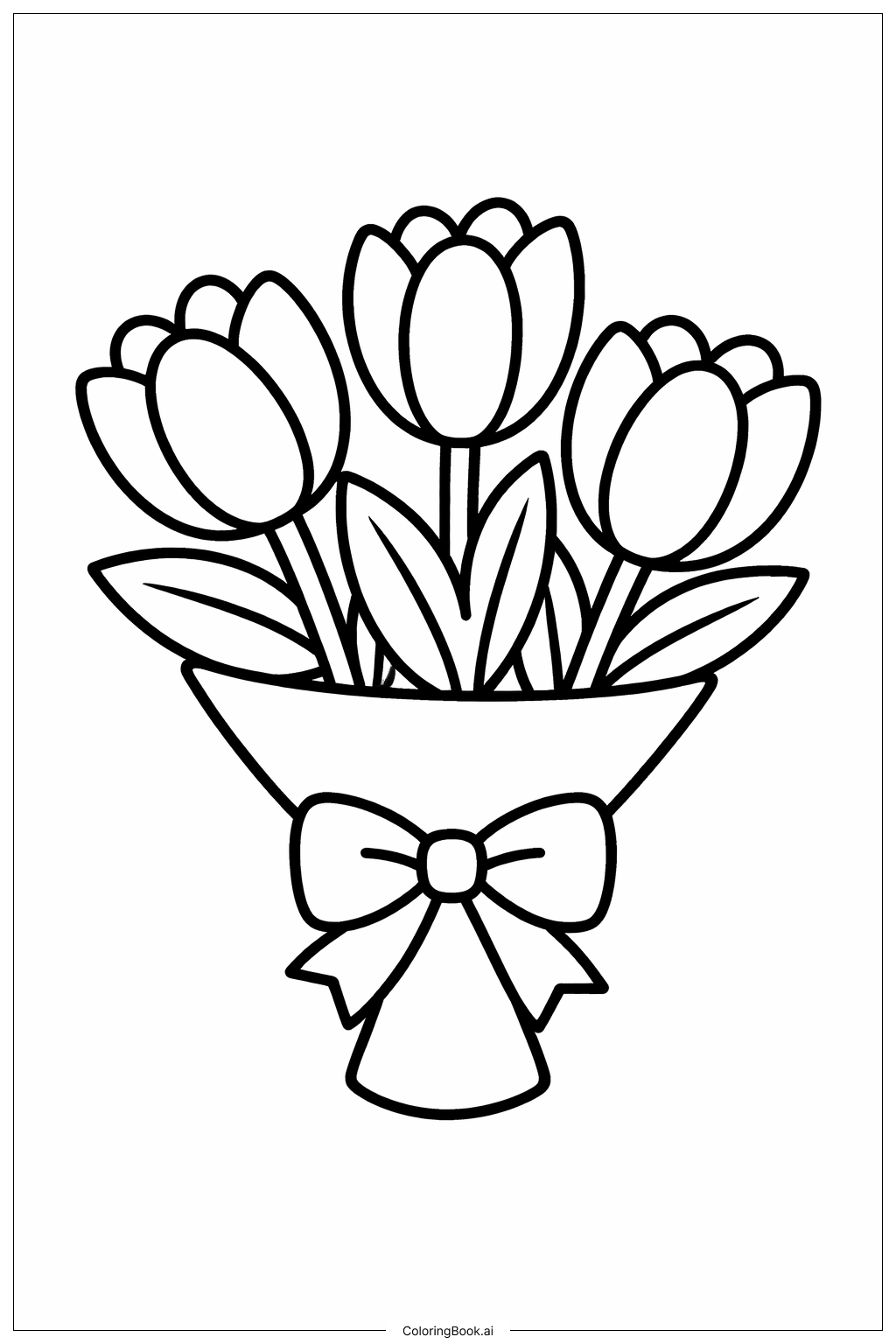
Coloring tips: How to color Bouquet Of Flowers With Big Tulips coloring page well?
Start with the big tulips since they are the stars of the bouquet. Try classic tulip colors like red, pink, orange, or purple for the petals. You can use a lighter shade on the inner petals and a darker shade on the outer edges to give them a rounded, lifelike look. For the smaller flowers, pick colors that complement but contrast with the tulips — yellow, white, or lavender work beautifully. Color the leaves and stems in different shades of green. Try using light green for young leaves and a deeper green for larger ones. If you want the bouquet to look extra special, add gentle streaks of a lighter color on each petal to show how light falls on them. Have fun mixing colors to make your bouquet totally unique!
Coloring challenges: Which parts are difficult to color and need attention for Bouquet Of Flowers With Big Tulips coloring page?
• Tulip Petal Shading: The large tulip petals look simple at first, but adding depth and dimension takes care. Each petal curves, so you need to blend light and dark tones smoothly to show that curve. Without shading, the petals can look flat. Try using a base color first, then gently layer a darker shade along the edges and a lighter tone near the center.\n\n• Small Flower Details: The smaller flowers surrounding the tulips have fine, delicate petals that sit close together. Coloring them without accidentally blending into neighboring petals or the background requires a steady hand and a sharp colored pencil or thin marker. Take your time and work petal by petal.\n\n• Leaf and Stem Variety: There are multiple leaves and stems overlapping in the lower part of the bouquet. Keeping each one distinct using different shades of green — without making the area look muddy or confused — can be tricky. Try alternating between light green, medium green, and dark green to help each leaf stand out clearly.\n\n• Color Harmony Across the Bouquet: Choosing colors that look good together across the whole bouquet is a real creative challenge. Too many bright colors at once can feel overwhelming, while too many soft colors can make the image look dull. Think about which flowers you want to stand out most, and let those guide your color choices for the rest of the arrangement.\n\n• Staying Within the Lines: With so many curved petals, rounded leaves, and overlapping shapes packed closely together, it takes focus and patience to stay neatly within each outlined section. This is especially true around the base of the bouquet where the stems cross and gather.
Benefits of coloring books: Advantages of drawing Bouquet Of Flowers With Big Tulips coloring page
Coloring this bouquet of flowers is a wonderful activity for kids and adults alike. Here are some great reasons to pick up your colors and get started.\n\nIt builds focus and patience. Filling in all those petals and leaves one by one trains your brain to slow down and pay attention — a skill that helps in school and everyday life.\n\nIt sparks creativity. Choosing your own colors for the tulips and companion flowers gives you the freedom to express yourself. There is no wrong answer — every color combination can be beautiful.\n\nIt relieves stress. The gentle, repetitive motion of coloring is calming and soothing. Many people find that coloring flowers helps them relax after a long or busy day.\n\nIt develops fine motor skills. Gripping a pencil and carefully coloring within the lines strengthens the small muscles in your hands and fingers, which is especially important for younger children.\n\nIt teaches color theory in a fun way. Experimenting with shading, blending, and complementary colors on real flower shapes is a natural and enjoyable introduction to how colors work together.\n\nBest of all, when you finish, you have a beautiful piece of flower art to display, gift, or keep as a memory of a quiet, creative moment.



