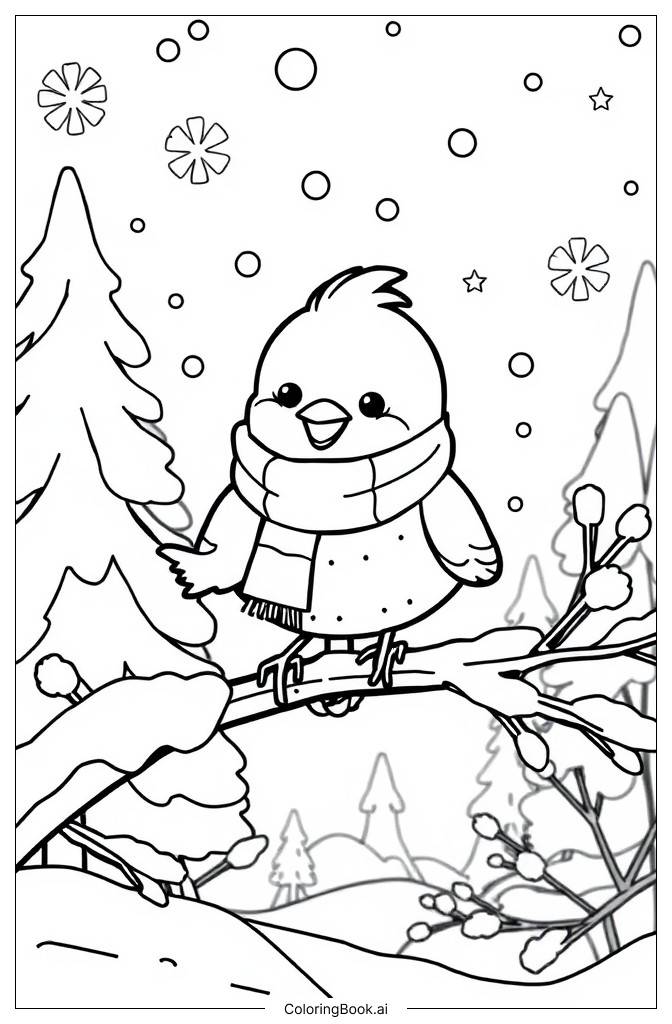
Coloring tips: How to color Winter Bird coloring page well?
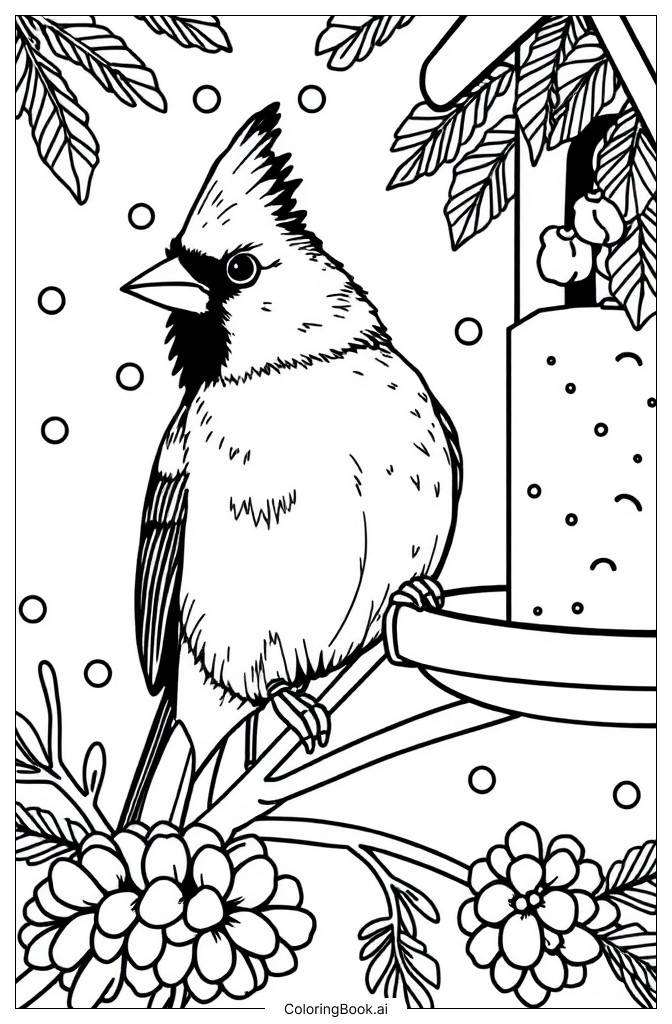
Use soft blues and icy whites for the snowy background to give a cold winter feel. The bird can be colored with warm browns, rusty reds, or soft grays, which contrast nicely against the cool background. For the pinecones, use shades of brown to add natural warmth. Add touches of green to the pine needles for a splash of color. Encourage using gentle shading to show the bird's feathers and the texture of the tree branch. Light gray or pale blue can be used to highlight the snowflakes for a sparkling effect. This combination makes the bird stand out while keeping the wintery mood.
Coloring challenges: Which parts are difficult to color and need attention for Winter Bird coloring page?
• Feather Details: The bird's feathers have fine lines that require careful coloring to keep the texture clear without coloring outside the lines.
• Snowflakes: The small snowflakes scattered around are tiny and have complex shapes that may be tricky to color neatly.
• Pinecone Texture: The pinecones have overlapping scales that need precise coloring to reflect their 3D texture.
• Branch and Needles: The thin pine needles need steady hand control to color each needle without going beyond the outlines.
• Contrast Balance: Balancing warm bird colors against the cool winter shades can be challenging to make the bird pop without overpowering the background.
Benefits of coloring books: Advantages of drawing Winter Bird coloring page
Coloring this Winter Bird image helps improve fine motor skills because of the detailed feathers, pinecones, and snowflakes. It encourages focus and patience as children work carefully on small shapes. The image also inspires creativity by choosing colors to express a winter scene mood. Coloring natural elements like birds and trees fosters appreciation for wildlife and the seasons. This picture can boost confidence as kids complete a detailed, beautiful artwork that shows their ability to handle intricate designs.