Coloring tips: How to color Tropical bird coloring page well?
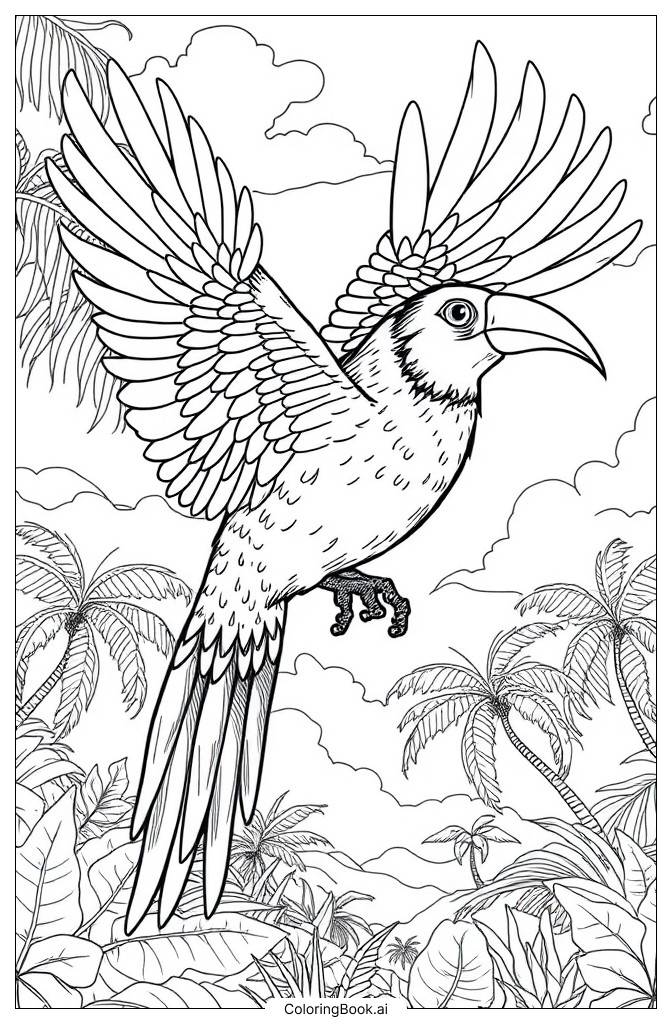
For this Tropical bird, try using bright and bold colors to bring it to life. Use vibrant reds, yellows, and blues for the feathers to make the bird stand out. You can color the leaves in various shades of green, mixing light and dark tones to create depth. The flowers can be colored with warm colors like orange, pink, or purple to add contrast. Don’t forget to color the branch with earthy browns. You can also add shading by using darker colors along the edges and lighter colors in the middle to show light and shadow. This will make the image look more lively and three-dimensional. Feel free to mix and match colors to create your own unique tropical scene!
Coloring challenges: Which parts are difficult to color and need attention for Tropical bird coloring page?
• Feather Details: The many layered feathers have small, delicate shapes that require careful coloring inside the lines to make the bird look realistic. This can be tricky for younger children who are still developing fine motor skills. • Leaf Variety: The leaves differ in size and overlap each other, so choosing the right shades of green to show depth and separation can be a challenge. Using too many similar colors might make the leaves blend together. • Flower Petals: The tropical flowers have multiple petals with small gaps between them, which need steady hands to color without going outside the lines. Some petal shapes are narrow or curved, increasing the difficulty. • Shading and Texture: Adding shadows and texture to feathers, leaves, and bark requires blending colors smoothly, which is an advanced coloring technique. This takes patience and practice to achieve a natural look. • Small Details: The bird’s beak, eye, and claw details are small and require precise strokes to color neatly. Missing these details may reduce the overall effect of the artwork.
Benefits of coloring books: Advantages of drawing Tropical bird coloring page
Coloring this Tropical bird image helps improve focus and concentration as children pay attention to the details of feathers, leaves, and flowers. It also develops fine motor skills through careful coloring of small and intricate shapes. Experimenting with bright colors and shading fosters creativity and artistic expression. This activity encourages learning about nature and tropical wildlife, sparking curiosity about birds and plants. Additionally, coloring can reduce stress and provide a calming, enjoyable experience for children and adults alike. Overall, it supports cognitive development while being a fun way to practice color recognition and hand-eye coordination.