Coloring tips: How to color Best Friend Fish coloring page well?
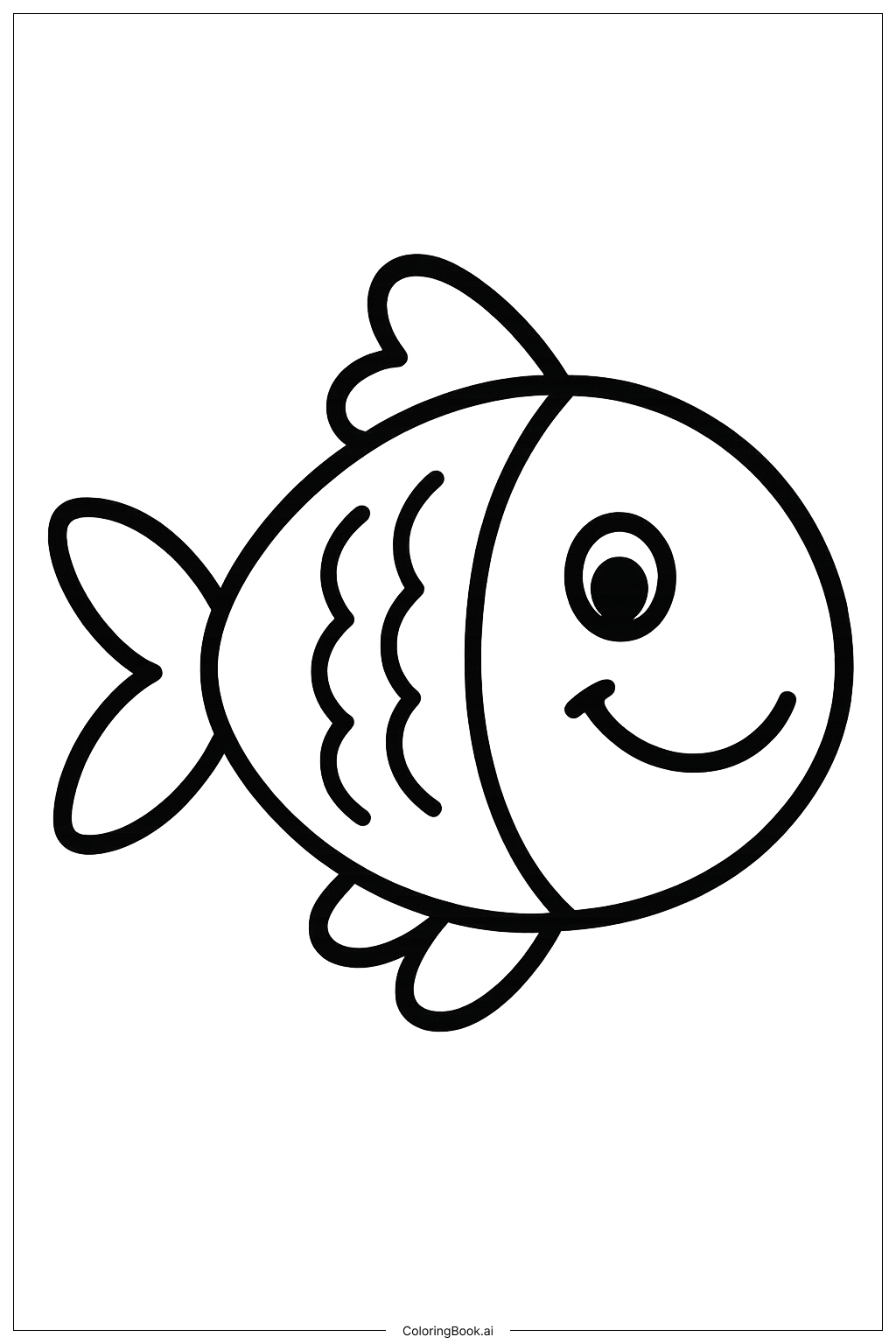
Use bright and cheerful colors such as blues, oranges, yellows, and greens to bring the fish to life. Try using different shades of blue for the water or background if you want to add an ocean scene. You can color the fins and tail in a different color than the body to create contrast. Adding sparkles or light highlights with white or lighter shades can give the fish a shiny, wet look. Don't forget to color the fish’s eye to make it look more lively. Experiment with warm colors for the fish to make it stand out or cool colors for a calm underwater feeling. Mixing colors and blending can make your fish look more realistic or magical.
Coloring challenges: Which parts are difficult to color and need attention for Best Friend Fish coloring page?
1. Staying within the thin lines of the fish’s small fins and tail can be tricky for younger kids. It requires careful hand control.
2. The parallel wave lines on the body might be hard to color separately without overlapping.
3. Coloring the fish’s eye perfectly can be difficult to avoid coloring the white part accidentally.
4. Choosing colors that contrast well between the body, fins, and tail may be challenging for some children.
5. Adding shading or highlights may be tough for beginners but can make the picture look better when done right.
Benefits of coloring books: Advantages of drawing Best Friend Fish coloring page
Coloring this fun fish helps children improve their fine motor skills by practicing precise coloring inside the lines. It also encourages creativity as kids decide which colors to use and how to blend them. Coloring animals like fish can teach kids about marine life and inspire an interest in nature. This activity boosts focus and patience, perfect for kids who like to take their time on their artwork. It also gives a sense of achievement and joy when the fish is fully colored and looks lively.