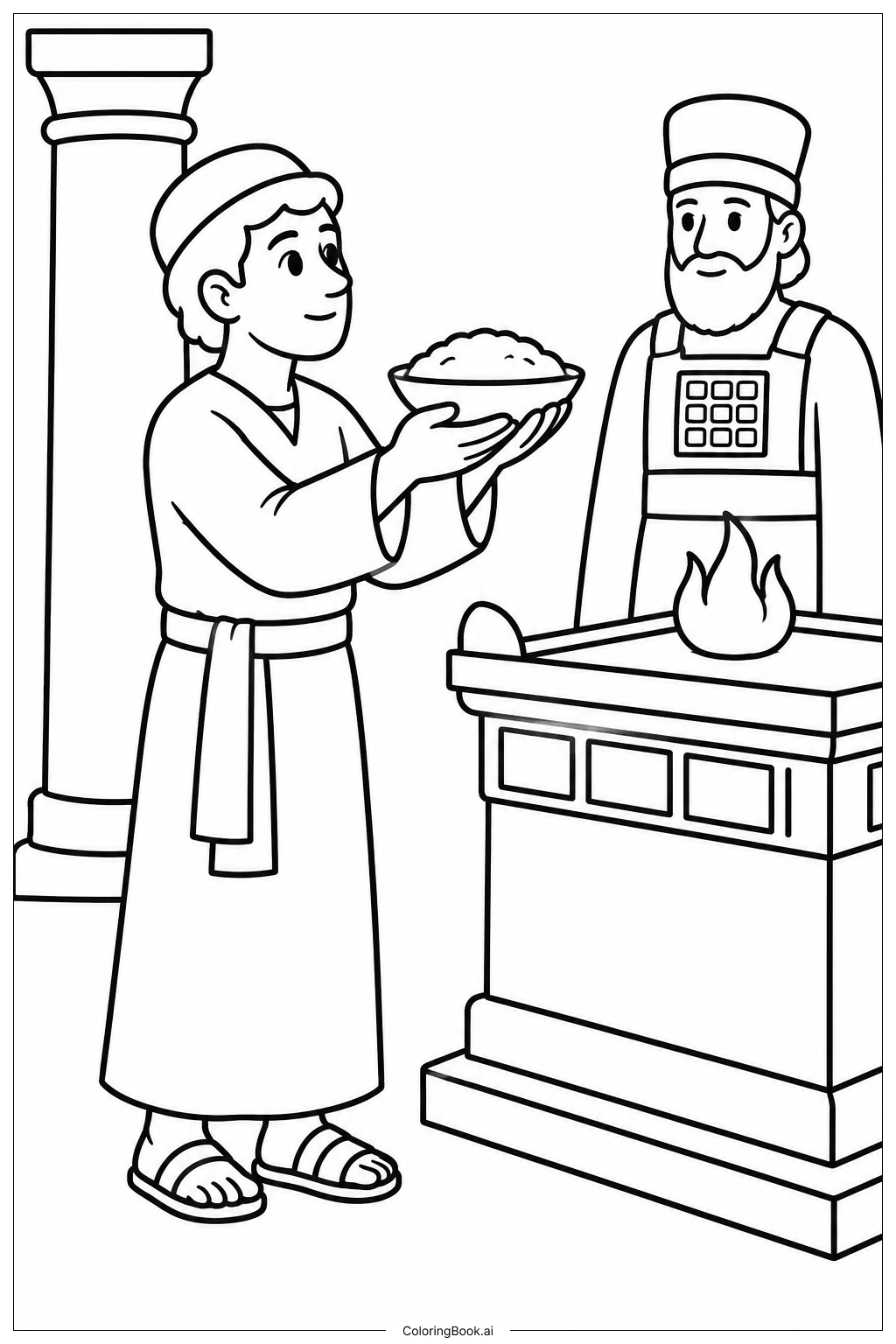
Coloring tips: How to color Offering Presented At Beis Hamikdash coloring page well?
Start with the large background elements like the Temple walls and columns. Use warm stone colors such as tan, beige, and light brown to bring the ancient architecture to life. For the priest's robes, try rich blues, purples, and whites, which are traditional colors associated with Temple service. Use bright oranges and reds for the flames on the altar to make them stand out. The altar itself can be shaded with gray and brown tones to show its stone surface. Add soft yellows and whites for the rising smoke and incense. Use gold or yellow tones for any ritual vessels or sacred objects. For the background sky or Temple interior, light blues and creams work beautifully. Take your time with each section. Color from the background forward so details in the front layer stand out clearly. This scene has many small details, so use thin markers or colored pencils for precision.
Coloring challenges: Which parts are difficult to color and need attention for Offering Presented At Beis Hamikdash coloring page?
• Priestly Robes and Garments: The ceremonial robes worn by the priest are layered and detailed, with folds, hems, and specific patterns. Coloring fabric folds realistically requires careful shading, using lighter tones on raised areas and darker tones in creases. Children may find it tricky to stay within the lines of each fold without muddying the colors together.
• Altar Flame Details: The fire on the altar has an organic, flowing shape that is hard to color in a natural-looking way. Blending reds, oranges, and yellows smoothly from the base to the tips of the flame takes practice. Going too dark at the top or too light at the base can make the flames look flat and unconvincing.
• Architectural Elements: The Temple columns, walls, and stone blocks contain repeating geometric patterns and fine line details. Keeping these consistent in color and tone across the entire background without the image looking patchy requires patience and steady hand control, especially for younger artists.
• Ritual Vessels and Sacred Objects: Small items like bowls, censers, and offering trays appear around the altar. These tiny elements demand precise coloring with narrow tools. Metallic finishes, like gold or bronze, are especially hard to replicate with standard crayons, requiring layering techniques to suggest shine and depth.
• Smoke and Incense Effects: The curling smoke rising from the altar is a subtle element that can be easily overlooked. Conveying a translucent, wispy quality using soft grays, pale blues, or whites on a light background is a real challenge, as pressing too hard with any color will make the smoke look too solid and heavy.
Benefits of coloring books: Advantages of drawing Offering Presented At Beis Hamikdash coloring page
Coloring this image of an offering at the Beis Hamikdash offers a rich mix of creative and educational rewards for children and adults alike. Engaging with the fine details of the Temple scene helps build concentration and fine motor skills, as the intricate lines require careful, controlled coloring. For Boys and Girls exploring their heritage, this page serves as a meaningful connection to Jewish history and tradition, making learning feel active and personal. Adults will find the complexity of the architectural details and ceremonial figures a satisfying meditative exercise, promoting focus and calm. The scene encourages curiosity, prompting questions about ancient Temple rituals, priestly roles, and the significance of offerings in Jewish practice. This kind of thoughtful engagement supports both historical literacy and spiritual reflection. Working through a detailed image like this also builds patience, as completing each section step by step teaches the value of slowing down. Whether used in a classroom, at home, or in a holiday setting, this coloring page creates a gentle, immersive way to honor and remember a central part of Jewish faith and history.