Coloring tips: How to color Grizzly Bear coloring page well?
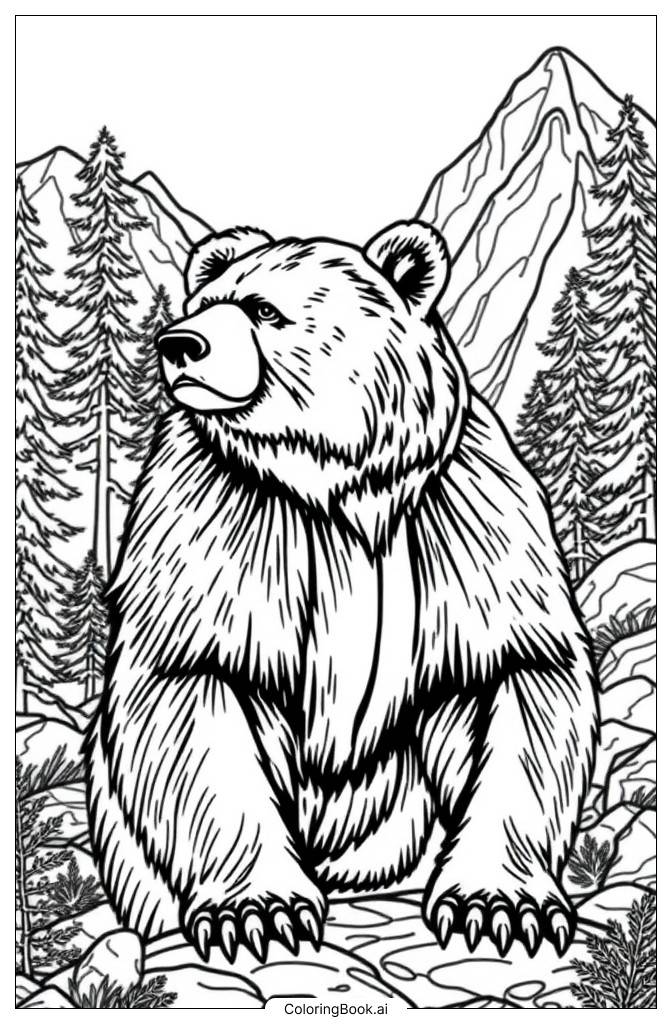
For this Grizzly Bear coloring page, start with rich browns and tans to bring the bear’s thick fur to life. Use different shades of brown to show texture and depth—lighter browns can highlight areas where sunlight hits the fur, while darker browns can create shadows. The claws can be colored in dark grey or black. For the rocky hill, choose gray tones to make the stones stand out, and try a bit of green or brown for patches of moss or dirt. The background trees and mountains can be colored with various greens and blues to show distance. Feel free to add a bright blue sky or warm orange for a sunset effect to make your picture more vibrant and exciting.
Coloring challenges: Which parts are difficult to color and need attention for Grizzly Bear coloring page?
• Fur Texture: Coloring the bear’s thick fur can be tricky because it involves many fine lines and layers. Careful blending is needed to make the fur look soft and natural rather than flat.
• Claws and Details: The bear’s claws and facial features have small, sharp details that need steady coloring to keep them clear and defined.
• Background Complexity: The trees and mountains behind the bear have overlapping shapes that require careful color choices to separate each element and avoid confusion.
• Light and Shadow: Creating realistic shadows on the fur and rocks involves understanding where the light comes from, which can be a challenge for younger colorers.
• Rock Texture: The rocky hill has uneven surfaces and cracks, demanding a mix of colors with fine strokes to give it a rugged, natural look.
Benefits of coloring books: Advantages of drawing Grizzly Bear coloring page
Coloring this Grizzly Bear image helps children and adults improve their focus and patience as they work on the detailed fur and background. It encourages observation skills by asking colorers to think about natural colors, light, and shadow in the wild. The activity also boosts creativity as colorers decide how to bring different textures and elements to life. For younger children, coloring this page helps develop hand-eye coordination and fine motor skills through careful coloring inside the lines. Additionally, connecting with wildlife themes can inspire respect and curiosity about nature.