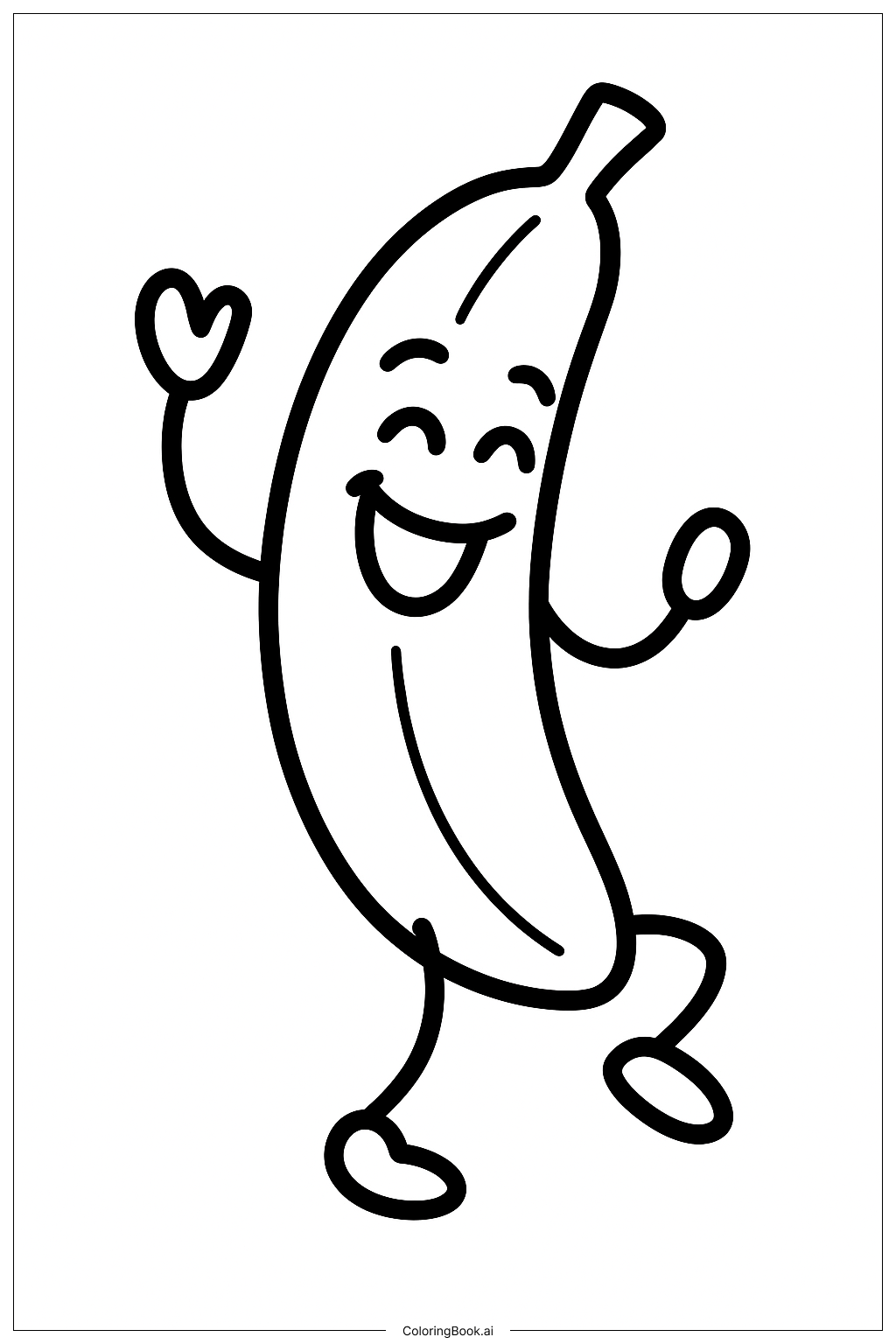
Coloring tips: How to color Dancing Banana coloring page well?
Start with the banana's body using a bright yellow as your base color. You can add a slightly darker yellow or light orange along the edges and curves to give it a rounded, three-dimensional look. Use a warm brown or dark yellow for the tips of the banana. The face is a great place to get creative — try a soft peach or light tan for the skin-like facial features. Color the eyes with dark brown or black, and add a pop of white for a shiny highlight. For the arms and legs, stay consistent with the yellow tone of the body. The motion lines around the character can be colored in light blue, orange, or left white to show speed and energy. Feel free to add a colorful background — bright blues, pinks, or purples work great to make the dancing banana really stand out. Have fun and be bold with your color choices!
Coloring challenges: Which parts are difficult to color and need attention for Dancing Banana coloring page?
• Curved Body Shading: The banana's naturally curved shape makes shading tricky. To give it a realistic, rounded look, you need to blend at least two shades of yellow — a lighter tone in the center and a darker tone along the edges. Getting a smooth gradient without streaks takes patience and practice, especially for younger colorists.
• Small Facial Features: The banana's face includes tiny eyes, a mouth, and expressive details packed into a small area. Coloring these neatly without going outside the lines requires a fine-tipped pencil or marker. One small slip can change the whole expression of the character, so take it slow and use a sharp tool.
• Motion Lines: The lines around the character represent movement and energy. Deciding how to color them — or whether to leave them white — can be confusing. If you choose to color them, picking the right shades that complement the banana without looking cluttered is a real challenge.
• Tiny Hands and Feet: The small, rounded hands and feet have their own outlines and details. Staying inside these tight spaces while still applying enough color for good coverage is difficult, especially for children using thicker crayons or markers.
• Background Balance: Choosing a background color that makes the dancing banana pop without overwhelming it is harder than it looks. Too dark and the banana blends in; too bright and the image loses focus. Finding the right balance takes a bit of color theory thinking, which is a great learning opportunity for older kids and adults alike.
Benefits of coloring books: Advantages of drawing Dancing Banana coloring page
Coloring this Dancing Banana page is a wonderful activity for kids and adults alike. Here are some of the great benefits it offers:
It boosts creativity. Choosing colors for a fun, silly character like a dancing banana encourages free thinking and imaginative expression. There are no wrong answers — every color choice is valid.
It builds fine motor skills. Carefully staying within the lines, especially around the small face and tiny hands, helps children develop hand control and pencil grip, which are important skills for writing and drawing.
It improves focus and patience. Completing a coloring page from start to finish teaches kids to concentrate on a task and see it through, which is a valuable life skill.
It reduces stress. The simple, repetitive motion of coloring is calming and meditative. Even a few minutes of coloring can help kids and adults feel more relaxed and at ease.
It sparks joy and laughter. A banana that dances is naturally funny and lighthearted. Coloring a character that makes you smile adds a layer of happiness to the creative process.
It introduces color theory. Experimenting with shading, highlights, and background colors gives young artists an early, hands-on introduction to how colors work together.