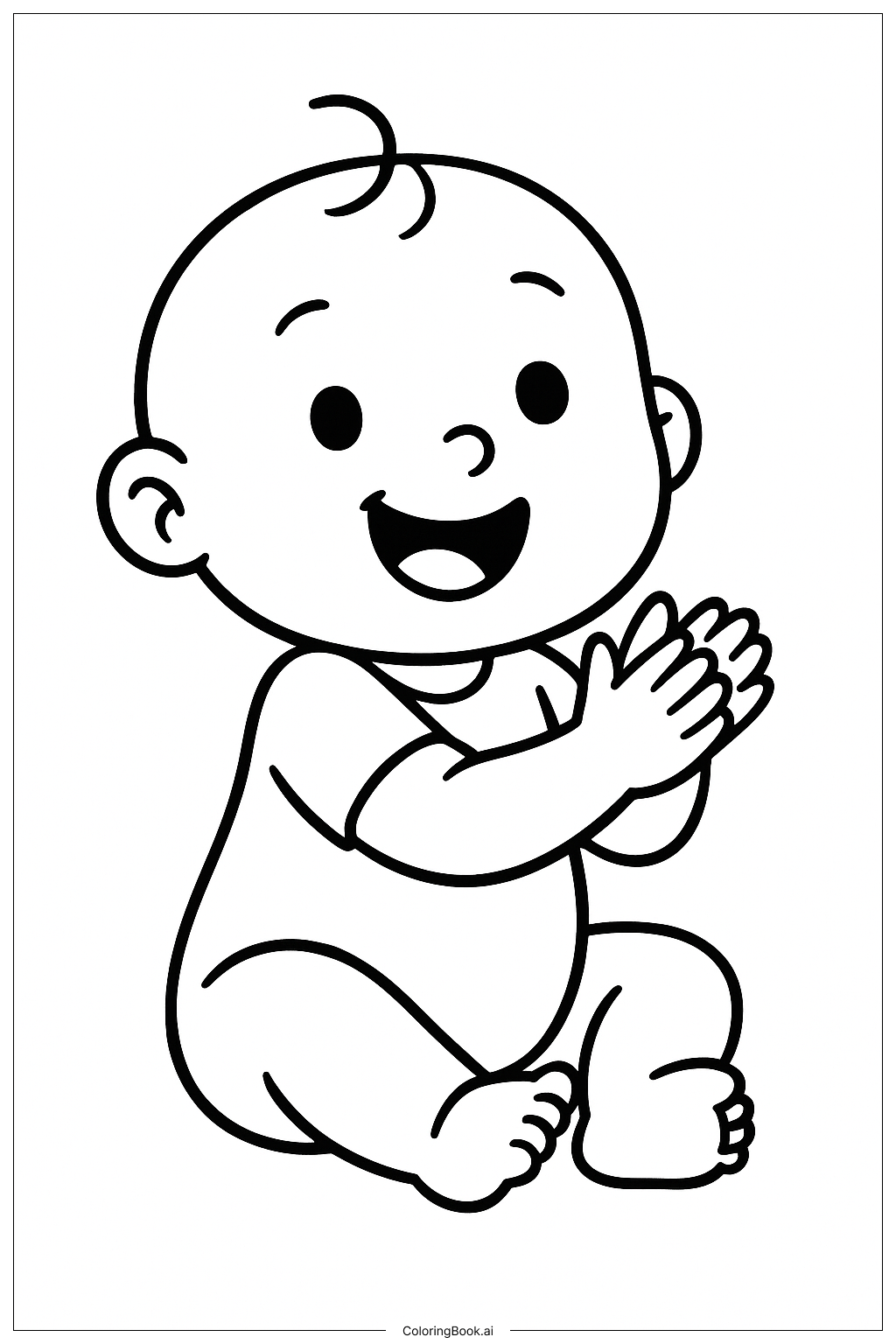
Coloring tips: How to color Happy Baby Clapping Hands coloring page well?
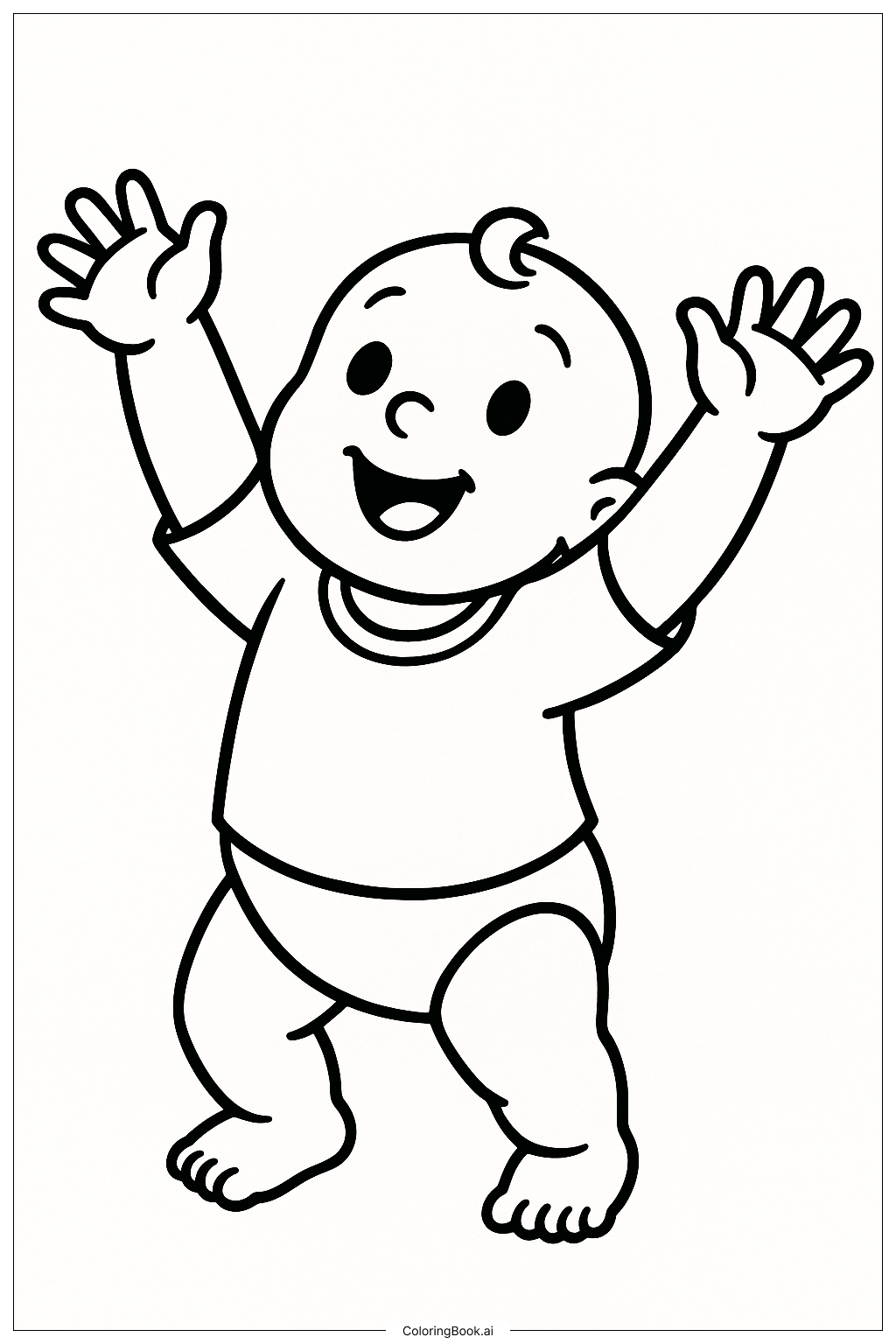
Start with the baby's skin using a soft peach or warm beige tone. Keep the color even and smooth across the face, arms, and hands. For the cheeks, add a light pink blush to give the baby a rosy, healthy glow. Use bright, cheerful colors for the baby's outfit — think pastel yellow, sky blue, or soft mint green. These colors feel playful and sweet. Color the eyes with a warm brown or deep blue, and add a tiny white dot to make them look shiny and alive. The hair, if present, can be done in light brown or golden yellow. Keep the background simple — a pale yellow or light lavender works well to make the baby stand out. Use colored pencils or crayons for a soft, gentle finish. This image is great for young children, so bold and simple strokes work perfectly. Have fun and don't worry about staying perfectly inside every line — the joy is in the coloring!
Coloring challenges: Which parts are difficult to color and need attention for Happy Baby Clapping Hands coloring page?
• Tiny Finger Details: The baby's clapping hands feature small, chubby fingers pressed close together. Coloring between each finger without smudging or going outside the lines can be tricky, especially for younger children. Take your time and use a sharpened pencil or a fine-tipped crayon for better control in these tight areas.
• Facial Expression Accuracy: The baby's face includes a joyful smile, round eyes, and soft cheek curves. Keeping the skin tone consistent across the entire face while also adding subtle shading around the smile and eyes requires patience. Pressing too hard can make the face look uneven or too dark.
• Clothing Folds and Creases: The baby's outfit has gentle folds in the fabric. These wrinkles need slightly darker shading than the flat areas to look realistic. Understanding where the light hits the fabric and where it falls into shadow is a small but important challenge, especially for beginners learning about depth and dimension.
• Maintaining Soft, Consistent Skin Tones: Baby skin should look smooth and gentle. Applying color in an even, light layer without streaks or blotchy patches takes practice. Blending two shades of skin tone — a base color and a slightly darker one for shadows — can be difficult to do naturally.
• Background Balance: Choosing and applying a background color that complements the baby without overpowering the main figure is a creative challenge. A color that is too dark or too bright can make the baby hard to see, while a color that is too similar can cause the image to look flat and lack contrast.
Benefits of coloring books: Advantages of drawing Happy Baby Clapping Hands coloring page
Coloring this happy baby image offers a wide range of wonderful benefits for children and even adults. For young kids, it helps develop fine motor skills as they practice holding crayons and coloring within the lines of the baby's small fingers, face, and outfit. This kind of careful, focused work also strengthens hand-eye coordination over time. The joyful subject matter — a baby clapping with delight — naturally brings out positive emotions. Children often feel happy and calm while coloring cheerful images, making it a great activity for emotional regulation and stress relief. Choosing colors for the baby's skin, eyes, and clothing encourages creative thinking and self-expression. Kids learn to make decisions and develop their own sense of color and style. For older children, adding shading and blending skin tones introduces early artistic techniques in a fun and low-pressure way. Coloring also builds focus and concentration, as children need to stay attentive to stay within the lines and plan their color choices. It is a screen-free activity that keeps young minds engaged and imaginative. Sharing and comparing finished pages with friends or family also encourages social interaction and builds confidence.