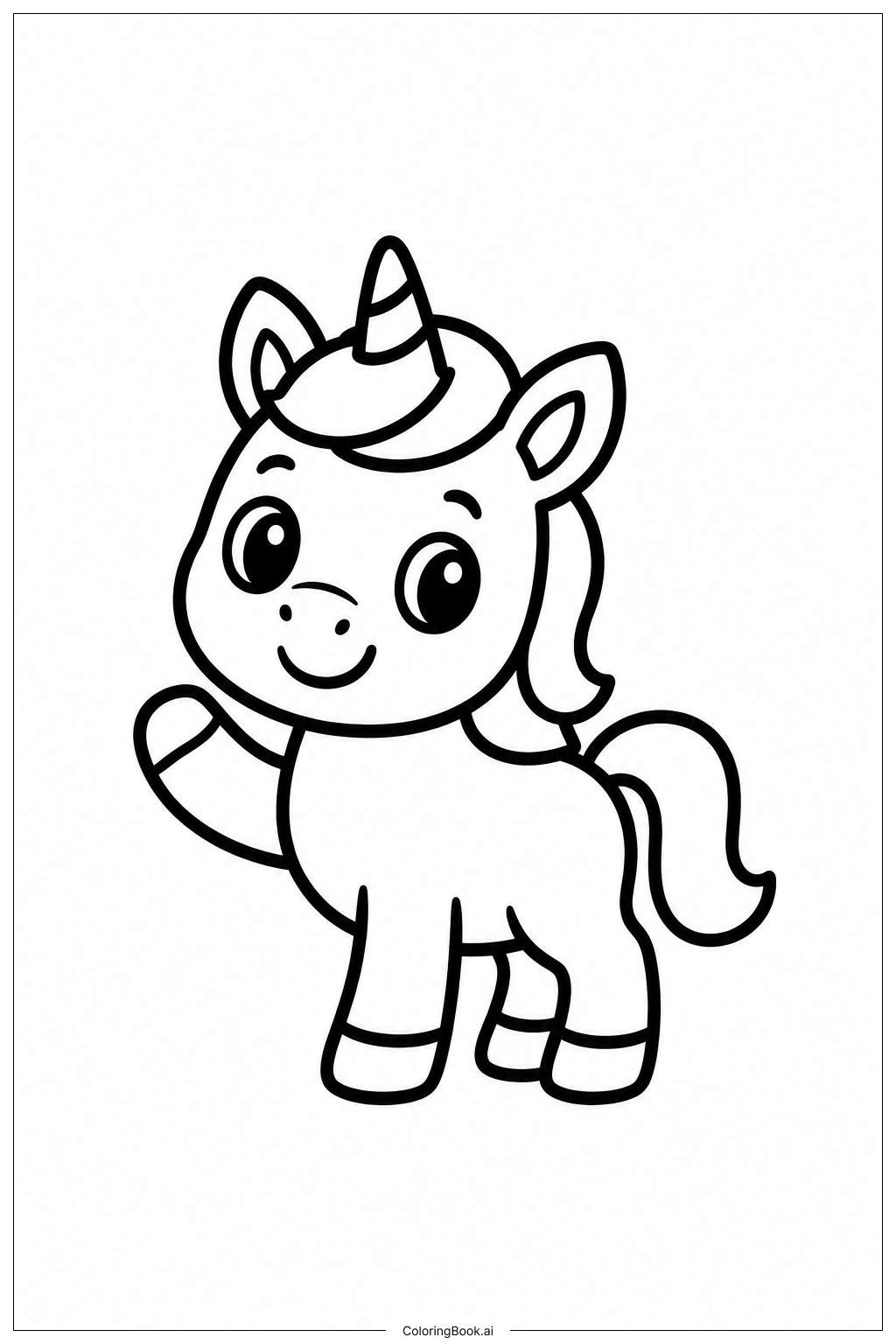
Coloring tips: How to color Baby Unicorn Waving coloring page well?
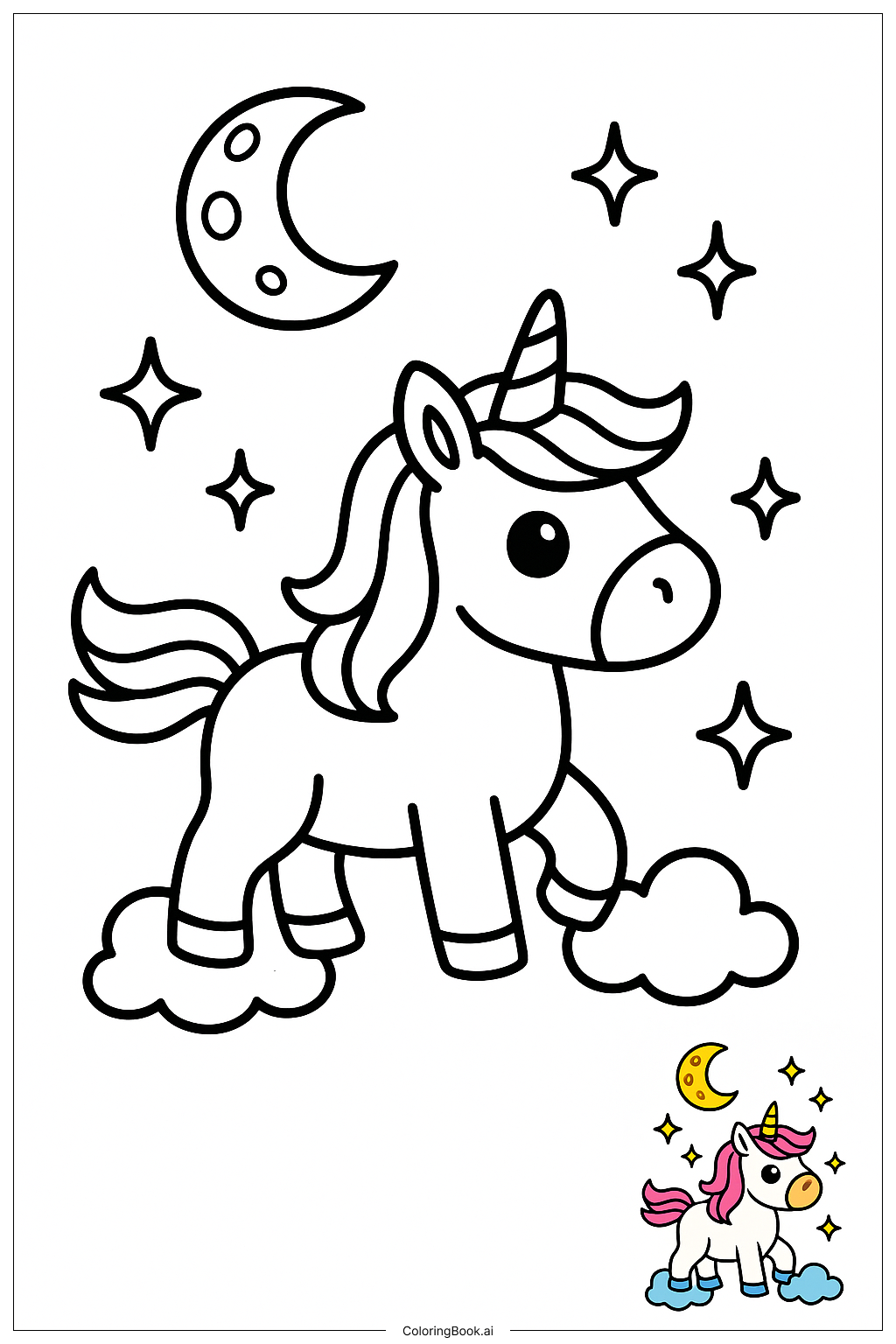
Start with the unicorn's body using soft pastel shades like pale pink, lavender, or mint green to capture its gentle, magical nature. The mane and tail offer a wonderful opportunity for creativity—try a rainbow gradient blending pink, purple, blue, and yellow, or keep it monochromatic with varying shades of one color for a sophisticated look. The horn can be colored in shimmering gold, silver, or iridescent white to emphasize its magical quality. Use rosy pink for the inner ears and cheeks to add warmth and dimension. The hooves can be a slightly darker shade than the body, perhaps in soft gray or beige. Consider adding highlights to the mane and tail with lighter tones or even leaving some areas white to suggest shine. For a finishing touch, you might color the background with soft clouds, stars, or a dreamy pastel sky to complete the enchanted scene.
Coloring challenges: Which parts are difficult to color and need attention for Baby Unicorn Waving coloring page?
• Mane and Tail Flow: The flowing, wavy strands of the mane and tail present a significant challenge as each wave needs to be colored individually while maintaining a sense of movement and cohesion. Young colorists must pay attention to the direction of each strand and decide whether to use one solid color, create gradients, or alternate colors to make the hair look dimensional and natural rather than flat.
• Maintaining Consistent Body Shading: The rounded, three-dimensional body of the baby unicorn requires thoughtful shading to avoid a flat appearance. Colorists need to consider where light would naturally hit the body and apply lighter shades on those areas while using darker tones in the shadowed regions, such as under the belly, behind the legs, and around the neck, which demands careful color blending skills.
• Fine Details on Hooves and Horn: The small spiral horn and the four hooves contain fine details that require precision and steady hand control. The horn's spiral texture needs careful attention to create the illusion of twisting, while the hooves must be colored distinctly from the legs to show proper separation and depth.
• Facial Expression and Features: The large eyes, gentle smile, and inner ear details require delicate coloring to preserve the unicorn's sweet, friendly expression. Coloring the eyes involves creating depth with pupils, highlights, and possibly eyelashes, while the smile and cheeks need subtle shading to look natural and maintain the character's charm without overwhelming the face with too much color.
Benefits of coloring books: Advantages of drawing Baby Unicorn Waving coloring page
Coloring this baby unicorn waving page offers numerous developmental benefits for children. It enhances fine motor skills as young artists carefully color within the defined lines of the mane, tail, and small features like the horn and hooves. This activity promotes hand-eye coordination and strengthens the small muscles in fingers and hands that are essential for writing. The friendly, waving pose encourages emotional connection and imaginative play, allowing children to create stories about where the unicorn is going or who it's greeting. The variety of areas—from large body sections to intricate flowing hair—provides practice in color selection, planning, and decision-making. Children learn about shading, blending, and color harmony as they experiment with different combinations to bring their magical creature to life. This calming, focused activity also reduces stress and anxiety while building concentration and patience. Completing the page gives a sense of accomplishment and boosts self-esteem, especially when children see their unique creative choices result in a beautiful, personalized unicorn.