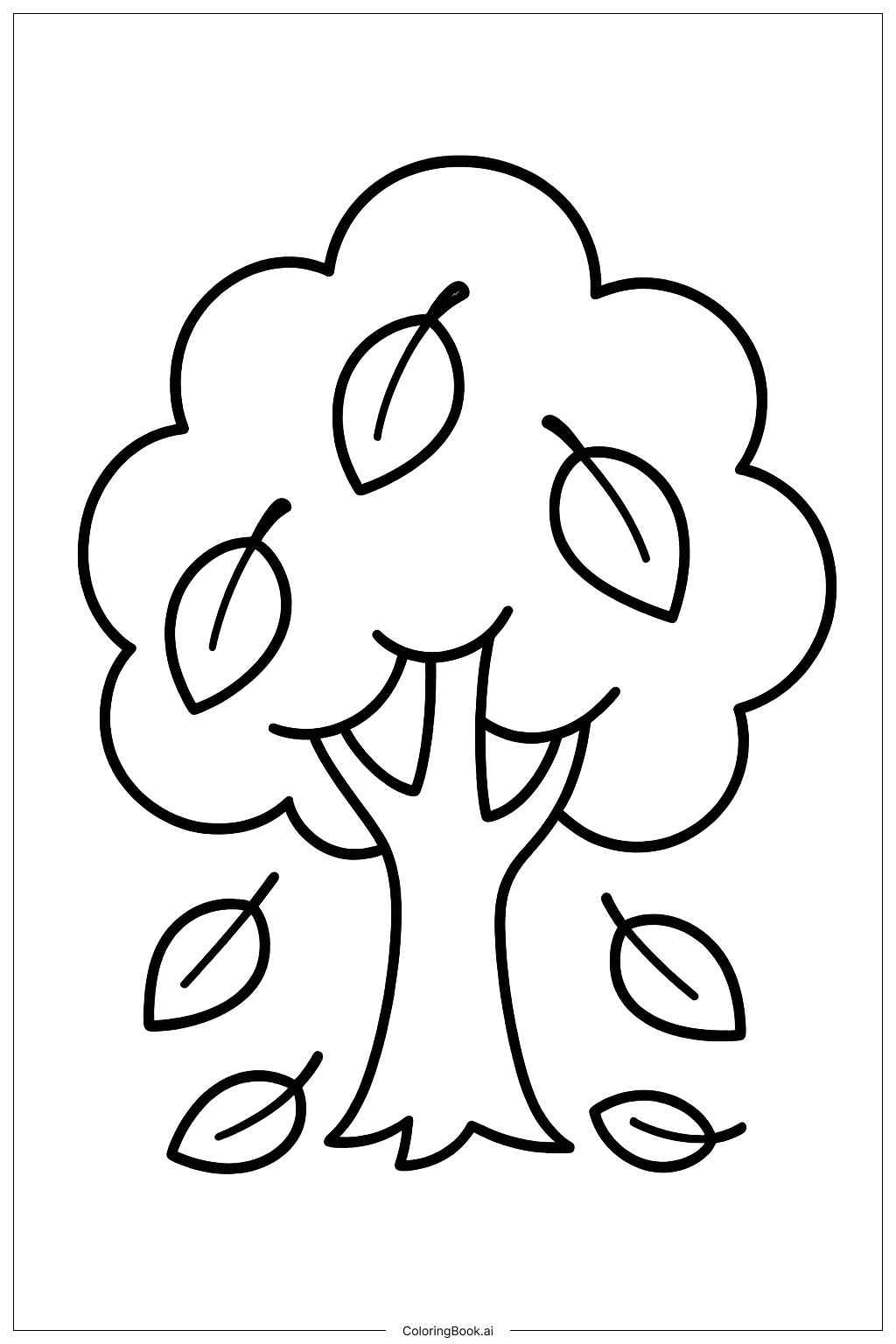
Coloring tips: How to color Basic Autumn Fall Tree coloring page well?
Use warm colors like orange, red, yellow, and brown for the leaves to show the fall season. Feel free to mix these colors for a natural look. Color the tree trunk with shades of brown. You can add little touches of green to some leaves to show that not all leaves change color at the same time. Try coloring the falling leaves slightly lighter or darker to show movement and depth. You can also add a blue or light gray background to represent the cool autumn sky.
Coloring challenges: Which parts are difficult to color and need attention for Basic Autumn Fall Tree coloring page?
1. Coloring the leaves can be tricky because you want to blend different warm colors to create a natural autumn look. Avoid coloring them all one solid color to make it more interesting.
2. The veins in each leaf are small and thin. Coloring them carefully without going outside the lines can be challenging, especially for younger children.
3. Coloring the tree trunk evenly can be difficult since it has some curved and uneven edges. Try to color smoothly to keep it neat.
4. The falling leaves around the tree can be hard to color in a way that shows they are moving. You may need to use lighter or different colors to show this effect.
5. Keeping the coloring within the thick lines without overlapping can take patience and control.
Benefits of coloring books: Advantages of drawing Basic Autumn Fall Tree coloring page
Coloring this picture helps improve fine motor skills because it requires careful coloring inside the lines. It encourages creativity by letting you mix and use many warm colors to represent autumn. Coloring also helps children focus and develop patience. This picture teaches about the season of fall and shows how leaves change color and fall from trees. It can be relaxing and fun to color, making it a great activity for learning and play.