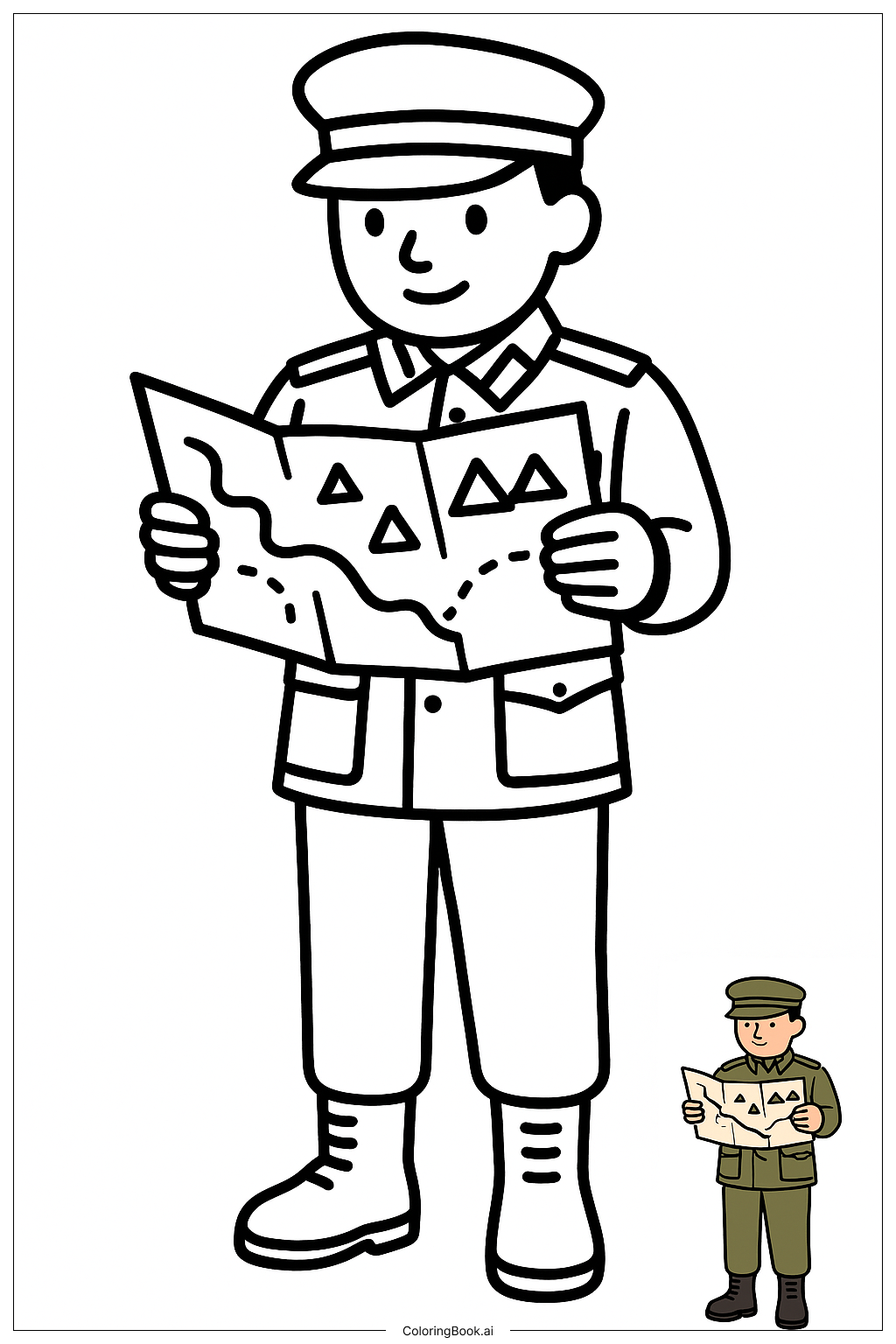
Coloring tips: How to color Army Officer Reading Map coloring page well?
Start with the officer's uniform using shades of olive green, khaki, or camouflage patterns mixing greens, browns, and tans. Use a darker green or brown for shadows in the fabric folds to add depth. Color the helmet in a similar military green or matte gray. For the map, use light yellows and beiges for the paper, with thin brown and blue lines for terrain and rivers. The officer's skin tone can be warm peach or a deeper brown. Add dark brown or black for boots and gear straps. Background trees work well in forest green, and the ground can be earthy brown or sandy tan. Keep colors bold and steady for younger colorists, or try blending for older kids who want a more realistic look.
Coloring challenges: Which parts are difficult to color and need attention for Army Officer Reading Map coloring page?
• Camouflage Pattern: The uniform may include a camouflage design, which requires carefully placing patches of green, brown, tan, and black in an irregular pattern. Staying inside small shapes while keeping the color arrangement looking natural can be tricky, especially for younger colorists.
• Facial Details and Expression: The officer's face shows concentration and seriousness. Coloring facial features like the eyes, nose, and mouth requires a steady hand and careful use of light skin tones. Adding subtle shadows under the brow and along the jaw can make the face look realistic but demands patience.
• Map Details: The map the officer holds is filled with fine lines, symbols, and contour markings. These tiny details need precise coloring with thin tools like colored pencils or fine-tip markers. Using too much color in one area can cause the map details to disappear.
• Uniform Insignia and Patches: Military uniforms often have badges, rank insignia, and unit patches with multiple small colors. Each element needs careful attention to stay within its boundary. Rushing through these sections often results in colors bleeding into each other.
• Background Depth and Lighting: Creating a sense of distance in the outdoor background while keeping the officer as the clear focal point is a challenge. The background should be colored in softer, less saturated tones to push it back visually, while the officer's uniform and gear stay vivid and detailed in the foreground.
Benefits of coloring books: Advantages of drawing Army Officer Reading Map coloring page
Coloring this Army Officer Reading Map page offers a wonderful mix of creative and educational benefits for kids. As children fill in the details of the military uniform, equipment, and terrain map, they naturally build fine motor skills and hand-eye coordination. The intricate details of the uniform and map encourage focus and patience, helping kids develop longer attention spans.
This image also sparks curiosity about geography, map reading, and the work of military professionals. It opens up conversations about teamwork, leadership, and problem-solving in challenging situations. Children who color this page may feel inspired to learn more about how maps work and how soldiers use them in the field.
For older kids and teens, the scene offers a chance to practice realistic color mixing, shading, and creating depth — all valuable artistic skills. Choosing the right camouflage colors and blending tones for the background introduces basic principles of color theory in a fun, hands-on way.
Beyond skills, coloring is a calming activity that helps reduce stress and anxiety. It gives children a quiet space to express themselves while staying engaged with a meaningful subject. Whether coloring for fun or as part of a learning activity, this page encourages creativity, respect for service members, and a healthy sense of focus.