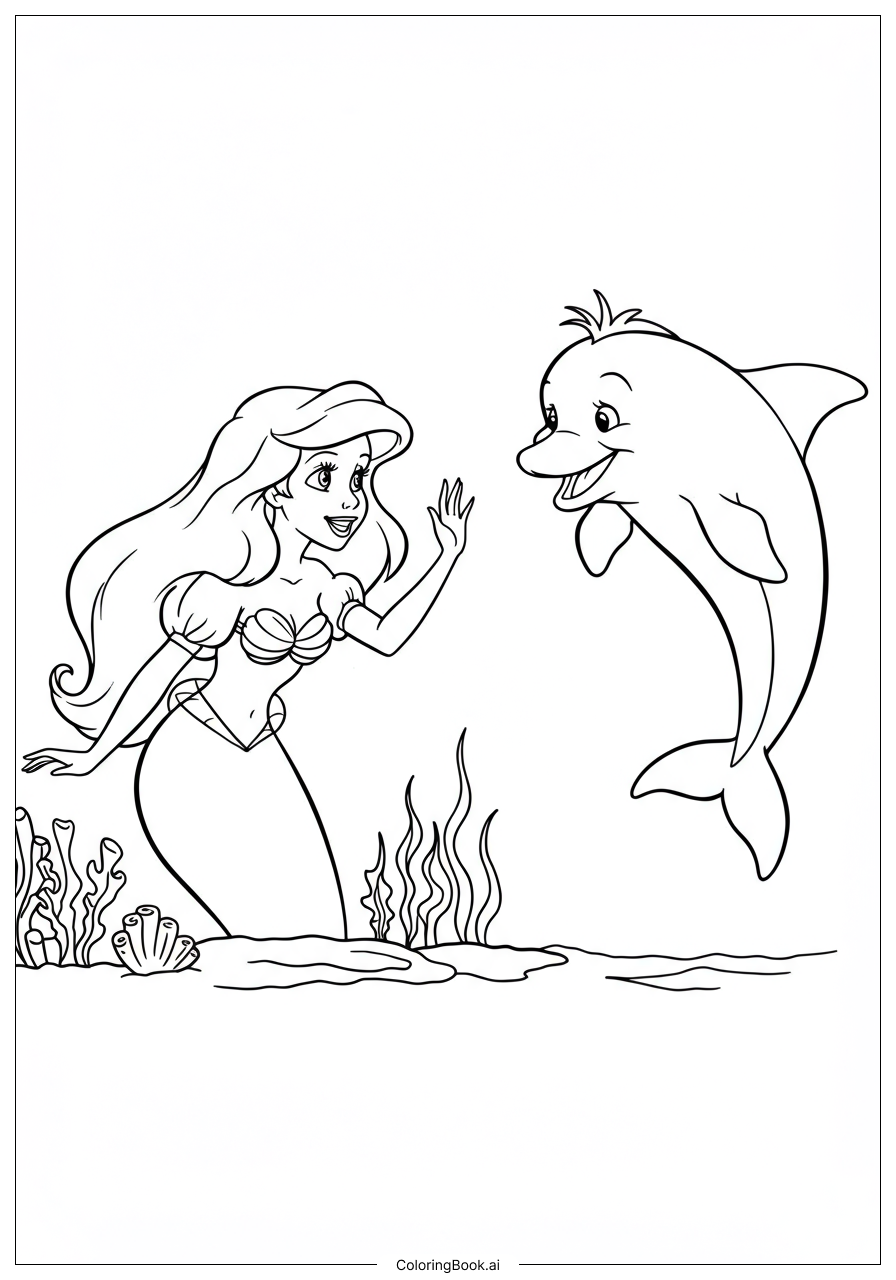
Coloring tips: How to color Ariel Waving Hello With A Dolphin coloring page well?
Start with Ariel's skin using a soft peach or light tan tone. Her hair is traditionally bright red-orange, so use bold, warm shades there for a classic look, or try purple or golden tones for a creative twist. Her iconic mermaid tail looks best in shimmering greens and teals, and her seashell top can be lavender or pink. For the dolphin, use smooth mid-range grays or go playful with blues and purples. Add a lighter belly color to make it look round and realistic. The ocean background works beautifully in layered blues and aquamarines. Use light yellow or white for bubbles, and add pops of coral, pink, and green for the sea plants and seaweed. Blend colors gently in large areas to give the underwater scene a soft, glowing feel. Bright colors make this image feel magical and fun.
Coloring challenges: Which parts are difficult to color and need attention for Ariel Waving Hello With A Dolphin coloring page?
• Ariel's Flowing Hair: Ariel's long, wavy hair spreads across a large portion of the page and has many flowing strands and subtle curves. Staying within the fine lines while keeping color direction consistent with the flow of the hair can be tricky. Using short, directional strokes that follow each wave will give the hair a natural, dynamic look.
• Mermaid Tail Scales: The tail is often made up of many small overlapping scale shapes. Each individual scale needs careful attention to avoid colors bleeding into neighboring scales. A fine-tipped coloring tool works best here. You can also try a gradient effect, going darker at the edges and lighter in the center of each scale, to add depth and shimmer.
• Dolphin Body Shading: The dolphin has a smooth, rounded body that needs shading to look three-dimensional. Without shading, the dolphin can appear flat. Apply a lighter color down the center of the belly and a slightly darker shade along the back and sides. This simple technique gives the dolphin a soft, realistic look.
• Underwater Bubble Details: The small bubbles scattered throughout the scene are very tiny and require a steady hand. Leaving them white or coloring them with the lightest touch of blue or pale yellow works best. Pressing too hard in these areas can cause the tiny circles to fill in completely and lose their delicate look.
• Background Depth and Layering: Creating a believable underwater background means layering different shades of blue and teal without making the scene feel muddy. Work from light to dark and keep each layer smooth to suggest depth and the soft glow of sunlight filtering through water.
Benefits of coloring books: Advantages of drawing Ariel Waving Hello With A Dolphin coloring page
Coloring this page of Ariel and her dolphin friend brings a wide range of benefits for kids and creative fans of all ages. For younger children, tracing and filling in the detailed lines of Ariel's hair, tail, and the dolphin's smooth body helps build fine motor skills and hand-eye coordination. Choosing which colors to use for the ocean, the sea plants, and the characters encourages creative thinking and builds confidence in making personal decisions.
The underwater setting sparks imagination and curiosity about marine life. Kids may become interested in real dolphins, coral reefs, and ocean ecosystems while they color. This makes the activity both fun and quietly educational.
Focusing on a single image for an extended time also supports concentration and patience, skills that are valuable in school and everyday life. The repetitive, calming nature of coloring helps reduce stress and anxiety, making it a wonderful quiet-time activity.
For older kids and teens, the shading challenges in this image, like blending the dolphin's body and creating depth in the ocean background, offer a chance to explore real artistic techniques. Finishing the page brings a strong sense of pride and accomplishment. Sharing or displaying the finished artwork builds self-esteem and encourages a love of creative expression.