Coloring tips: How to color Ariel Mermaid Smiling coloring page well?
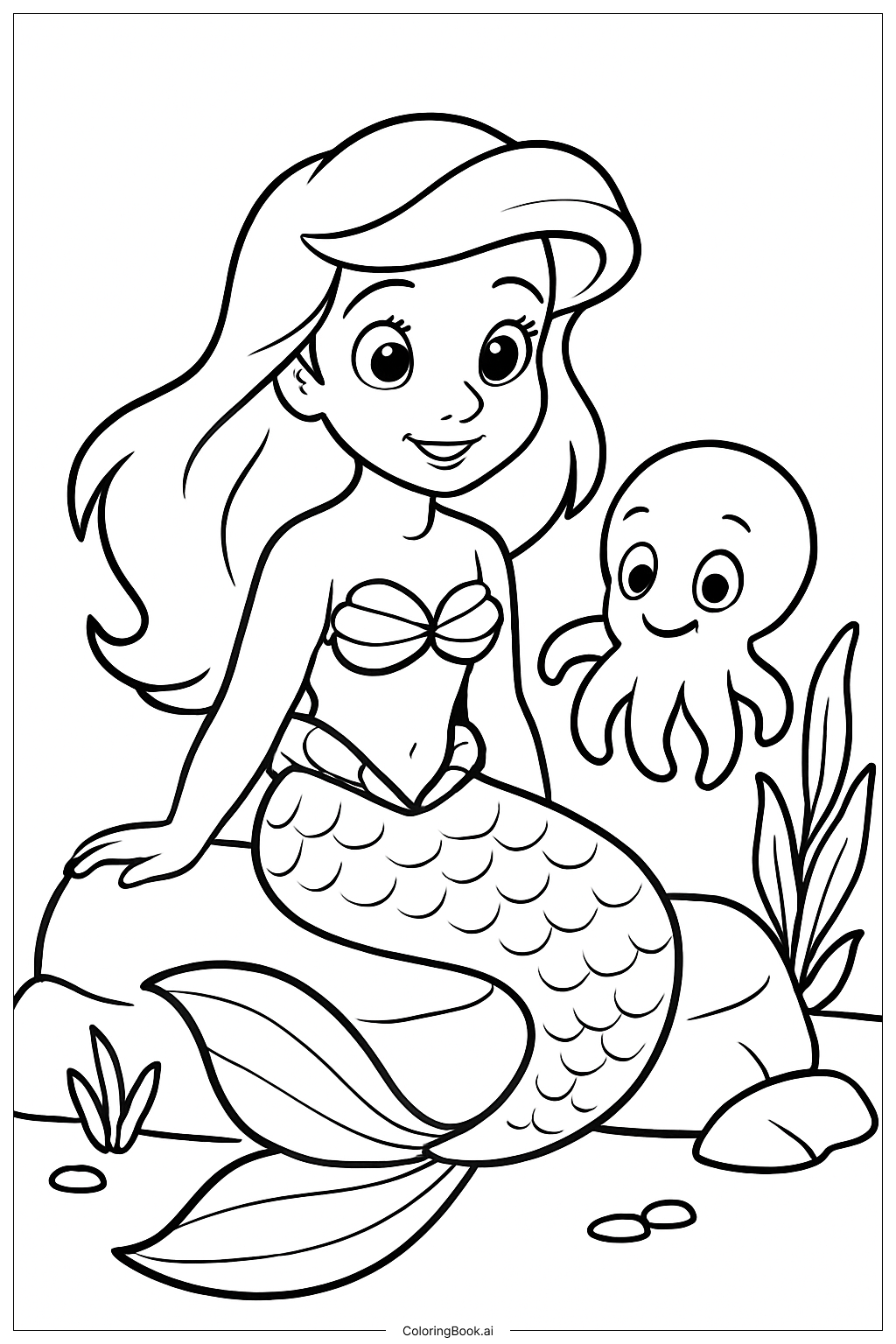
To fill in Ariel's hair, bright colors like red or orange will make her look vibrant. Choose aqua or teal for her tail to represent the ocean. For her seashell top, light pink or lavender can create a lovely contrast. Kids can also play with different shades of blue for the water around her. Encourage using glitters for a magical effect. Combining warm and cool colors can add depth to the drawing, making Ariel stand out. Additionally, coloring the background with waves or seaweed can create a dynamic underwater scene.
Coloring challenges: Which parts are difficult to color and need attention for Ariel Mermaid Smiling coloring page?
1. **Hair Coloring**: Ariel's hair has flowing shapes, which might be challenging for younger kids. They may find it difficult to blend different shades for a natural look. 2. **Tail Details**: The mermaid's tail has a fin with curves. Coloring within the lines while adding depth may require some skill. Older kids may want to create gradients, which could be complex. 3. **Color Combinations**: Choosing colors that complement each other can be tricky. Children might struggle with this if they select clashing shades. 4. **Background Elements**: If they want to add elements like seaweed or fish, it might require extra creativity and planning. These details can easily become overwhelming. 5. **Patience and Focus**: Coloring this image can take time, so kids will need to practice patience to ensure they finish without rushing their work.
Benefits of coloring books: Advantages of drawing Ariel Mermaid Smiling coloring page
Coloring this page offers many benefits for children. First, it allows for creative self-expression. Kids can choose colors that reflect their personality or mood. Second, it enhances fine motor skills. Holding crayons or markers improves grip and control. Third, coloring also boosts concentration. As kids focus on filling in the image, they improve their attention span. Fourth, it can be a relaxing activity, helping to reduce stress and anxiety. Lastly, coloring helps children learn about colors and how to mix them, promoting cognitive development and artistic skills.