Coloring tips: How to color Apple Cider Making Process coloring page well?
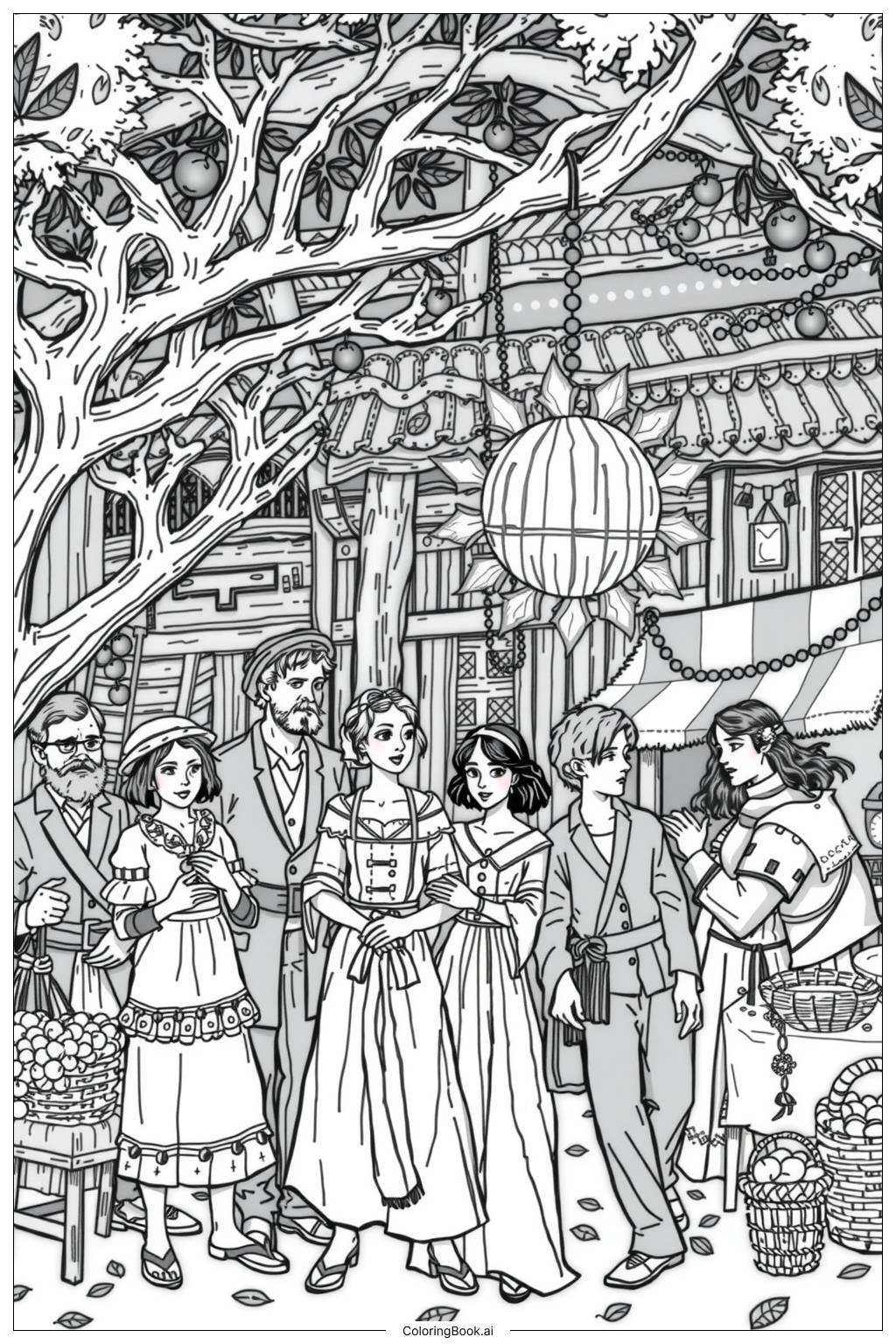
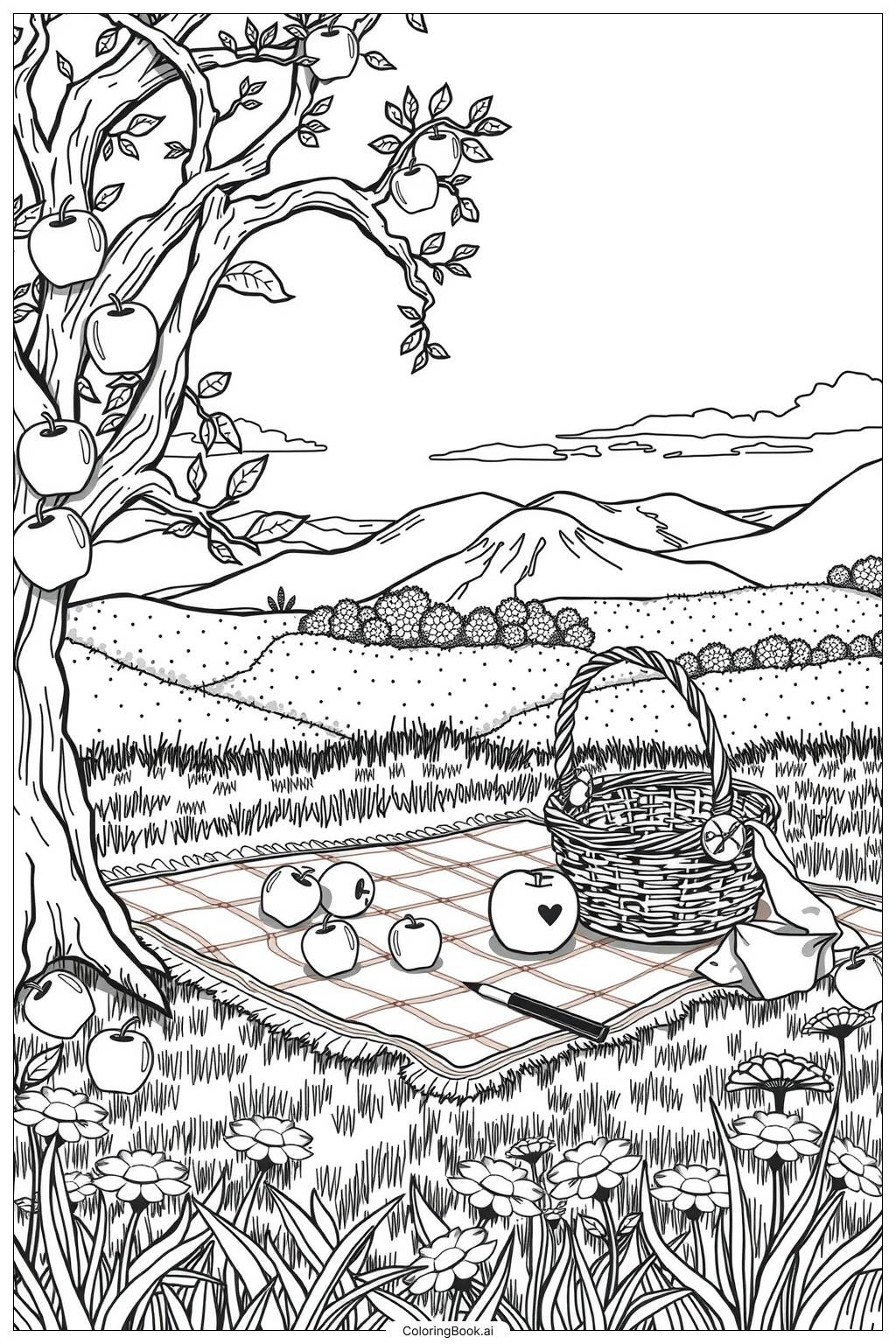
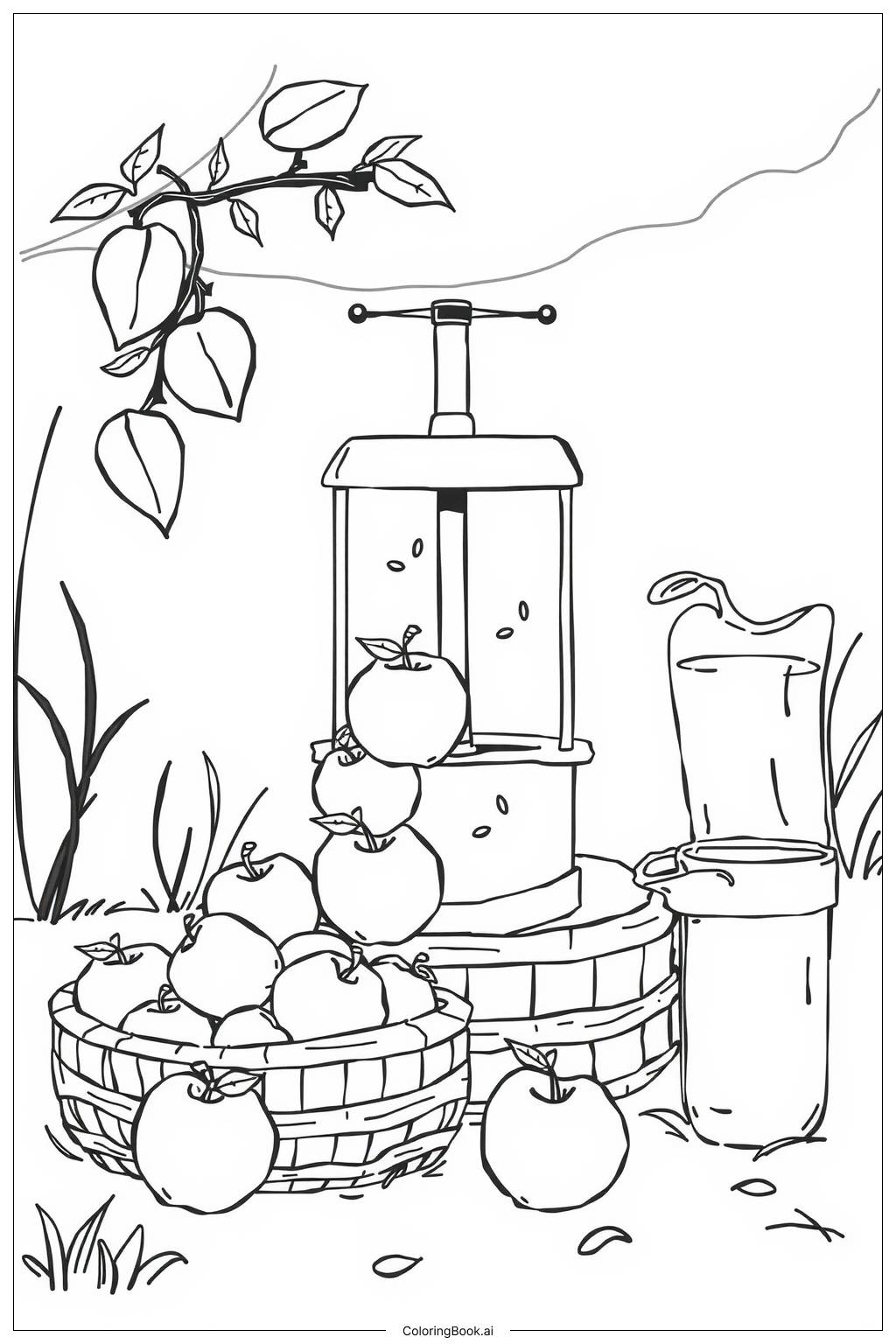
Use warm reds, greens, and yellows for the apples to show their fresh and ripe qualities. Color the wooden cider press brown to give it a natural, sturdy look. The fresh apple juice flowing into the container can be painted a golden or light amber color to show its sweetness. For the trees and grass, use various shades of green. You can make the baskets a light brown or beige to look like woven wood or straw. People’s clothes can be colored with bright, simple colors like blue, red, or purple to make the scene lively and cheerful. Don't forget to add light blue or soft gray tones for the sky area.
Coloring challenges: Which parts are difficult to color and need attention for Apple Cider Making Process coloring page?
• Small Details: The image includes many small apples scattered around and inside baskets, which require careful coloring to stay inside the lines. • Wood Texture: The cider press has many parts with wood grain and round shapes, which can be tricky to shade evenly to give a natural wooden look. • Juice Flow: The apple juice flowing from the press needs smooth and translucent coloring, which can be hard to achieve with crayons or markers without mixing colors properly. • People and Clothes: The workers’ different clothing styles and facial features need attention to detail for expressive coloring. • Background Elements: The orchard trees and grass have lots of small leaves and blades that require patience when filling in without making the area too crowded or messy.
Benefits of coloring books: Advantages of drawing Apple Cider Making Process coloring page
Coloring this image helps improve fine motor skills as children learn to control their coloring inside many small areas like apples and wooden textures. It encourages creativity by letting them choose colors for natural objects like apples and trees, as well as people’s clothes. This page also teaches patience and focus because of the detailed parts like the juice flow and basket weaving. Lastly, it introduces young ones to an interesting traditional process, connecting nature to food production in a fun and artistic way that can inspire curiosity about how apples are made into cider.